
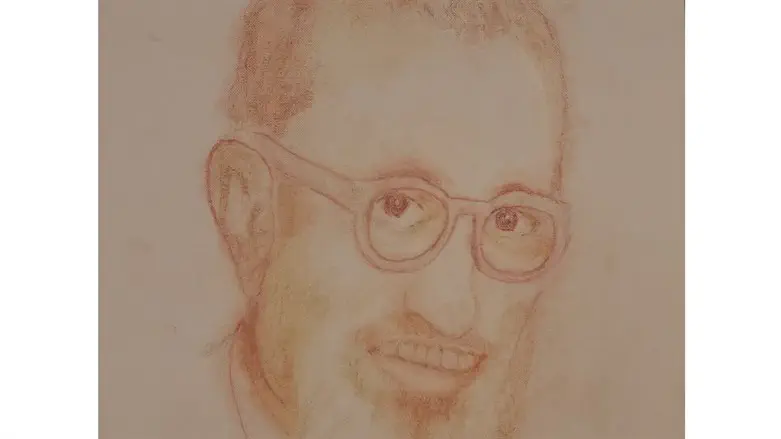
This essay is based on the teaching of the Rav and is in honor of his 33rd yahrzeit:
The Structure of Heartrending Choice
Not all moral clarity comes from knowing what is right. There are moments-rare, demanding, and formative-when the challenge lies not in distinguishing good from evil, but in choosing between goods that cannot be reconciled. In such moments, decision does not resolve tension; it exposes it. Classical Jewish sources preserve precisely this more difficult model of religious judgment: situations in which each alternative carries an authentic claim, and where the act of choosing affirms one value without canceling the other.
These are not failures of moral vision but its highest expression. What is gained does not negate what is lost; the road not taken remains part of the terrain.
Moses: Redemption and the Preservation of Memory
The Exodus is framed simultaneously as liberation and fulfillment. The Israelites are commanded to despoil Egypt: “וְנִצַּלְתֶּם אֶת־מִצְרָיִם" (“And you shall despoil Egypt") (Exod. 3:22), thereby realizing the divine promise: “וְאַחֲרֵי־כֵן יֵצְאוּ בִּרְכֻשׁ גָּדוֹל" (“and afterwards they shall go out with great wealth")(Gen. 15:14). Material acquisition thus functions as an integral component of redemption, addressing the injustice of enslavement.
Yet the Torah introduces a counterpoint:
“וַיִּקַּח מֹשֶׁה אֶת־עַצְמוֹת יוֹסֵף עִמּוֹ" -And Moses took the bones of Joseph with him" (Exod. 13:19).
The Sages sharpen the contrast:
"כל ישראל נתעסקו בביזה, ומשה נתעסק בעצמות יוסף." - “all Israel occupied themselves with the spoils, but Moses occupied himself with the bones of Joseph"
This formulation does not criticize the people; they act in full accordance with divine command. Rather, it reveals a second axis of obligation operating simultaneously. Joseph had articulated a future-oriented faith-a covenantal promissory note spanning generations:
“פָּקֹד יִפְקֹד אֱלֹקִים אֶתְכֶם…"- “God will surely remember you" (Gen. 50:24).
To carry his bones is to transform that faith into historical continuity. Moses thus accords greater urgency, in his role as leader, to carrying Joseph’s bones than to personally engaging in the commanded collection of Egypt’s wealth.
The Midrash deepens the episode further: the location of Joseph’s remains had been forgotten entirely and was revealed by Serach bat Asher, the lone figure who had preserved the memory across the centuries of bondage. The chain is explicit-promise, memory, fulfillment-and it is fragile: without Serach’s living remembrance, Moses could not have acted. Redemption depends on those who refuse to forget.
Moses’ act is traditionally categorized as חסד של אמת, but its significance exceeds any single category. It establishes that redemption must carry the past forward even as it reaches toward the future. The Israelites depart Egypt with wealth; Moses ensures they depart with identity. The two imperatives do not cancel each other, but neither can they be equally enacted by every individual simultaneously. This is the structure of tragic choice: not failure, but the inescapable cost of acting within a world of plural, legitimate obligations.
II. Rabban Yohanan ben Zakkai: Continuity Without Center
In Talmud Bavli Gittin 56b, Rabban Yohanan ben Zakkai, smuggled out of besieged Jerusalem in a coffin, stands before Vespasian and makes his famous request:
"תן לי יבנה וחכמיה." - "Give me Yavneh and its sages"
The request is remarkable for its restraint-and, when read carefully, for its audacity. He does not petition for Jerusalem, the Temple, or even a postponement of the siege. He asks for a scholarly enclave. Retrospectively, the choice can appear inevitable, even prescient: Yavneh became the seedbed of Judaism, the institution that would sustain the Jewish people through two millennia of exile.
Historically, however, the decision entails a profound and irreversible relinquishment. The Temple represents not merely a ritual site but the entire theological architecture of sacrificial atonement, priestly mediation, and spatial holiness. Its loss does not merely change Jewish practice; it redefines what Jewish life fundamentally is.
The Talmud records his anxiety:
On his deathbed he states:
“איני יודע באיזו דרך מוליכין אותי."- “I do not know which path they are leading me"
The deathbed confession is disquieting precisely because it comes from the man who made the choice. Rabban Yohanan ben Zakkai does not die in the certainty of vindication. He dies in the awareness that he navigated between catastrophes, and that the road not taken-holding out for Jerusalem, pressing for the Temple-will never be fully adjudicated.
This uncertainty is constitutive, not incidental. It is the irreducible mark of a decision made under conditions of genuine tragic complexity, where every option carries consequences that cannot be fully foreseen or undone.
III. Rabbi Joseph B. Soloveitchik: Between Brisker learning and History
Rabbi Joseph B. Soloveitchik emerges from the Brisker tradition-a world of rigorous halakhic analysis, intellectual inwardness, and principled distance from the ideological currents of modernity. Brisk, as a school of thought, was wary of political movements, including Zionism, on the grounds that they risked subordinating Torah to historical or national agendas that were not themselves halakhically grounded. To engage with such movements, in the Brisker view, was to compromise the autonomy of Torah discourse.
Rav Soloveitchik’s decision to engage with Mizrachi-and through it, with the broader political and secular dimensions of Zionist nation-building-constitutes a significant departure from that inheritance. It is not merely a matter of institutional affiliation; it is a reorientation of religious posture. The question he forces open is not whether Torah remains central-for him, it always does-but whether Torah can remain sealed off from the historical fate of the Jewish people. His answer, implicit in his choices and explicit in his writings, is that it cannot.
This theological necessity of communal engagement finds its clearest articulation in his public addresses:
“The individual Jew cannot free himself from responsibility for Knesset Yisrael."⁸
“Judaism does not permit man to withdraw from the community and live only a private religious life."⁹
These statements are not rhetorical flourishes but theological positions of the first order. They assert that the covenant is not merely a vertical relationship between the individual soul and God, but a horizontal bond binding each Jew to the collective historical existence of Knesset Yisrael. To withdraw from that community-even in the name of spiritual purity-is, for Rav Soloveitchik, itself a form of religious failure.
Yet this very engagement reintroduces the tension he inherited. To stand with Mizrachi is to risk the charge-from within the Orthodox world-of allowing historical exigency to shape halakhic posture. Rav Soloveitchik does not pretend that this tension does not exist; he does not resolve it into a neat synthesis. Instead, he inhabits it. Like Moses choosing memory over material gain, and like Rabban Yohanan ben Zakkai choosing Torah’s continuity over the Temple’s last defense, Soloveitchik makes a decision of irreversible consequence-without erasing the legitimacy of what was surrendered.
Robert Frost’s poem “The Road Not Taken" is frequently misread as a celebration of bold individualism-the triumphant choice of the road less traveled. But Frost’s speaker, more honestly, confesses that the roads were “really about the same," and that the claim of difference is a story told afterward, in retrospect, to make sense of a contingent life.¹⁰
The “difference" the speaker will one day sigh about is not univocal; it encompasses both what was gained and what was foreclosed. The three figures examined here operate in precisely this register. Moses, Rabban Yohanan ben Zakkai, and Rav Soloveitchik each arrive at a crossroads where both paths are legitimate, where the stakes are irreversible, and where no subsequent rationalization can fully dissolve the weight of what was not chosen. In Jewish thought, leadership is defined not by the absence of doubt, but by the capacity to act responsibly within a field of irreducible competing goods-and to bear the cost of that action with integrity.
The enduring lesson is that religious life does not eliminate tension. It demands the courage to inhabit it.
Itzhak David Goldberg MD is Professor Emeritus Albert Einstein College of Medicine