

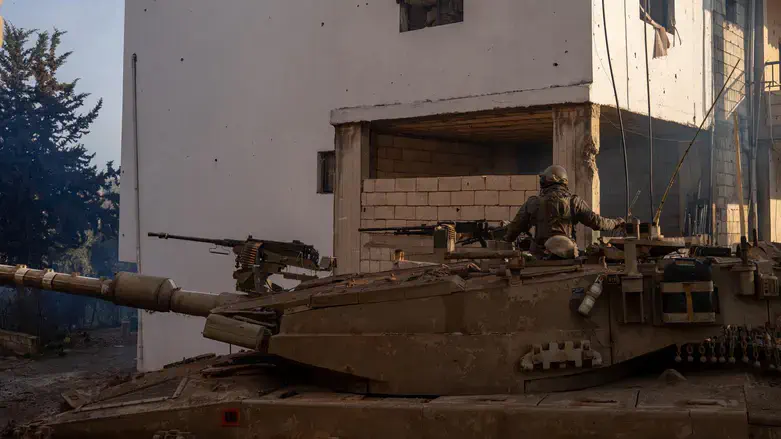
The IDF has formulated a new operational plan aimed at reshaping the Middle East on the "day after" the northern campaign, and is expected to present it to the political echelon in the near future.
The plan, which has undergone legal review, is based on the assessment that Hezbollah exploited the return of civilians to villages in southern Lebanon following the conclusion of Operation Northern Arrows in late 2024 in order to rebuild underground infrastructure and stockpile weapons in close proximity to the Israeli border.
According to the plan, the IDF seeks to completely destroy dozens of Lebanese villages located along the front line, from Kafr Kela to Naqoura. The plan defines civilian infrastructure in these villages as "incriminated," due to Hezbollah’s extensive use of them.
Unlike the situation prior to Israel’s withdrawal from Lebanon in the year 2000, the intention is for the new zone to be entirely free of Lebanese residents. The plan stipulates that a limited number of Christian villages in the area will not be destroyed, and their residents will be permitted to remain under IDF security control.
Additionally, the IDF plans to establish a strong and permanent defensive line within Lebanese territory, effectively replicating the “yellow line" concept implemented in the Gaza Strip within Lebanon.
Alongside the operational plan, the IDF on Friday presented a more sober assessment regarding the end of the campaign. After two-and-a-half years of prolonged fighting, officials acknowledged that the goal of disarming Hezbollah is not currently achievable.
“The constraints do not allow for disarming the organization at this time," a senior IDF officer admitted. He added that the objective for concluding the campaign is to weaken Hezbollah, significantly damage its capabilities, and physically push it away from the border.