
Negar Karamati is a journalist and former Persian language news editor, and an anchor who works in the legal field. She writes on Iran‘s political and social issues, including women's rights and Iran's religious minorities, particularly the Baha’i.
For decades, Iran has been framed primarily through the lens of geopolitics, security concerns, and regional tension. Yet this framing often obscures a critical reality: a profound and growing divide between the Iranian people and the system that governs them. Today, that distinction is no longer abstract, it is central to understanding the trajectory of the country. What is unfolding is not simply a confrontation involving Iran as a nation, but a deeper internal reckoning over its future direction.
Iran stands at one of the most decisive moments in its modern history, a moment that will shape not only the future of a government, but the destiny of a nation.
What is often described in international discourse as a “threat against Iran" is, in reality, increasingly understood as pressure directed at the ruling system, not the Iranian people. This distinction is essential. Iran is not synonymous with the Islamic Republic; it is a nation with a far deeper historical identity, and a society whose aspirations extend well beyond the constraints of its current political structure.
At this critical juncture, public demands have moved beyond calls for reform or cosmetic political change. They have evolved into a clear and fundamental demand: structural transformation.
Experience has shown that changing individuals without addressing the nature of the system itself does not resolve underlying crises, it merely postpones them. Iranian society, shaped by decades of lived reality, has reached a level of awareness where superficial reform is no longer seen as a viable path forward.
Within this context, recent international developments including increased pressure on key power structures are viewed by Iranians not as actions against their country, but as efforts to contain sources of long-standing instability. In this regard, the role of the United States and Israel is, for Iranian public opinion, seen as consequential in addressing these destabilizing dynamics.
At the same time, Iran’s growing prominence in major international forums such as recent discussions in the United States, including CPAC reflects a broader shift: Iran is no longer merely a domestic issue, but a central topic in global conversations about regional stability and security.
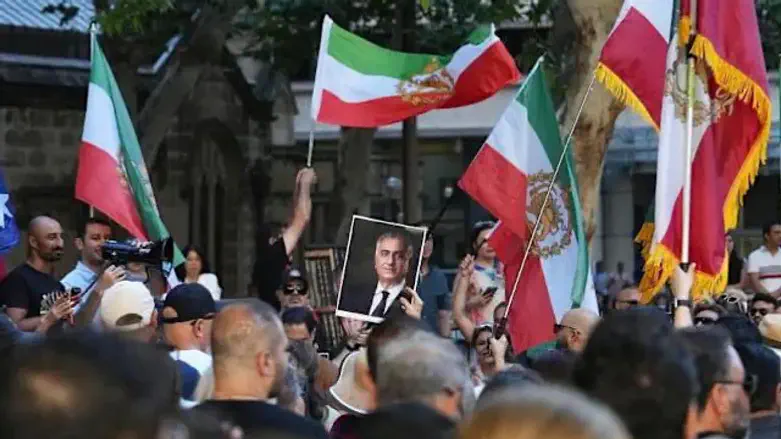
Looking ahead, the planned gathering of Iranians in Washington, D.C. this Sunday represents more than a demonstration. It is a moment of collective visibility, a unified voice signaling that Iranians, both inside and outside the country, are aligned in their desire for change, stability, and a different future.
Such moments of civic presence help shape international understanding and reinforce the legitimacy of seeking transformation.
Inside Iran, the population continues to face overlapping crises: soaring inflation, unemployment, systemic corruption, and social restrictions. These pressures have intensified public frustration.
Yet, amid these challenges, there are clear signs of hope. Large-scale gatherings of the Iranian diaspora across Europe and North America reflect a growing sense of collective purpose. Geographic distance has not weakened the bond with the homeland; it has strengthened a shared national consciousness.
A new generation of Iranians abroad has played a pivotal role in shaping global understanding. Fluent in international discourse and equipped with modern communication tools, they have successfully brought a clearer narrative of Iran to the world stage.
At the core of these efforts lies a key element: the belief in a viable alternative. Many argue that the presence of a recognized and trusted figure can help guide a transition process, reducing the risk of instability and offering continuity in a moment of change.
In this context, Crown Prince Reza Pahlavi has emerged as a unifying figure representing the possibility of a more stable and less disruptive transition, grounded in national unity and a commitment to non-violence.
Ultimately, however, the future of Iran will not be determined by any single individual. It will be shaped by the collective will of its people.
At this pivotal moment, the way Iran is understood and engaged with matters profoundly. Viewing the country solely through the prism of threat risks overlooking a society that is actively pushing toward change. Recognizing the distinction between a nation and its rulers is not just a matter of perspective; it is a strategic necessity.
A stable and free Iran is not just a hope for its citizens, it is a force capable of reshaping regional dynamics in profound and lasting ways. The momentum for change is real and accelerating, and it is being reinforced by international support for the aspirations of the Iranian people. Leaders in the United States and Israel have publicly acknowledged the courage of Iranians seeking greater freedom and have pursued policies aimed at weakening the authoritarian regime and amplifying calls for democratic reform, recognizing that the success of the Iranian people’s movement matters not only for Iran but for broader regional stability.
The path to a free Iran has already begun, and its success will depend on sustained action and collaboration between Iranians and the international community with clarity, consistency, and a shared vision