

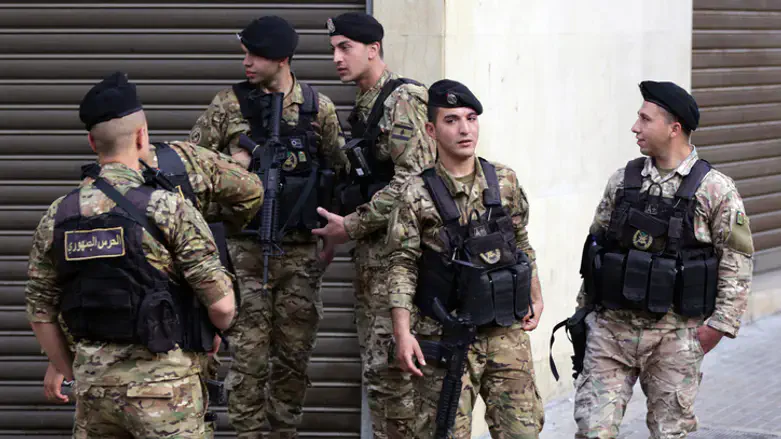
Lebanese authorities recently conducted a comprehensive survey of Iranian nationals across the country, amid heightened tensions and security concerns.
According Lebanese security source cited by Annahar, the review included individuals entering via the airport and through the Syrian border, particularly in the period preceding the departure of former Syrian president Bashar al-Assad to Moscow.
The survey covered members of the Iranian community residing in Beirut, the southern suburbs, the south, and the Bekaa region, and extended to diplomatic personnel at the Iranian embassy, employees across cultural, media, and educational sectors, as well as individuals connected to religious institutions. Even individuals with Iranian origins linked to foreign diplomatic missions were included in the scrutiny.
Tensions within Lebanon’s government and political landscape have intensified following the controversy surrounding Iranian Ambassador Mohammad Reza Sheibani, whose credentials were rejected and who was asked to leave the country.
According to Annahar, officials and political factions outside the orbit of Hezbollah and the Amal Movement supported the government’s move. These figures argue that Iran’s Islamic Revolutionary Guard Corps (IRGC) is a central participant in the ongoing conflict, alleging that its officers operate command centers on Lebanese territory and issue directives related to rocket and drone attacks, as well as engagements with Israeli forces in multiple southern border towns.
The report noted that prior to the escalation into a renewed phase of conflict following the assassination of Ali Khamenei, there had been increasing discussion about the presence of IRGC elements across various regions of Lebanon. This followed intensified Israeli targeting, alongside reports of cooperation from local actors facilitating movement and housing for these individuals.
According to the report, a notable number of embassy staff, including diplomatic and consular personnel, along with individuals working in cultural and educational roles, have left Lebanon with their families. Departures were carried out via Iraq, Turkey, and Russia, with numbers reportedly increasing following Israeli threats.
Only a limited number of diplomatic staff remain to manage the embassy’s affairs. Security sources stated that the review did not identify confirmed Iranian officers engaged in military activity, though they acknowledged the possibility that such individuals could be operating under assumed identities and civilian professions.
The sources added that authorities would act against any Iranian national found to be involved in IRGC-related or unlawful activities, emphasizing that enforcement would apply in accordance with Lebanese law.
On the political level, the matter has been left to the government and relevant judicial and constitutional bodies to address any individuals deemed to be undermining security or threatening internal stability.