

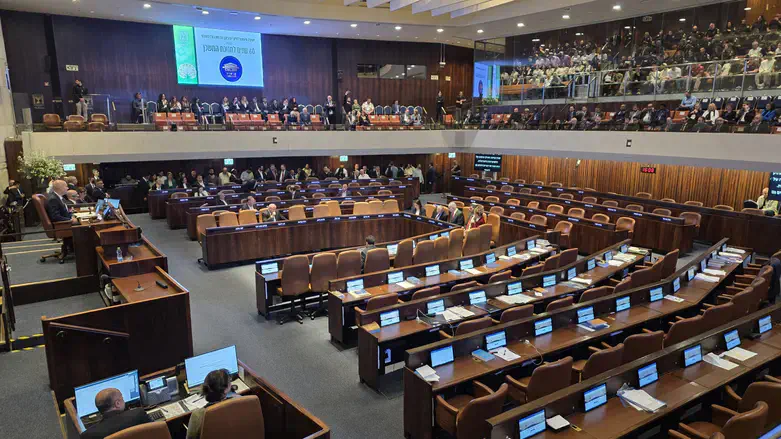
A bill expanding the authority of rabbinical courts passed its second and third readings in the Knesset plenum early Tuesday morning, with 65 votes in favor and 41 against.
The law stipulates that state rabbinical courts may hear civil and financial disputes as arbitrators, but only with the explicit consent of both parties. In doing so, it codifies powers similar to those that rabbinical courts had exercised in practice until 2006, when the Supreme Court ruled that a rabbinical court could not adjudicate civil matters outside its core religious jurisdiction.
Following that ruling, it was determined that even if both parties wished it, a rabbinical court could not be authorized to resolve their dispute through arbitration.
The new bill’s sponsors stress that the rabbinical court will only be empowered to hear a case if both parties agree, and that such authority will be granted only after a dispute has already arisen - not in advance for potential future conflicts.
The chairman of the Knesset Constitution, Law and Justice Committee MK Simcha Rothman welcomed the law’s passage, stating, “This is a simple and straightforward proposal that should have been accepted by everyone, because nothing is more liberal than this - allowing two consenting adults to decide they want their dispute resolved according to Torah law."