
Juda Honickman is Spokesperson for One Israel Fund
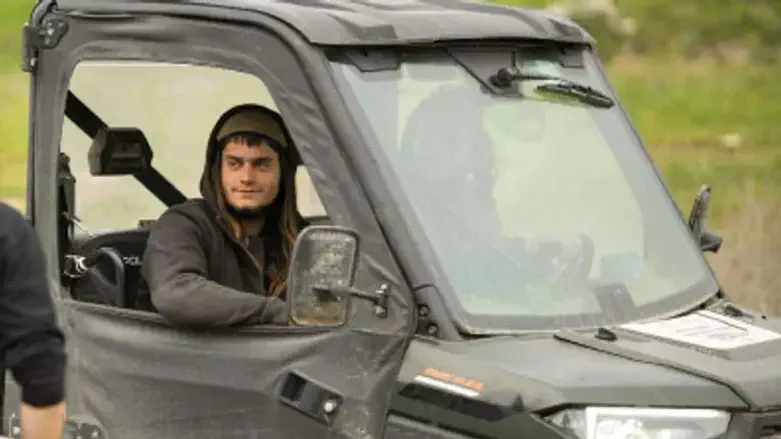
His name was Yehuda Sherman.
He was 18 years old.
On Shabbos afternoon a terrorist drove a vehicle into him in Samaria and killed him.
I want you to know his name. Because in a few days the news cycle will move on, the headlines will change, and Yehuda Sherman becomes a statistic in a conflict the world has decided it is tired of caring about.
But we don't get to do that.
I live in Judea and Samaria (aka "West Bank."). I chose to be here. Not by accident, not by circumstance. I made a decision to raise my family on this land, to plant roots in this soil, to build a life in the place where Jewish history was born and where Jewish history is still being written every single day.
It is the most beautiful place I have ever known.
It is also a place that knows loss.
I have stood at funerals here. I have looked into the eyes of parents whose worlds have been shattered. I have watched communities absorb blow after devastating blow and somehow keep going. Keep building. Keep sending their kids to school in the morning.
That is not stubbornness. That is not politics. That is faith.
What happened on Shabbos was not an isolated incident. It was the latest chapter in a story that has been repeating itself in these hills for decades.
Yehuda Sherman joins a long and devastating list.
-Rina Shnerb, 17 years old, killed in a bomb attack near Dolev in 2019.
-Hallel Yaffa Ariel, 13 years old, stabbed to death in her bedroom in Kiryat Arba in 2016.
-The Fogel family; Udi, Ruth, and their children Yoav, Elad, and three-month-old Hadas, murdered in their home in Itamar in 2011.
And too many others. Fathers, mothers, teenagers, children. Names that should have meant something to the world and were forgotten within a news cycle.
The attacks come in different forms. Stabbings. Shootings. Bombings. Rammings.
The weapon changes but the target is always the same; Jews living in Judea and Samaria.
And each time, the world responds with the same tired choreography. Condemnations that come with a “but". Calls for restraint directed at the people who just buried their dead. Careful, clinical language that flattens the murder of an 18-year-old boy into an "incident" in an "ongoing conflict." And the PA rewards the murderers with a stipend.
Yehuda Sherman was not an incident.
He was a person.
There is a particular kind of loneliness that comes with living here and watching how the outside world talks about us.
We are not "settlers", occupiers or obstacles to peace. Our presence on this land, land that is mentioned by name in the oldest texts in human civilization, is treated as the provocation. Our children's deaths are contextualized before they are mourned.
I have never accepted that framing and I never will.
The communities of Judea and Samaria are not outposts of extremism. They are homes. Synagogues. Schools. Wineries. Medical clinics. Young couples pushing strollers. Kids on bikes. Grandparents sitting on porches watching the sun set over hills that have belonged to this people since before the nations that now lecture us existed.
The people who live here made a choice. A conscious, eyes-open, fully-informed choice to be here.
We know the risks. We stay anyway. Not because we are reckless, but because we believe that Jewish life in the Jewish homeland is not a provocation it is a right. A responsibility. A continuation of something that began long before any of us were born and will continue long after all of us are gone.
The world will move on from Yehuda Sherman.
It always does.
There will be no international emergency session. No candlelight vigils in European capitals. No hashtags that trend for weeks. No one will change their profile picture in his memory. There will be no "Remember His Name" campaign. No murals. No moment of silence at the UN. No celebrities posting black squares.
The machinery of global outrage that mobilizes so swiftly in other circumstances will remain quiet.
It always remains quiet when the victims are Jews, especially Jews in Judea and Samaria.
I am not surprised anymore. But I also refuse to be numb. Because numbness is how we lose.
Numbness is how names stop meaning anything. Numbness is how an 18-year-old boy becomes a data point instead of a human being with a family and a future that was stolen from him on Shabbos afternoon on a road in Samaria.
His name was Yehuda Sherman.
Say it like it matters.
Because it does.
Because he was somebody's son. Somebody's friend. Somebody's neighbor. One of thousands of young people building their lives in these ancient hills, doing nothing more threatening than being Jewish in the land of the Jews.
He was one of ours.
And we will not forget him.
יהי זכרו ברוך.
May his memory be a blessing.