
We are not just believers, we are rememberers.
Ours is not simply a faith, it is a story. A story told and retold across generations, carried through exile and return, through unimaginable darkness and extraordinary renewal. A story that survives not because it is written down, but because it is spoken aloud, at dinner tables, in classrooms, on stages, in films, in podcasts, in museums, and in the quiet, everyday moments between parent and child.
But memory, if it is to mean anything, cannot be passive. It must be carried, it must be protected and above all, it must be passed on.
Because that is how we survive.
Not through conquest, not through numbers, not through proselytising, we do not seek to convert the world to our way of thinking, quite the opposite. We survive because we build strength through continuity. Because each generation inherits not just a story, but the responsibility to carry it forward, stronger than they received it.
That is our model, our inheritance and our obligation.
Each Friday I try to cite those who have made a difference over the past few days, those who have helped move things forward, often quietly, often against the odds.
Every week the names change, but the idea remains the same: to recognise those who step up when it matters.
This week, the thread that connects them is simple.
They are carrying memory forward.
So this week, I want to say greet the following people and institutions.
1. Lucie Kon.
There is something profoundly Jewish about telling a story that might otherwise be forgotten. This week, producer Lucie Kon stood on one of the biggest stages in the world and accepted an Oscar for Best Documentary, but this moment does not stand alone.
Over the past twelve months, she has delivered one of the most extraordinary runs any producer has achieved in recent memory, multiple Emmys, a Columbia Journalism Award, a BAFTA, Sundance recognition and now an Oscar.
Rarely has a producer enjoyed such a year, but more importantly the work itself truly matters.
This is the same brilliant executive who produced We Will Dance Again, the definitive account of the Nova massacre on October 7th. A film that ensured the truth of what happened could not be denied, diluted or rewritten.
She has told the stories of those in our community whose voices might otherwise have been lost in the noise, just as she has told the stories of Russians who refuse to accept the rule of a dictator without resistance.
That is not coincidence, that is intent. She understands something fundamental, that truth, if left undefended, will be overtaken by manipulation and lies.
Storytelling, in that context, is not just creative work, it is an act of preservation and at times, an act of resistance.
Gratitude to Lucie Kon, and to the storytellers who refuse to allow truth to be buried, forgotten or reshaped to fit the moment.
2. Thank you to the survivors who still speak.
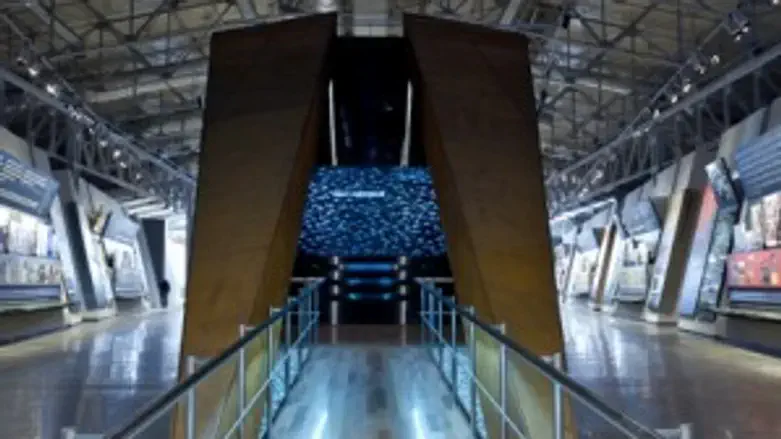
This week marked the 30th anniversary of the National Holocaust Museum. Thirty years of remembrance, of education and of ensuring that the darkest chapter in our history is neither denied nor diminished.
And yet, denial and diminishment are no longer fringe positions.
They are becoming increasingly normalised, on the far right and, increasingly, on parts of the left. Since October 7th in particular, we have seen the Holocaust invoked not as history to be honoured, but as a tool of comparison, distortion and political argument.
The dead of one atrocity measured against another. The facts questioned, the scale debated, the intent relativised.
We are watching, in real time, how memory is eroded and we are already seeing the same patterns applied to October 7th.
How many died?
How did they die?
Did they deserve to die?
These are not abstract questions, but the early stages of historical distortion. Because in 80 years’ time, when most if not all of the survivors of October 7th are gone, we will be having this same conversation again. Unless we act now.
That is why the survivors who still speak matter so much.
Because testimony is the most powerful defence against denial. Because truth, when spoken directly, is harder to distort. Because memory, when carried by those who lived it, cannot easily be rewritten.
We are living in the final chapter in which we will still have that privilege. What we do with it will define us.
Gratitude to the survivors who continue to speak, and to those who understand that remembering is not optional, it is a responsibility we all now share.
3. Lynne Dover, Angela Epstein, Noemie Lopian and the women who shape us.
This week I had the privilege of joining the brilliant hosts of the Jewish Mother Me podcast, for a conversation that was at times amusing, at times emotional, and entirely rooted in something deeply familiar. The Jewish family.
I believe that if you want to understand why our community has survived, you do not start with institutions or politics, you start at home.
We spoke about the women who shaped me. My Grandma Elizabeth, who escaped Nazi Germany in the early 1930s. My Grandma Naomi, born in pre-state Palestine, who met my grandfather during the siege of Jerusalem in 1948. My mother, whose strength of character runs through everything I do and who’s passing nearly a decade ago is a weight I carry every day. And my wife Natasha, who is the only person I ever ask permission of before speaking out and whose answer is always the same: an unequivocal yes.
This is where continuity is built. Not in theory, but in example. Not through instruction alone, but through lived experience. Through values demonstrated, not just taught.
The strength of our community does not come from hierarchy. It comes from partnership, from women and men equally carrying the responsibility of passing something forward that is greater than themselves.
That is how identity survives, it is how resilience is built, it is how a people endures.
Gratitude to Lynne Dover, Angela Epstein and Noemie Lopian, and to the women and families who ensure that our story is not just remembered, but lived and passed on.
4. Sir Gerald Ronson and the CST.
Next week, the Community Security Trust will hold its annual dinner. An opportunity to recognise an organisation that has become indispensable to Jewish life in this country.
This week, I had the honour of spending time with Sir Gerald Ronson and his wife at a small dinner and what stood out was something simple.
He is a doer, not a talker, nor a commentator, but a builder. The ultimate expression of the tough Jew. The one who sees what his community needs and goes out and creates it.
CST did not emerge from theory, it emerged from necessity. From the understanding that if a community is to survive, it must be able to protect itself. That safety is not an abstract concept, but a precondition for everything else: education, celebration, identity, continuity.
What was needed then, is needed even more now. Every guard outside a synagogue, volunteer at a school gate, every act of vigilance. They are not just protecting people. They are protecting the conditions in which a people can continue to live, gather and pass their story on.
Thank you to Sir Gerald Ronson, to CST, and to those who build, protect and defend our community not with words, but with action.
Every week there are people who carry our story forward. Not always with grand gestures, sometimes simply by refusing to let memory fade when it would be easier to move on.
This week I recognised just a few of those people. A filmmaker who ensured truth reached a global stage. Survivors who continue to speak in the face of distortion and denial. Families who pass identity and strength from one generation to the next. And those who build and protect the infrastructure that allows our community to live openly and without fear.
Different arenas, the same responsibility.
The responsibility to remember, the responsibility to teach, the responsibility to ensure the story continues.
So if someone made a difference this week, by telling a story that matters, by preserving truth, by strengthening the next generation or by protecting the space in which our community can live and gather, add their name.
Because memory does not sustain itself, but survives because people choose to carry it. When we recognise those who do, when we celebrate them and shine a light on their work, we make it easier for others to take their place in that chain.
If you’ve seen someone make a difference this week, in your community, in your workplace or simply by refusing to let our story be forgotten, nominate them. Because there are far more people worthy of a Shabbat Shalom than can fit into a single column.
Shabbat Shalom, may we never stop carrying our story forward, and defending it when we must.
Leo Pearlman is a London based producer and a loud and proud Zionist. His most recent film about the Oct 7 Nova Music Festival massacre, ‘We Will Dance Again’ has won the 2025 Emmy of the 46th Annual News & Documentary Awards for most ‘Outstanding Current Affairs Documentary’.