
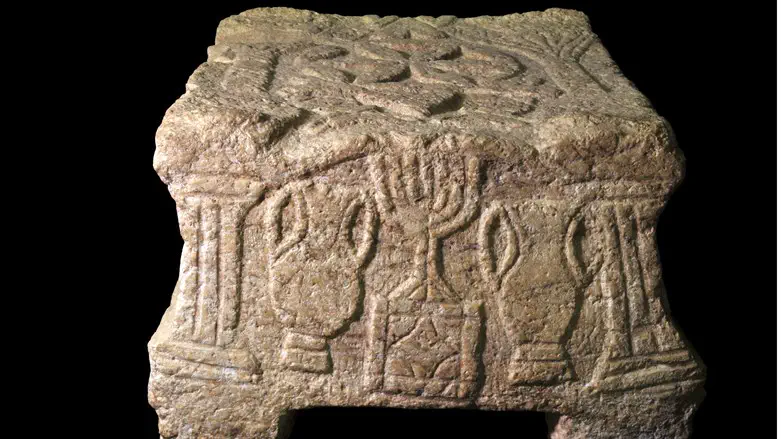
Our Parasha - Parashat Vayikra - teaches the laws of the Korbanot: the offerings on the altar.
We read :(1:1)’Hashem spoke to Moshe, from the Tent of Meeting, saying: Speak to Bnei Israel and say to them: אדם כי יקריב מכם: When a man among you brings an offering to Hashem, from animals - from the cattle or from the flock shall you bring your offering.’
Meshech Hochmah introduces his commentary on Sefer Vayikra, saying:’The Rishonim ‘ our early prime commentators - ‘disagreed as to the reason for the Korbanot - Rambam posited that it was to distance the hearts of men from idolatry.
‘Ramban - and those who went in his way - expounded that it was to bring close all the forces in the universe, the service of the Kohanim operating to do so, in the upper realms, as is known.
‘Perhaps we can decide ‘ - as between these two views: the negative view of Rambam AND the positive view of Ramban - ‘that the korbanot offered on the במה: the stages outside the Temple, were only to remove thoughts of idolatry from the hearts of Bnei Israel - therefore they could only be offered if לשם שמים:: for the Sake of Heaven.
‘Not so the korbanot in the Bet Mikdash - assuredly they were to unite worlds.
‘Thus, when the Bet Mikdash was standing, one who sought to distance himself from by bringing an offering on a stage, was declaring himself to be a sinner, a rasha - how could he do so, when the Temple was standing, and he was able to bring his offering there - clearly any offering there did not bring a sweet smell to Hashem, and He had no wish for such offerings, whose only purpose was to distance the person from idolatry.
‘The korbanot - then - only were sweet smelling to Hashem, when they were to unite worlds.’
Rav Yaakov Neiman - in his sefer ‘Darchei Mussar’ - brings the exposition of the Ramban, and adds, that the first thing that should be on the mind of the transgressor, when he brings his korban, is one of humility and submissiveness, as likely haughtiness is what enabled his yetser ha’ra to transgress.
This is the real message of the approaching Pesach - uproot any trace of chametz, which symbolizes pride, and, instead, be like the matzah, which is the very opposite of- being simply plain, humble flour, which does not rise.
Rav Avigdor Nebenzahl also brings the exposition of the Ramban, adding:’Rav Hirsch embellishes the mussar that the transgressor, when bringing his korban, has to place his hands and weight on the korban, signifying his willingness - and his understanding - that what is done to the korban, should have been done to him- and his willingness to offer his very being to the Creator.
‘This applies equally today, with a variation - few people think that Hashem ‘eats’ their offering, but -sadly - some still think that Hashem has a need for their service -or that He has a need for their meticulous performance of mitzvot.
‘The foundation of our avodat Hashem, has to be the clear understanding that there is nothing that we give - or can give - to Hashem - and that the only ones who benefits, are ourselves.’
The Yismach Moshe raises a beautiful:’Man brings a korban, to atone for his transgression - what has the animal done, that it should suffer its fate?
‘Further, why is no korban brought for intentional transgressions - only for שגגות: unintentional ones?
‘Many drashot have been proffered as to these matters - especially as to the rationale underlying the offering of korbanot - prime among them, the subjugation of the lessser - the animal - to the ‘greater’ - man, so that he should have in mind before him, that because he transgressed, the innocent animal is slaughtered and dismembered - and this should fill him with shame, in his conduct, which our Sages teach, is the ultimate repentance, and protection against relapsing.
‘Herein also lies the answer as to why korbanot are only brought for inadvertent transgressions - and not for intentional ones - the intentional transgressor cannot be said to be ‘greater’ than the animal, to merit the animal being offered in his place - and, in that case, the original question is in place: why should the innocent animal be killed, in place of the intentional transgressor?’
The Netivot Shalom notes that there is a unique requirement in korbanot ‘that they mist be offered לרצונו: willingly - which is not found in other mitzvot; further, the appellation אדם is used - not the usual איש - as we read: אדם מכם כי יקריב - and the passuk starts in the singular, but concludes in the plural: קרבנכם: your offerings.
‘Ramban answers: man’s actions consist of thought ,speech and action - therefore Hashem commanded, that when man transgresses, he has to bring the offering by his hands - against his actions - and make vidui by his mouth - against his words -and burn parts of his offering on the altar, against the sinful thoughts which he harbored.
‘He is thereby to be mindful that - but for Hashem’s mercy - all should befall him.
‘This is at the heart of the korban - that he should offer himself completely to Hashem - if this is ls not לרצונו: his will, the essence of the offering is deficient.
‘This is the objective of the Torah - to offer our entirety to Hashem, as we commit in our Kriyat Shema - if this is present, it is an offering ‘to Hashem’ - in its absence, it is only ‘your offering’ , not an ‘offering to Hashem’.’
Rav Shimshon Raphael Hirsch, notes: ‘The Torah throughout the passage of the kobanot, uses the appellation of mercy - not of strict judgement - because that is not the underlying purpose - Hashem is not seeking satisfaction, by the korban - as the scoffers surmise.
‘Hashem is not seeking revenge or the blood of the slaughtered animal - as a substitute for the transgressor who deserves to be killed .
‘Instead, the appellation of mercy is used - the chessed being that the transgressor is granted new life - life, not death, lies at the heart of the matter - a new, higher level of life.
‘The part that has died, is gone and departed - because it was distant from Hashem - the new closeness to Hashem, brings the promise of eternal life, to the penitent.’
Rav Chaim Friedlander adds: ‘Now prayers are in place of the korbanot - which cannot be offered as the Bet Mikdash does not presently exist - and as our service was when we were able to bring korbanot, so too our avodah in our prayers, is to cleave closer to Hashem, and to nullify all our wishes to the will of Hashem - not to satisfy our private wishes, but to receive His help, to do His will.
‘Rashi expounds that prayer is ‘to pour our souls before Hashem’.
‘Here we ask: Are our prayers not usually for what we perceive to be our own needs - health, sustenance and our material needs? To be ‘pouring our soul’, we should pray for what Hashem believes is good for me - not what I believe is good for me.
‘We need to always have in mind the exposition of Ramban, as to the rationale of the korbanot - that what is done to the offering should - but for the chessed of Hashem - have been done to me, for my transgression, and the gross insult i have done thereby, to the King of Kings - for which we merited to lose our very life.’
The Be’er Mayim Chaim notes that some of the korbanot are brought ‘to draw from Above, heavenly blessings - like those offered on Shabatot, Roshei Chodesh and the like - whilst the other class of korbanot is brought to seek atonement for transgressions.
‘Clearly Hashem derives no nachat ruach from the second type of- much better in His eyes, that there had been no transgression, and need for atonement by the offering.
‘This having been said, whenever one of the people transgresses, and truly regrets and repents, and - when we merited to have a Bet Mikdash - brought a korban, Hashem accepts him with love, calling him again:’My beloved’, as our Sages say:’In the place where Ba’alei Teshuva stand, even the completely righteous do not stand.’
‘It clearly cannot be said that Hashem wanted these korbanot, when He gave the commandments of the korbanot - as He commanded us not to transgress against any of His commandments.
‘Against these two categories, the Torah here used the two ‘expressions: דבר אל בני ישראל ואמרת - דבר: harsh language,and ואמרת: soft, favorable language, seemingly unnecessarily repetitive - the former alluding to the undesired korbanot offered after transgression, and the latter, to the offerings not brought to expiate transgressions.’
A parting gem from the Ohr Hachaim Hakadosh:’The Torah In choosing to call the offeror of the korban by the honored title of אדם - and not the more usual איש - saying: אדם כי יקריב - who should he מקריב : literally: bring nearer? מכם: from the ‘lesser ones’ who are distant from Hashem - closer to their source - this being truly a קרבן לה'
‘One who does this, will not be required to bring any offering - voluntary or compulsory - as our Sages say: ‘One who benefits the many, no sin will come to him.’
‘After alluding to this kind of offering, the Torah adds:’From the cattle..your offering’ - as this can be found in everyone - unlike the few who give merit to others.’
לרפואת כל פצועי צה"ל ונפגעי טרור ביניהם נועם עליזה בת זהבה רבקה ונחום אלימלך רפאל בן זהבה רבקה, בתוך שאר חולי עמנו.