


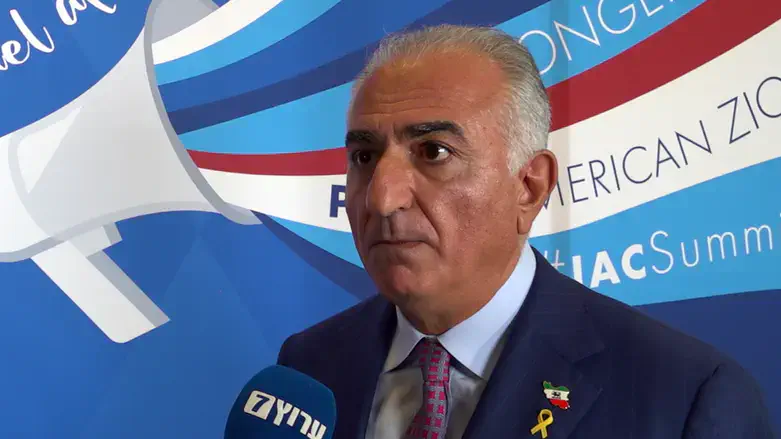
Prince Reza Pahlavi, the son of the last Iranian Shah, announced today (Monday) the formation of the Committee for Drafting the Framework for Transitional Justice in Iran (the “Committee"). This Committee will lay the groundwork for a Special Court to prosecute the regime’s perpetrators of crimes against humanity, as well as a Truth Commission.
Shirin Ebadi, Nobel Peace Prize laureate, has been appointed by Pahlavi as Chair of the Committee.
The Transitional Justice program is a critical component of the Prince’s plan for a lawful transition as set out in the Iran Prosperity Project (the “Plan"). Developed by experts, this Plan sets out a legitimate political, legal, and economic transition for Iran.
The members of this Committee are a cross-generational group of Iranian experts, academics, and attorneys:
Dr. Shirin Ebadi
Dr. Leyla Bahmany
Dr. Afshin Elian
Mr. Iraj Mesdaghi
Pahalvi said: “Over the past five decades victims of injustice, torture, and repression under the Islamic Republic have received no justice. Mothers and fathers, daughters and sons, sisters and brothers who are grieving and seeking justice, whose numbers and suffering this tyrannical regime have increased every year, every month, and every day."
Additionally, a number of prominent international jurists and experts will assist this Committee as advisors.
Transitional Justice Committee member bios:
Shirin Ebadi: Iranian lawyer, former judge, prominent human rights activist and Nobel Laureate. She became one of Iran’s first female judges in the 1970s and served as president of Tehran’s city court until the 1979 Islamic Revolution, after which women were barred from serving as judges. She then practiced law, defending dissidents, women, and children. In 2003, she became the first Iranian and the first Muslim woman to receive the Nobel Peace Prize for her work promoting democracy and human rights, particularly the rights of women and children in Iran. She now lives in exile and continues her advocacy.
Iraj Mesdaghi: Iranian author, researcher, and human rights activist, as well as a former political prisoner. Arrested in 1981 for his political activities, he spent about 10 years in Iranian prisons, including during the 1988 mass executions of political prisoners, where he witnessed and later documented widespread torture and atrocities. After his release in the early 1990s, he fled to Sweden, where he has since lived in exile. He has authored multiple books and testified in international cases, including Sweden’s landmark trial related to the 1988 massacre.
Leyla Bahmany: Senior Legal Adviser to the Iran Prosperity Project. She is an Iranian legal expert and international law scholar, who has studied law in Iran, the United States, and Canada. She has contributed to discussions and publications on legal and political structures in periods of emergency or transition from authoritarian rule, including work on Iran’s post-regime planning (such as sections in booklets and frameworks related to transitional governance and justice).
Afshin Elian: Iranian-born Dutch professor of law and a philosopher. He studied law and earned advanced degrees in the Netherlands, becoming a professor of jurisprudence at Leiden University. There, he heads the Department of Jurisprudence and holds leadership roles at the law school’s interdisciplinary institute. His work focuses on international criminal law, social cohesion, multiculturalism, and citizenship