

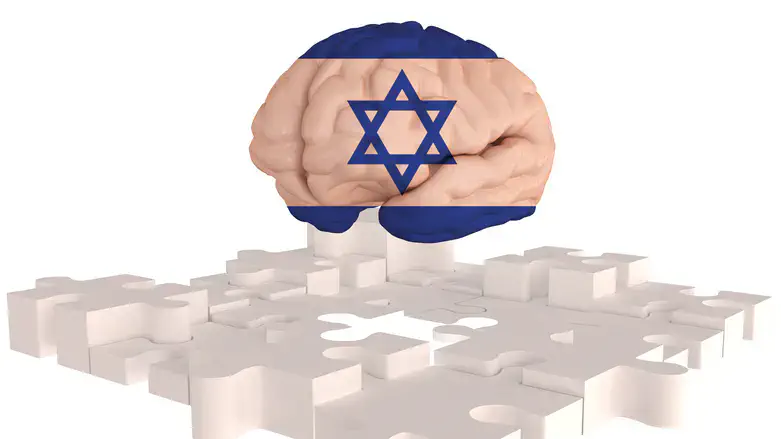
Israel has long been recognised as the “Startup Nation," a country whose innovation ecosystem consistently produces high-impact technology companies disproportionate to its size. In recent years, artificial intelligence (AI) has become one of the central pillars of that ecosystem. From defence systems and cybersecurity to healthcare diagnostics and financial technology, AI development in Israel is not a peripheral trend-it is a strategic priority embedded across academia, industry and government.
This article examines the evolution of AI in Israel, the structural factors behind its growth, leading sectors of application, regulatory considerations and the geopolitical implications of its expanding influence.
Foundations of Israel’s AI Ecosystem
Academic Excellence and Research Infrastructure
Israel’s AI strength begins in its universities. Institutions such as the Technion - Israel Institute of Technology, Tel Aviv University, the Hebrew University of Jerusalem and the Weizmann Institute of Science are globally respected for research in computer science, mathematics and engineering.
Israel consistently ranks highly in AI research output relative to population size. Academic labs have contributed to advances in:
● Machine learning theory
● Computer vision
● Natural language processing
● Reinforcement learning
● Robotics
Professor Shai Shalev-Shwartz, a leading Israeli AI researcher, has noted that:
“Israel’s competitive advantage lies in deep algorithmic expertise combined with strong engineering culture."
The close relationship between academia and industry accelerates the commercialisation of research breakthroughs.
Military and Intelligence Influence
Technology Transfer from Defence to Civilian Markets
A defining feature of Israel’s innovation landscape is the role of elite military technology units, particularly Unit 8200, the Israel Defense Forces’ intelligence corps.
Many Israeli AI entrepreneurs are alumni of military technology divisions, where they gain experience in:
● Cyber operations
● Data analysis
● Signal intelligence
● Autonomous systems
This background fosters advanced problem-solving skills and familiarity with large-scale data environments.
Historically, technologies initially developed for national security applications, such as cybersecurity tools and surveillance algorithms-have transitioned into commercial markets.
Government Strategy and Policy
National AI Programmes
Recognising AI’s economic and strategic importance, Israel launched a national AI programme designed to:
● Increase public R&D investment
● Strengthen computing infrastructure
● Support data-sharing initiatives
● Expand AI education and talent pipelines
● Foster collaboration between academia and industry
Government-backed initiatives have included funding for AI research centres and incentives for startup development.
Policymakers view AI not only as an economic driver but also as critical to national competitiveness.
Investment and Venture Capital Activity
Israel consistently attracts significant venture capital investment relative to GDP.
AI-focused startups have raised billions of dollars across sectors including:
● Cybersecurity
● FinTech
● HealthTech
● AgriTech
● Autonomous mobility
Tel Aviv remains one of the world’s leading startup hubs. International technology giants-including Google, Microsoft, NVIDIA and Intel-have established R&D centres in Israel, often acquiring local AI startups to integrate into global operations.
Venture capitalist Eyal Gura explains:
“Israeli AI startups often specialise in core technologies rather than consumer interfaces. That technical depth makes them attractive acquisition targets."
Key Sectors of AI Development
Cybersecurity
Israel is widely recognised as a global cybersecurity leader. AI plays a central role in:
● Threat detection
● Behavioural anomaly identification
● Automated incident response
● Fraud prevention
Machine learning models analyse vast volumes of network traffic to identify suspicious patterns in real time.
Given Israel’s geopolitical environment, cybersecurity innovation is both commercially and strategically motivated.
Healthcare and Life Sciences
AI-driven healthcare innovation has accelerated significantly.
Applications include:
● Early disease detection
● Radiology image analysis
● Predictive diagnostics
● Personalised treatment planning
Israeli startups have developed AI systems capable of identifying cancers in medical imaging with high accuracy rates.
Hospitals increasingly integrate AI decision-support tools to enhance clinical workflows.
Autonomous Systems and Robotics
Israel has invested heavily in autonomous mobility and robotics.
AI-powered systems are applied in:
● Unmanned aerial vehicles (UAVs)
● Autonomous agricultural equipment
● Warehouse automation
● Defence robotics
The country’s expertise in sensor fusion and real-time data processing underpins these developments.
Financial Technology (FinTech)
AI applications in Israeli FinTech include:
● Credit risk modelling
● Fraud detection
● Algorithmic trading
● Customer service automation
Machine learning improves accuracy and reduces operational costs in financial services.
Climate and AgriTech
Water scarcity and agricultural efficiency are longstanding priorities in Israel.
AI supports:
● Precision irrigation
● Crop yield prediction
● Soil quality monitoring
● Climate risk modelling
These technologies position Israel as a contributor to global food security innovation.
AI Infrastructure and Computing Power
Advanced AI research requires substantial computational resources.
Israel has invested in high-performance computing clusters to support deep learning research. Public-private collaboration plays a key role in expanding national computing capacity.
Cloud adoption among Israeli startups is widespread, enabling scalable AI model training and deployment.
Ethical and Regulatory Considerations
Balancing Innovation and Oversight
As AI systems become more powerful, ethical concerns intensify.
Key issues include:
● Data privacy
● Algorithmic bias
● Surveillance concerns
● Dual-use technology
● Autonomous weapons governance
Israel participates in international discussions around AI governance, though its security context introduces unique considerations.
Legal scholars debate how to balance innovation incentives with civil liberties.
Global Collaboration and Strategic Positioning
Israel maintains close AI partnerships with:
● The United States
● European Union member states
● India
● Asian technology markets
Collaborative research agreements and cross-border venture investments strengthen Israel’s global integration.
AI is increasingly viewed as a component of diplomatic and economic alliances.
Talent Development and Education
AI education is expanding across Israeli universities and technical institutes.
Initiatives include:
● AI-focused undergraduate degrees
● Specialised graduate programmes
● Coding bootcamps
● Military-to-industry transition programmes
However, competition for AI talent is intense. Retaining skilled researchers amid global recruitment pressures remains a challenge.
AI in Creative and Media Applications
While much attention focuses on defence and enterprise AI, Israel also contributes to creative AI tools.
Startups have developed algorithms for:
● Image enhancement
● Video processing
● Content moderation
● Digital restoration technologies
For example, AI systems capable of advanced Photo Restoration demonstrate how machine learning can recover damaged visual materials with remarkable precision. Such applications illustrate AI’s expanding reach beyond industrial and security contexts into cultural preservation and digital creativity.
These developments broaden AI’s societal footprint.
Challenges Facing Israeli AI
Despite strong growth, challenges remain:
1. Geopolitical Risk
Regional instability may affect investment flows and partnerships.
2. Talent Shortage
Global demand for AI specialists intensifies competition.
3. Ethical Scrutiny
Dual-use technologies attract international debate.
4. Market Concentration
Heavy reliance on acquisitions by foreign tech giants may limit long-term domestic scaling.
Sustaining AI leadership requires strategic planning beyond short-term startup exits.
The Broader Economic Impact
AI contributes significantly to Israel’s GDP growth and export performance.
High-tech industries account for a substantial portion of national exports, and AI increasingly underpins that segment.
AI adoption also enhances productivity in traditional sectors such as manufacturing, agriculture and healthcare.
The multiplier effect of AI extends beyond startups into the broader economy.
Future Outlook
Israel’s AI trajectory suggests continued expansion, particularly in:
● Generative AI
● Edge computing
● AI-driven defence systems
● Climate modelling
● Biotechnology integration
The intersection of AI with quantum computing and advanced semiconductors may shape the next phase of innovation.
Strategically, AI strengthens Israel’s position as a technology-driven economy in an increasingly competitive global environment.
Conclusion
AI development in Israel reflects a convergence of academic excellence, military-derived technical expertise, strong venture capital networks and proactive government policy.
The country’s compact size facilitates close collaboration between research institutions, startups and global technology firms. This agility accelerates innovation cycles and commercial deployment.
While challenges persist-particularly regarding ethics, regulation and talent competition- Israel’s AI ecosystem remains robust and influential.
Artificial intelligence is not simply another vertical within the Israeli tech sector. It is a cross-cutting force reshaping industries, enhancing national competitiveness and reinforcing the country’s reputation as a global innovation hub.
As AI continues to evolve, Israel’s ability to integrate research depth with entrepreneurial execution will determine whether it maintains its leadership in this transformative field.