

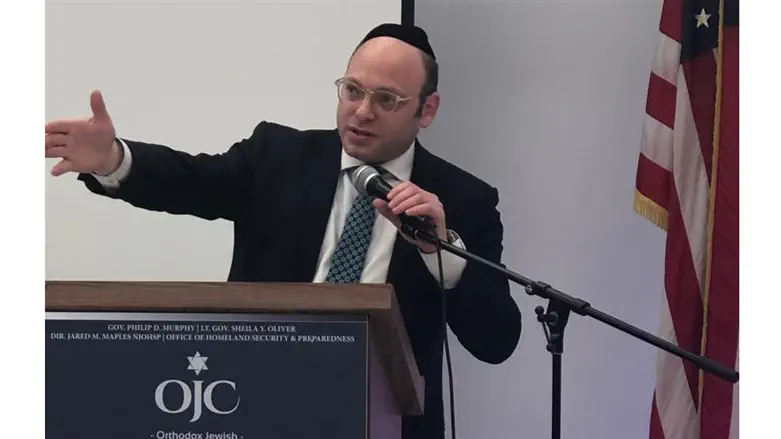
Duvi Honig is founder & CEO of the Orthodox Jewish Chamber of Commerce.
Since October 7th, 2023, I have watched something deeply troubling unfold in our public discourse.
Suddenly, everyone seems to believe they are qualified to lecture governments and presidents about war, diplomacy, and national security. Podcasters, actors, television personalities, influencers, and commentators speak with absolute certainty about how global conflicts should be handled-as if having a large audience somehow makes someone an expert in nuclear threats or military strategy.
It doesn’t.
Having a microphone is not the same as having responsibility. Having millions of followers is not the same as having access to intelligence briefings. And hosting a podcast certainly does not make someone the commander-in-chief of the United States.
This is not about silencing anyone’s voice. Free speech is one of the greatest strengths of America. But there is also something called humility-recognizing the limits of what we know and the limits of our expertise.
Since October 7th, global tensions have reached levels we have not seen in years. Israel is fighting for its survival. Iran’s influence and aggression across the region have become impossible to ignore. Terror networks continue to destabilize entire regions.
And now we are hearing serious warnings from U.S. officials about Iran’s nuclear capabilities.
U.S. envoy Steve Witkoff recently warned that Iran has accumulated enough enriched uranium to potentially produce eleven nuclear bombs within days.
Iran has also reportedly issued direct threats toward the United States during discussions with American envoy Steve Witkoff, underscoring the seriousness of the moment and the hostile posture that continues to shape the geopolitical landscape.
Eleven nuclear bombs.
Think about that for a moment.
This is not a theoretical debate. This is not a topic for entertainment commentary or a podcast episode. This is a matter of global security that could affect millions of lives.
Yet somehow we have created a culture where people who spend their careers in entertainment feel comfortable declaring how presidents should handle nuclear threats and military conflicts.
Joe Rogan recently questioned the seriousness of confronting Iran and described the situation as “insane." Others with large media platforms have done the same.
But here is the reality: national security decisions are not made from behind a microphone.
They are made by leaders who carry the weight of protecting an entire nation.
Those decisions are informed by intelligence briefings, military commanders, diplomatic assessments, and strategic considerations that the public simply does not see.
The President of the United States does not operate with the luxury of speculation. He operates with the burden of consequence.
And importantly, the President was elected by the American people to do exactly this job. Americans placed their trust in his foresight, judgment, and leadership because they believe he can see the bigger picture and protect the country in moments of global danger. That is the foundation of democracy: the people choose a leader they trust to make the hardest decisions on behalf of the nation.
Every profession has its lane, and the strength of any serious society depends on respecting expertise.
Imagine the world’s greatest heart surgeon publicly condemning a structural engineer and dictating how to build a bridge. That surgeon may save lives every day, but that does not make him qualified to calculate structural load or design infrastructure.
Likewise, someone who is brilliant in finance is not automatically an expert plumber. A talented actor does not suddenly become a nuclear strategist. And a successful podcaster does not become the President of the United States.
Expertise matters.
Responsibility matters.
Perspective matters.
Presidents must see the bigger picture-one that includes intelligence reports, global alliances, military readiness, and long-term consequences.
They are not making decisions based on what sounds good in a podcast conversation. They are making decisions based on protecting the safety of the American people and preventing threats that could endanger future generations.
History teaches us something important: the most dangerous moments often occur when serious threats are ignored until it is too late.
When hostile regimes approach nuclear capability, waiting and hoping for calm is not a strategy. Leadership sometimes requires acting before a crisis becomes irreversible.
That responsibility belongs to elected leaders-not to commentators who speak without the burden of consequence.
Again, this is not about attacking anyone personally. Joe Rogan has built a hugely successful platform, and millions enjoy listening to him. The same can be said for many media personalities across the political spectrum.
But success in broadcasting does not equal expertise in national defense.
And at a time when nuclear threats are real and global stability is fragile, we cannot afford to treat serious geopolitical decisions like topics for entertainment.
The American people elected their president to protect the nation and safeguard the future of their children. That responsibility requires difficult decisions, long-term thinking, and access to information the public does not always see.
Sometimes leadership requires actions that are unpopular in the moment but necessary in the long run.
That is the burden of the presidency.
And that is why national security should never become a podcast debate.
At a moment when Iran may be only days away from producing multiple nuclear weapons, perhaps the most responsible thing anyone with a large platform can do is recognize the limits of their expertise.
Podcasters should podcast.
Actors should act.
Commentators should comment.
But when it comes to the safety of nations and the threat of nuclear weapons, the decisions must remain in the hands of those entrusted with protecting the country.
Because when the stakes involve the safety of millions of lives, national security is far too serious to become just another episode of commentary.