
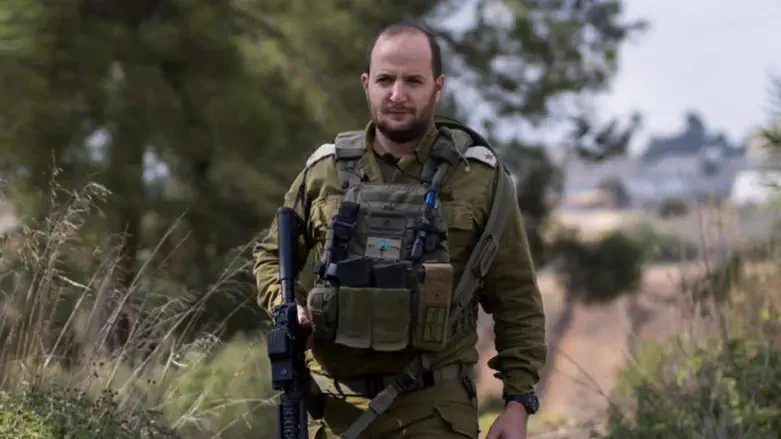
Lt. Col. (res.) Yossi Levi is widely known for his civilian role as CEO of the Netzah Yehuda association, which works to integrate haredi soldiers into the IDF through support for the Netzah Yehuda Battalion. At the same time, he serves as the commander of Battalion 21, currently operating in Judea and Samaria during the ongoing war.
“Until the week of October 7, promoting haredi enlistment was the main focus of my civilian life alongside my military role," Levi said. “Since then, everything has changed."
Following the outbreak of the war, Levi joined intense combat operations beyond the Judea and Samaria sector. He fought alongside the 450th Battalion in heavy fighting in Khan Younis and Rafah in Gaza. That unit later took part in the operation that eliminated Hamas leader Yahya Sinwar. After completing those combat rotations, Levi returned to command Battalion 21 in the Binyamin and Etzion areas.
Today, the battalion is responsible for security in the Beitar Illit sector and nearby villages, including sensitive seam-line areas. According to Levi, the unit maintains constant offensive activity designed to prevent terrorism from gaining momentum.
“We are a very offensive battalion," he explained. “We operate in the villages every night with significant operations, and that’s what brings calm to the sector. We don’t buy quiet. Quiet doesn’t fool us. There is calm because we are constantly working to maintain it."
Levi says the strategy adopted by the Etzion Brigade during the war has made it one of the most aggressive formations in the Judea and Samaria Division.
“There is a brigade commander here who constantly thinks about how to generate more offensive activity and how to truly create calm," he said. “That’s what brings stability. The quiet can be very deceptive. Judea and Samaria didn’t suddenly become peaceful - it only appears that way. Our role as the army is to make sure that calm continues."
Much of that work takes place at night and largely out of public view. According to Levi, these operations are essential to preventing another front from erupting in the center of the country.
“There isn’t a house we don’t map or intelligence detail we don’t identify," he said. “Every night we rethink how to reach more places and prevent attacks before they happen. Our goal is that residents of Judea and Samaria and all citizens of Israel can feel safe in their homes. It’s a challenge, but we constantly think creatively about how to reach anyone planning to cause harm long before they can carry it out."
As the war continues, one of the major concerns facing the IDF is the strain on the reserve system. Still, Levi says he remains repeatedly impressed by the dedication of his soldiers.
“Reserve fatigue is no secret," he said. “But what surprises me each time is the turnout. Despite the fatigue and the personal and financial pressures, the response rates remain very high."
Levi believes the real strength of the IDF in this war comes from the unique mindset that reservists bring from civilian life.
“The creativity among reservists is something you won’t find anywhere else," he said. “There is the army, and there is the regular army that sustains it - but the army itself is the reservists. You can’t ignore that reality during a war. As reservists, we bring a civilian mindset that allows us to think more creatively and less rigidly. That flexibility helps us reach solutions and places that would otherwise be impossible."