
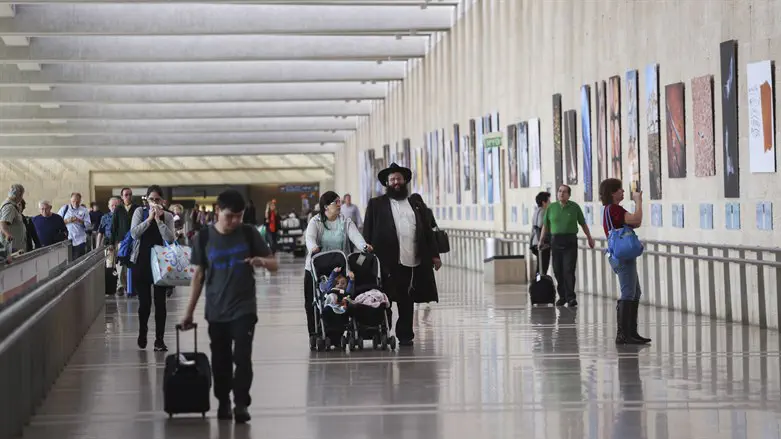
I have a question for you; what other country has citizens who fly towards war?
Not evacuating. Not escaping. But coming home.
Back to a country where the sirens don’t stop. Where bomb shelters are part of the daily routine. Where suicide drones and rockets are background noise that nobody asked for and nobody ignores.
And yet, when the attack came, thousands of Israelis fought to get on flights back.
Civilians who needed to be with their families. Reservists cutting trips short to report for duty. Students, parents, workers - people who simply knew: when your country is under attack, that’s where you belong.
I’ve thought a lot about why. And I think the honest answer is this: being Israeli isn’t just a nationality. It’s a posture. A way of standing in the world.
There is a concept in Jewish tradition, going back further than the state, further than modern Zionism, of not abandoning your people. The Hebrew word is אחריות, achrayut. Responsibility. But it’s deeper than that word suggests in English. It’s the sense that what happens to one of us happens to all of us. That there is no such thing as a private exit when the house is burning.
The people who ran toward the danger didn’t do it because they were fearless. They did it because the alternative, sitting safe somewhere abroad while their families huddled in shelters, was psychologically impossible.
Not heroic. Just impossible.
The fear of being away was greater than the fear of coming back.
That is not something you can manufacture. It is not a government campaign or a national slogan. It is something that lives in the chest of a people who have understood, across generations, that they have only each other.
And this is where El Al enters the story.
You don’t have to love El Al. A lot of people don’t. The pricing during a crisis? Not a great look. Some of it was ugly. Those are fair criticisms and I’m not here to wave them away.
But here’s what’s also true: they flew. When others didn’t. When it was dangerous, complicated, and probably not their most profitable move - they flew.
Rebooking stranded passengers. Running recovery flights. Keeping the channel open between the Jewish people and the land they were trying to get back to.
You can hold both things. You can believe they have real work to do on how they treat customers in a crisis, and also recognize that when our people needed a way home, they didn’t close the door.
You want to know what a company, or a person, or a community, is really made of? Watch what they do when things get hard. When there’s no easy call. When every other carrier has already walked away.
That’s not a business decision. That’s character.
There is something the outside world consistently misreads about Israelis. It sees the toughness - the army, the directness, the bluntness - and concludes that we have been hardened into something cold. Militarized. Desensitized.
What it misses is the tenderness underneath. The reason Israelis run toward danger isn’t because they don’t feel fear. It’s because they feel love more. Love for family. Love for land. Love for a people who have survived too much to be abandoned now.
War or no war.
Home is home.