
In the heat of the military campaign to dismantle the Ayatollah regime and uproot its proxies across Lebanon and the Middle East, it is easy to succumb to the reductive trope that "all Shiites are extremists."
To be sure, the region is home to millions of radicalized Shiites and "Shiite suicide bombers." Yet, we must not forget that millions of Sunni extremists have also emerged, producing "Sunni suicide bombers" who - despite orchestrating atrocities as devastating as 9/11 and the barbaric reign of ISIS - never had a similar label pinned to their entire sect.
True political sobriety regarding the "day after" requires us to acknowledge a fundamental reality: A future Iran will not emerge as a Jewish or Sunni power; it will remain inherently Shiite. The strategic challenge, therefore, is not the eradication of Shiism, but the cultivation of a moderate, pragmatic alternative. We must remember that under different leadership, as seen during the era of Mohammad Reza Shah Pahlavi before the 1979 Islamic Revolution, Iran and its affiliates have the potential to shift from being engines of instability to becoming vital partners in a new regional order.
The Shiite schools of thought
The "moderate" Shiite voice is not defined by a single border or capital, but rather as a diverse intellectual current woven throughout global Shiite communities. These voices stand in fierce, principled opposition to the weaponization of faith for violent political ends and the Iranian-imposed doctrine of Wilayat al-Faqih - the absolute "Guardianship of the Islamic Jurist."
From the historic seminaries of Najaf in Iraq, Grand Ayatollah Ali al-Sistani exemplifies this "quietist" yet “reformist path." While he envisions a state guided by Islamic values, he remains a steadfast opponent of direct clerical rule, championing a government that serves its people rather than one commanded by its priests. Similarly, in Lebanon, a growing internal opposition of intellectuals and storied religious families refuses to let their heritage be eclipsed by Hezbollah’s militancy or Tehran’s regional ambitions. Across the Gulf, in nations like Bahrain and Kuwait, Shiite communities continue to integrate into the fabric of civil society, explicitly rejecting radical ideologies in favor of national stability.
For these moderates, the role of the clergy is to provide spiritual light, not to hold the reins of state power. Their creed is simple yet profound: "My country first." They prioritize loyalty to their sovereign nation-states over any transnational, Tehran-led religious axis.
This moderation extends to the very heart of religious practice. Many now reject extreme rituals - such as the self-flagellation seen during Ashura - viewing them as a distortion of faith that alienates the global community and obscures the true essence of Islam. Instead, they advocate for a faith of proximity: one that seeks genuine interfaith dialogue, pursues reconciliation with Sunni brothers and sisters, and fosters a constructive engagement with the West.
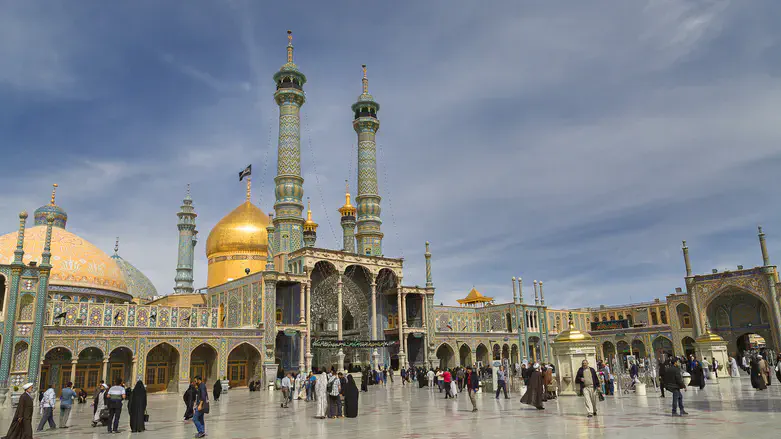
The divide between the two primary schools of Shiite Islam - one centered in Qom, Iran, and the other in Najaf, Iraq (the burial place of Ali ibn Abi Talib, the founder of Shiism and its first Imam) - is far more than geographical. It is a profound ideological and legal rift that touches upon the very role of the clergy in the modern world. At its heart lies the controversial doctrine of "Wilayat al-Faqih," or the Guardianship of the Jurist.
The Qom school represents the radical-revolutionary approach that has dominated since the 1979 Islamic Revolution. It champions the "Absolute Guardianship of the Jurist," a doctrine asserting that a senior cleric holds divine authority to govern the state, the military, and the economy until the return of the "Mahdi" (the Shiite Messiah). Under this model, state law and Sharia (religious law) are one and the same.
In contrast, Najaf represents a more conservative yet moderate tradition. Led by figures like Grand Ayatollah Ali al-Sistani, the scholars of Najaf believe that clerics have no divine mandate to rule. Their role is to advise, provide moral guidance, and safeguard religious institutions, while political administration remains the responsibility of elected officials.
This distinction shapes how each school views authority and legitimacy. In Qom, obedience to Iran’s Supreme Leader is framed as a supreme religious duty. In Najaf, however, the believer is free to choose their own spiritual guide based on personal merit, regardless of political borders.
The two schools also diverge in their political activism. Iran utilizes religion as a vehicle for regime change, the "export of the revolution," and the advancement of regional interests like the "Shiite Crescent." In Iraq, political involvement is rare, reserved only for moments of extreme crisis - such as the fatwa to fight ISIS or calls for free elections - without clerics holding official government posts. Naturally, these philosophies influence their methods of study: While Najaf allows for a degree of intellectual independence, Qom tends toward ideological uniformity to serve the ruling establishment.
Paradoxically, the radical Qom school can appear more "liberal" on certain practical issues necessitated by state management. For instance, Iran has become a global hub for gender reassignment surgeries due to specific religious rulings, whereas the conservative establishment in Najaf remains far more stringent. Similarly, Qom often adopts modern legal solutions to ease economic pressures, while Najaf tends to adhere to more traditional and rigorous interpretations of lifestyle and tradition.
Ultimately, the struggle between Qom and Najaf is a struggle for the soul of Shiism: a choice between a state-run religious ideology and a faith that maintains its independence from the halls of power.
The tension between moderate Najaf and radical Qom is not merely a theological debate; it is the central axis of political and military power struggles across Iraq and Lebanon. In recent years, Iraq has become the primary stage for this confrontation, most visibly within the Popular Mobilization Forces (PMF) - Al-Hashd al-Shaabi. These Shiite militias are deeply divided: those loyal to Grand Ayatollah Ali al-Sistani of the Najaf school advocate for full integration into the Iraqi army and state, while those aligned with the late Ali Khamenei’s Qom school function as Iranian proxies.
Operating from Iraqi soil, these pro-Qom militias have long targeted American regional interests and launched attacks against Israel using rockets, missiles, and drones. However, Sistani’s persistent emphasis on Iraqi sovereignty and free elections has historically hampered Tehran's ability to dictate a total political agenda in Baghdad. The Iranian establishment has long viewed Najaf as a strategic threat, as it offers a religious authority that undermines Qom’s claim to absolute leadership.
This struggle resonates deeply in Lebanon as well. Hezbollah, as the standard-bearer for the Qom school, faces growing internal friction. Despite Hezbollah’s military dominance, significant portions of the Lebanese Shiite community still look to Sistani and Najaf for guidance. Independent voices, such as Sheikh Ali al-Amin, echo the Najaf doctrine by calling for the disarmament of militias and the restoration of exclusive state authority-a stance often branded as "treason" by radicals.
The recent death of Iran’s Supreme Leader Ali Khamenei in March 2026 has introduced a new, volatile dimension to this rivalry. While pro-Iran factions in Iraq have reacted with calls for escalation against the US and Israel, Sistani has maintained a characteristic posture of "cautious solidarity," denouncing foreign aggression against Iran while continuing to distance Najaf from Tehran's direct political control.
This leadership vacuum in Iran may further intensify the identity crisis among Lebanese and Iraqi Shiites: Will they remain part of a shrinking "Axis of Resistance," or will they pivot toward the national integration model championed by Najaf? As Lebanon approaches its 2026 elections, the answer to this question will determine whether the Shiite community acts as a state-within-a-state or as a foundational pillar of its own nation's sovereignty.
Summary and Future Outlook: A Sharp Sword in a Shifting Middle East
The current campaign against the "Axis of Resistance" is more than a military conflict; it represents a historic window of opportunity to reshape the face of Shiism in the Middle East. The ongoing war between the Iran-Hezbollah axis and the coalition of Israel and the US is significantly eroding the influence of the Iranian school of Qom. In its place, the Najaf school is emerging as a moderate, stable alternative-offering Shiites a more "normal" future, reminiscent of the era before the Islamic Revolution or the model seen in Azerbaijan. In Azerbaijan, despite being the world’s second-largest Shiite-majority nation, identity remains primarily cultural rather than a tool for political-religious upheaval.
However, as this campaign concludes, Israel must guard against euphoria. Israel must remain vigilant toward the tectonic geo-strategic shifts occurring both above and below the surface. Israel should have no illusions: Neither the Sunni nor the Shiite factions are about to join a "Zionist fan club." In the Middle East, there are no eternal alliances-only the intermittent alignment and clashing of interests. Survival is reserved for the strong and the cunning, for those who truly understand the "rules of the format."
The people of Israel will remain ever-vigilant and prepared to live by the sword to safeguard the Jewish state in the Promised Land, at the heart of the Middle East. Therefore, that sword must remain sharp, gleaming, and held by a professional and steady hand. It must be a hand that is not led astray by ignorant leaders, dubious agreements, or delusional Western concepts, but one that rests on uncompromising strength and an absolute belief in the justice of the Jewish - Israeli - Zionist cause.