
For nearly half a century, the Islamic Republic in Tehran has survived by combining ruthless repression at home with destabilizing aggression abroad. Yet today the regime stands at perhaps the most precarious moment in its forty-seven-year history. Militarily weakened, politically isolated and increasingly detached from its own population, the clerical system ruling Iran is confronting a convergence of crises that could reshape the Middle East.
The war between the United States, Israel and the Iranian regime has exposed a reality long obscured by Tehran’s propaganda: the regime’s power was always more brittle than it appeared. What once projected itself as a revolutionary force capable of reshaping the region increasingly resembles an isolated and exhausted state struggling to preserve its own survival.
Inside Iran, the ruling establishment faces a population that has repeatedly demonstrated its willingness to challenge the system. In January 2026 alone, Iranians once again rose in protest, marking the nineteenth major nationwide uprising against the regime since the 1979 revolution. As in previous cycles of unrest, the authorities responded with extraordinary brutality. More than 30,000 opponents were reportedly massacred in an effort to extinguish dissent. Yet repression has failed to restore legitimacy. Instead, it has deepened the gulf between the rulers and the ruled.
The sudden removal of Supreme Leader Ali Khamenei from the political stage further exposed the fragility of the regime’s internal structure. Within hours, authorities shut down internet access across the country and deployed military forces throughout major cities. The leadership in Tehran moved quickly to fill the vacuum by elevating Mojtaba Khamenei, the dictator’s son, as the regime’s new figurehead.
The decision revealed the regime’s central anxiety. Tehran’s rulers understand that the moment the illusion of continuity collapses, the Iranian public may once again flood the streets - for the twentieth time - demanding the end of clerical rule. The regime’s answer has been predictable: tighter repression, tighter censorship and the attempt to maintain the same ideological structure under a new name.
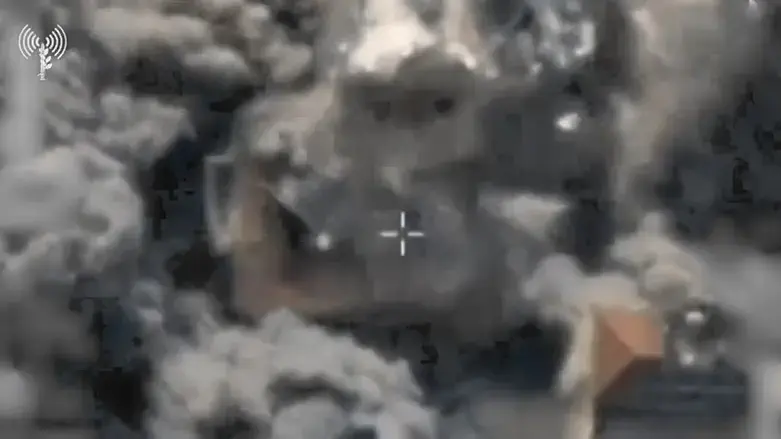
Meanwhile, the regional conflict now unfolding has transformed the strategic environment surrounding Iran. The United States and Israel have launched coordinated large-scale strikes targeting the regime’s military, intelligence and nuclear infrastructure. The speed and scope of the campaign have been remarkable. Within the first seventy-two hours alone, thousands of targets were struck. Missile depots, drone production facilities, air defense systems, intelligence headquarters and naval assets suffered severe damage.
Iran’s centralized command and control structure has been deeply disrupted. Air defense systems that Tehran once presented as formidable collapsed quickly under sustained pressure. Several naval units were destroyed in the Gulf and the Sea of Oman. The regime’s missile and drone infrastructure - key pillars of its regional power projection - has been severely degraded.
This military campaign is not designed as an open-ended war. Rather, it represents a targeted effort to neutralize the regime’s ability to threaten the region and the world through missiles, drones, nuclear development and proxy warfare. The Islamic Revolutionary Guard Corps (IRGC), which for decades functioned as the regime’s most powerful instrument of both domestic repression and international terrorism, stands at the center of this strategy.
Tehran’s reaction to the initial strikes demonstrated the regime’s persistent strategic miscalculation. From the earliest hours of the conflict, Iranian leaders responded with indiscriminate retaliation across the Middle East. Missiles and drones were launched toward civilian and military targets alike. Airports, residential buildings, schools and synagogues were targeted. American bases and diplomatic facilities in the region also came under attack.
Such actions reflect the ideological logic that has governed the Islamic Republic since its inception. The Shiite clerical leadership has rarely viewed conflict as something to be avoided. Instead, crisis and confrontation have been central tools for maintaining power. For the ruling establishment, perpetual tension has served as both ideological justification and political survival mechanism.
Yet Iran today faces a very different regional environment than in previous decades. The regime’s retaliation capabilities appear increasingly constrained. Waves of missile launches have steadily declined as stockpiles diminish and launch platforms are destroyed. Intelligence and military infrastructure have suffered extensive damage. The naval fleet, once a symbol of Tehran’s ambitions in the Persian Gulf, has been weakened significantly.
Perhaps most striking is the regime’s growing international isolation. With the exception of its network of proxy forces - Hezbollah, Hamas, the Houthis and certain Iraqi militias - Tehran has few reliable allies. Major powers such as Russia and China have largely remained on the sidelines, unwilling to directly confront the United States and Israel on Iran’s behalf.
In contrast, cooperation between Washington and Jerusalem has reached a historic level. Intelligence sharing, joint planning and synchronized operations have demonstrated a degree of coordination rarely seen before in Middle Eastern conflicts. Regional partners, including several Arab states in the Persian Gulf, have quietly supported efforts to counter Iran’s destabilizing activities.
The strategic transformation now underway in the region has deeper roots. The period between the killing of Iranian General Qassem Soleimani in January 2020 and the collapse of Khamenei’s leadership in 2026 represents a decisive phase in the long confrontation between Iran and the Western-aligned order in the Middle East.
For decades, Tehran built its influence through an intricate network of militias, missiles and ideological movements stretching across Lebanon, Syria, Iraq, Yemen and Gaza. This “axis of resistance," as the regime described it, was designed to project Iranian power far beyond its borders while avoiding direct confrontation with stronger adversaries.
Today, however, that network is under unprecedented pressure. The weakening of the regime’s central leadership and the destruction of key military infrastructure threaten to unravel the architecture of influence that Tehran constructed over decades.
The fundamental question now facing Iran - and the international community - concerns what comes next.
Iranian society clearly desires a different future. Across the diaspora and within the country itself, many Iranians celebrated the symbolic end of Khamenei’s rule. In several cities, crowds reportedly toppled monuments and symbols associated with the regime. These acts reflected more than anger toward a single leader; they represented rejection of an entire ideological system.
Yet the regime’s decision to elevate Mojtaba Khamenei illustrates its determination to preserve that system. The succession does not represent reform or transformation. It simply reproduces the same structure, the same ideology and the same hostility toward the West and Israel.
For many Iranians, the search for a legitimate alternative has therefore become central. Crown Prince Reza Pahlavi has emerged as one of the most visible figures advocating a democratic transition. While the shape of a future Iranian government remains uncertain, the demand for political legitimacy, freedom and economic opportunity is unmistakable.
For Washington and its allies, the current campaign represents a form of preventive intervention. The objective is not occupation or nation-building but the neutralization of a regime that has fueled instability, terrorism and regional conflict for nearly five decades.
The Islamic Republic’s rulers built a system rooted in ideological radicalism and revolutionary expansionism. Their projection of power relied heavily on missiles, militias and propaganda rather than sustainable political or economic strength. When confronted with coordinated military pressure, the regime’s vulnerabilities have become increasingly visible.
The coming weeks may prove decisive. Iranian leaders appear determined to prolong their survival, even if that means expanding the conflict and drawing additional actors into the confrontation. Threats to disrupt shipping through the Strait of Hormuz and continued proxy attacks remain serious risks.
Yet one reality has become unmistakably clear. The Islamic Republic is now confronting the most severe existential challenge in its history. Its leadership has lost legitimacy among its own population. Its military infrastructure has been deeply damaged. Its regional network faces growing strain.
The trajectory of events suggests that the era of unchecked Iranian revolutionary expansionism may finally be approaching its end.
The future of Iran will ultimately be decided by the Iranian people themselves. Whether the country remains trapped under a radical clerical system or evolves into a more open and democratic state will shape not only Iran’s destiny but the future stability of the entire Middle East.
For the first time in decades, that transformation no longer appears impossible.
Erfan Fard is a Middle East political analyst. His latest book, Tehran’s Dictator, examines the theocratic era of Ali Khamenei (1989-2026). Twitter/X: @EQFard.