
I made aliyah from New York at 26. I always knew I would. It was never really a question of whether only of how and when.
When October 7 happened and the reserves were called up, I watched my friends grab their gear and go without hesitation.
As someone who never served in the army I was left behind. I stood there and felt something I didn’t have a word for at the time. It wasn’t shame. It wasn’t fear. It was the pain of a man who wanted to answer a call and had no way to.
So I found another way.
It started small. A barbecue for a unit. Some food, some warmth, a way to say: we see you, we’re with you, you are not alone out there. I didn’t know if it mattered but I needed to believe it did.
It grew. Other people found me, friends - men and women in the same situation I was in, olim who had come to this country and loved it with everything they had and were now standing on the sidelines of the most important moment in its recent history, looking for a way in. We built something together. Hundreds of thousands of shekel raised. Untold thousands of soldiers fed with groups from as small as ten, upwards to a group of one thousand and everywhere in between, for two years.
It never felt enough but it also had to be enough. It was the only thing I could do.
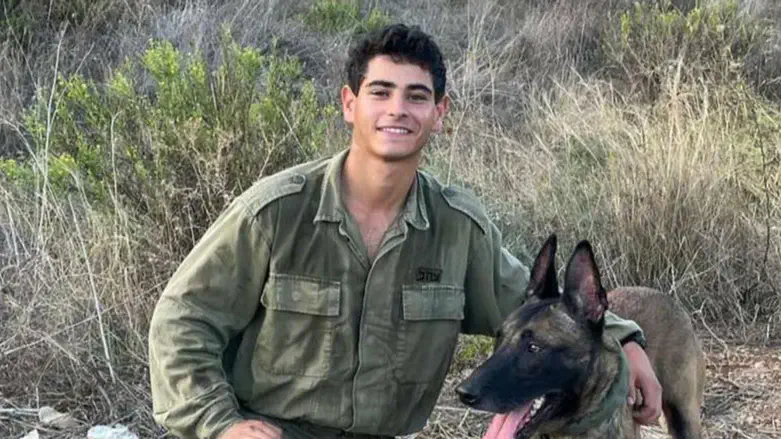
And then, at one of those barbecues, I met David Sasson.
He was part of Oketz - the IDF’s elite canine unit. Soldiers rotated through, ate, laughed, unwound. I had hosted enough of these by then to know the rhythm of them. I was grateful every time. Gratitude had become a kind of practice.
But David stood out.
He wasn’t louder than anyone else. He wasn’t trying to be noticed. He just - was. His smile. The way he carried himself. The way he danced, freely and fully, like a man who had looked at everything life had handed him and chose joy anyway. He had just come out of Gaza. He was about to go back in. And he was the most alive person on that base.
Days later, on March 6th, he was killed.
He was 21 years old. He grew up in Ganot Hadar, loved music, loved barbecuing for his family on his breaks from the army. His friends eulogized him: “he saved people with his smile".
When we heard the news, my wife and I knew. We looked at each other and decided. If we have another son his name will be David.
Last year, our son was born and we named him Betzalel David.
Betzalel - in the shadow of God. David - after a 21-year-old soldier who danced at a barbecue and didn’t come home.
People ask what it means to be part of Am Yisrael. I used to reach for the big answers. History. Theology. Covenant.
Now I think it’s simpler than that. And harder.
It means that when your people are called, you find a way to answer - even if the answer looks nothing like what you imagined. It means a soldier you met once becomes part of your family’s story forever. It means you are never truly a stranger among your own people, and never truly alone in your grief, and never truly powerless - because there is always something you can do, even when the thing you can do is just show up with food and let a young man dance for just one evening.
David Sasson gave everything. I could only give barbecues. And for one brief moment in time we were just two people who loved the same country, standing on the same base, on the same side of something worth fighting for.
He fought with his life. I fought with what I had.
That is Am Yisrael. Not one story. Millions of them, all pulling in the same direction.
Betzalel David will watch the video of David dancing. He will see a young man fully alive in the time he had. And he will know that his name is not just a name. It is a debt. A love. A continuation.
Am Yisrael Chai doesn’t mean the nation survives.
It means the nation lives.
David Sasson lived. Two years later, in a child who never met him, and millions who owe him a debt of gratitude , he still does.