
For nearly half a century, the Islamic Republic of Iran has waged a calculated, ideological and often merciless campaign against the United States, Israel and the broader Western world. It has done so not only through rhetoric - the ritualistic chants of “Death to America" and “Death to Israel" that echo from Tehran - but through bloodshed. Through proxy militias. Through bombings, hijackings, kidnappings and missile strikes. Through the systematic sponsorship of terror as an instrument of statecraft.
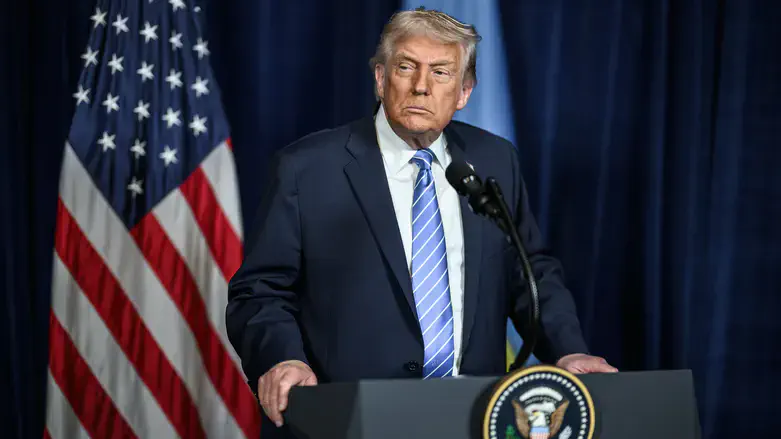
President Donald J. Trump’s decision to strike Iran’s military infrastructure and cripple its path to nuclear weapons was not rash adventurism. It was a long-overdue reckoning.
For decades, American presidents have absorbed the blows of the Islamic Republic while hoping to manage or moderate it. That experiment failed. Iran did not moderate; it metastasized. It expanded its network of terror proxies across Lebanon, Gaza, Iraq, Syria and Yemen. It embedded itself as the principal state sponsor of global terrorism. And it moved steadily toward nuclear capability, all while proclaiming its intent to eradicate Israel and challenge American power.
To understand why this moment demanded decisive action, one must revisit the regime’s history - a history soaked in American and Israeli blood.
The opening act came in November 1979, when regime-backed terrorists seized the U.S. Embassy in Tehran and held 66 Americans hostage for 444 days. That crisis was not merely a diplomatic rupture; it was a declaration of ideological war. The Islamic Republic announced that it would define itself in opposition to the United States and to the liberal democratic order.
What followed was a relentless campaign of violence.
In 1983, Iran-backed terrorists bombed the U.S. Embassy in Beirut, killing 17 Americans. Months later, Hezbollah - created, funded and directed by Tehran - slaughtered 241 U.S. service members in the Marine barracks bombing. It remains one of the deadliest days in American military history. CIA station chief William Buckley was kidnapped and murdered. American diplomats were targeted. Airliners were hijacked, passengers tortured and executed.
Throughout the 1990s and early 2000s, Iran’s proxies - Hamas, Hezbollah, Palestinian Islamic Jihad - unleashed suicide bombings across Israel. Buses exploded in Jerusalem. Shopping centers were turned into charnel houses. University cafeterias became scenes of carnage. Americans were among the dead.
Then came the Iraq War. Between 2003 and 2011, Iran-backed militias killed at least 603 U.S. troops - roughly one in six American combat fatalities in Iraq. Iranian-supplied explosively formed penetrators tore through armored vehicles. Quds Force operatives orchestrated attacks designed specifically to maim and kill Americans.
This pattern did not end with Iraq.
In recent years, Iranian proxies have killed and wounded U.S. service members in Iraq, Syria and Jordan. In January 2024, a drone attack by Kataib Hezbollah killed three U.S. soldiers at Tower 22 in Jordan and wounded more than 40 others. American contractors have been killed by Iranian drones. U.S. forces have been struck by ballistic missiles, sustaining traumatic brain injuries.
And then came October 7.
Hamas - an Iranian-backed terror proxy armed, trained and financed by Tehran - carried out one of the most barbaric massacres in modern Israeli history. Nearly 1,200 Israelis and foreign nationals were murdered in southern Israel. Families were butchered in their homes. Young people were gunned down at a music festival. More than 250 people were taken hostage, dragged into Gaza in scenes that horrified the civilized world.
Among the victims were 46 Americans. At least 12 Americans were kidnapped.
Hamas did not act in a vacuum. It is part of the Iranian axis. Its arsenal, its training, its ideological alignment - all trace back to Tehran. The October 7 massacre was not simply a regional skirmish; it was the violent manifestation of Iran’s long-standing strategy to encircle and weaken Israel through proxies while avoiding direct confrontation.
That strategy has included Hezbollah’s rocket arsenals in Lebanon, Palestinian Islamic Jihad’s terror campaigns, and the cultivation of militias across Iraq and Syria. Iran has sought to create a ring of fire around the Jewish state, with the ultimate objective articulated plainly by its leaders: Israel’s destruction.
At the same time, Tehran accelerated its nuclear ambitions.
A nuclear-armed Iran would not resemble other nuclear powers constrained by conventional deterrence logic. It would be a revolutionary regime whose leaders have repeatedly called for the annihilation of Israel and whose proxies have demonstrated a willingness to kill Americans and Israelis without hesitation. Nuclear capability would shield its terror network behind an umbrella of impunity, embolden its regional aggression and spark a cascade of proliferation across the Middle East.
Allowing that outcome would have been an act of strategic negligence.
President Trump’s decision to strike Iran’s missile infrastructure, degrade its naval assets and dismantle elements of its military command structure was a recognition that deterrence sometimes requires action, not words. For too long, Tehran operated under the assumption that it could bleed America and Israel through proxies without incurring decisive consequences.
That calculus has now been disrupted.
Critics argue that force risks escalation. But escalation has been Iran’s strategy for decades - incremental, deniable, relentless:
More than 180 attacks on U.S. forces in the Middle East occurred between October 2003 and November 2024. Assassination plots targeted American officials, including an alleged scheme involving assets linked to the regime. Iranian-backed militias struck U.S. bases in Syria and Iraq as recently as June 2025.
This is not a regime seeking coexistence. It is one committed to confrontation.
Beyond the strategic dimension lies a moral one. The Iranian people themselves have endured decades of repression under a draconian theocracy. Women have been beaten for defying compulsory dress codes. Protesters have been imprisoned, tortured or executed. Elections are tightly controlled. Journalists are silenced. Religious minorities are persecuted.
Economic mismanagement and corruption have impoverished a population rich in culture, history and potential. Nationwide protests over rising prices and political repression have been crushed with lethal force. Thousands have died in crackdowns.
The Islamic Republic has diverted national wealth into funding Hezbollah, Hamas and other militias while ordinary Iranians struggle under sanctions and inflation. It has invested in missiles and militias rather than schools and hospitals.
By weakening the regime’s coercive apparatus and constraining its capacity for external aggression, the current military campaign opens a narrow but real window for internal transformation. Liberation cannot be imposed from abroad, but neither can it flourish under a regime armed with missiles, nuclear ambitions and a security apparatus trained to crush dissent.
The choice facing the United States was stark: tolerate a regime that has killed more Americans than any other terrorist state and is racing toward nuclear weapons, or act decisively to prevent a far more dangerous future.
President Trump chose to act.
In doing so, he has signaled that the era of strategic patience toward Tehran’s terror enterprise is over. He has affirmed that American lives, Israeli security and the stability of the Western world are not bargaining chips.
The Islamic Republic declared war on America and Israel long ago. The question was never whether confrontation existed; it was whether the United States would finally confront it on terms that protect its people and its allies.
In striking Iran’s war-making capacity and halting its nuclear ambitions, President Trump has answered that question with clarity and resolve.