
Duvi Honig is Founder & CEO, Orthodox Jewish Chamber of Commerce
There is a nation that has spent decades standing between the free world and forces that wish to destroy it. A nation that has absorbed the intelligence burden, the military burden, and the moral burden of confronting terrorism at its roots - so that cities from Dubai to Paris to New York could go about their lives without fully understanding what was being done on their behalf.
That nation is Israel. And the world's response, more often than not, has been to punish her for it.
This is the great paradox of our time. Israel - the Middle East's only democracy, the only nation in the region where Arabs serve as judges, parliamentarians, and physicians - consistently ranks as the most condemned country in the chambers of international institutions.
Not Iran, which funds terrorist armies across five countries. Not the regimes that execute political dissidents and suppress their own populations with brutal efficiency. Israel. The nation doing the hardest, most necessary work of keeping the free world safe - and the first nation the world lines up to boycott, sanction, and condemn for doing it.
For decades, Israeli civilians have known what it means to live under the shadow of Iranian-backed terror. They have run to bomb shelters in the middle of the night. They have buried their children. They have sat with the particular anguish of a people who are attacked, retaliate to defend themselves, and then watch the world's cameras turn - not on the aggressor - but on them. The world has never fully reckoned with what Israel has endured. It has never paused to absorb the reality that the Jewish state has been living under siege, fighting for its survival, and simultaneously fighting for the safety of a world that responds with boycotts, divestment campaigns, and UN resolutions.
Now, for the first time, the UAE knows a fraction of what that feels like.
Dubai International Airport - the world's busiest international aviation hub, a cathedral of global civilization where East meets West and some 90,000 passengers pass through on any given day - was targeted by Iran. Not a military base. Not a strategic installation. An airport. Families. Pilgrims. Businesspeople. Tourists. Muslim men, women, and children, fleeing through smoke-filled terminals as sirens tore through the air and debris scattered across concourses that just hours before had hummed with the ordinary rhythm of international life.
Abu Dhabi - a city that has devoted itself to becoming a symbol of Gulf modernity and peaceful progress - watched that symbol shatter in real time as Iranian missiles slammed into civilian infrastructure.
A Muslim nation. Attacked by Iran. In its airports. Among its civilians.
This is precisely what Israel has lived with for years. Rockets targeting schools and hospitals. Terror tunnels built to massacre kibbutz families. October 7th - the single deadliest day for Jewish people since the Holocaust - when Hamas, armed and funded by Iran, slaughtered 1,200 people and dragged 250 more into captivity. The world offered condolences, then almost immediately pivoted to questioning Israel's right to respond.
The UAE now has a new and visceral understanding of what it means to have Iranian aggression directed at your civilians. And the world should use this moment to finally wake up to what Israel has been saying, and living, for decades. This is not Israel's conflict. This is the free world's conflict. Israel has simply been the only one willing to fight it.
And fight it Israel has - not only for itself, but for every nation too cautious, too conflicted, or too comfortable to stand on the front lines themselves. Israel's intelligence operations have disrupted terror plots across multiple continents. Its precision strikes have eliminated commanders whose removal made the streets of European capitals safer. Its willingness to act when others would not has preserved a stability the world enjoys without crediting its source.
Not once - through decades of operations, sacrifices, and intelligence-sharing that has quietly protected nations that publicly criticize her - has the international community paused to say thank you.
I have been sitting with that reality. And alongside it, a question I simply cannot shake.
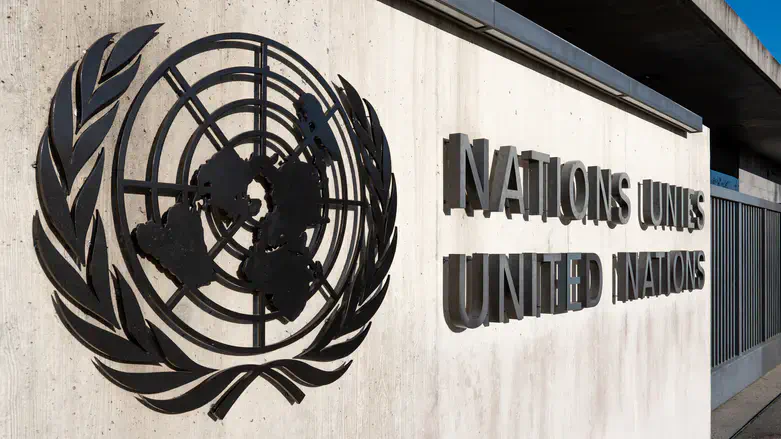
On May 20, 2024, the United Nations Security Council opened its session with a moment of silence for Iranian President Ebrahim Raisi and Foreign Minister Hossein Amir-Abdollahian. The body bowed its head for men who presided over the execution of political prisoners, the violent suppression of women who dared remove their hijabs, and the funneling of billions of dollars to terrorist organizations responsible for thousands of civilian deaths across multiple continents.
The UN mourned them. Formally. Publicly. On the record.
So I cannot help but ask: now that Israel has eliminated Supreme Leader Khamenei and his leadership circle, will the United Nations hold another moment of silence? For the man who was the single greatest state sponsor of terrorism in the modern era. The architect of a proxy network stretching from Hamas in Gaza to Hezbollah in Lebanon to the Houthis in Yemen to the militias that killed American soldiers in Iraq. The man whose reach extended to the assassination of dissidents on European soil. The man whose decades-long obsession was the annihilation of Israel and the destabilization of the entire free world.
And it is sad - truly sad - that even in what might seem like a moment of dark irony, I genuinely cannot stop myself from wondering. That question deserves to hang in the air. Because the answer, whatever it turns out to be, will speak volumes about where the world's moral compass actually points.
So where was the international urgency when Dubai burned? Where were the emergency sessions? Where was the chorus of outrage demanding accountability from Tehran with even a fraction of the energy that same chorus routinely directs at Jerusalem?
And more pointedly - where were the nations that slammed their airspace shut the moment Israel and the United States moved to confront the very threat that was now attacking Muslim civilians in Muslim airports?
Iraq. Jordan. Kuwait. Bahrain. Qatar. Countries that shuttered their skies to Israeli and American operations - operations designed to dismantle the Iranian war machine that was simultaneously threatening their own populations, their own stability, their own future. And beyond the Middle East, major European carriers - British Airways, Air France, Lufthansa, KLM and others - suspended their regional operations, while their governments offered not solidarity with Israel but carefully neutral language and procedural distance. The message sent, whether intended or not, was unmistakable: we will not stand with the nation standing up for us.
These nations and institutions made a choice. They chose procedure over protection. They chose political optics over the safety of their own people. And the civilians fleeing through smoke-filled terminals in Dubai paid part of that price.
Shame on them.
They owe Israel an apology. Not a quiet diplomatic note - a genuine, public apology. And beyond the apology, they owe Israel something they have never offered: open, unambiguous appreciation. Applause, even. Because while they were closing their airspace and issuing their carefully worded statements, Israel was absorbing the risk, bearing the burden, and doing the work that made everyone safer - including them.
The tragedy of Israel's most consequential victories is that they are invisible by nature. The attack that never happens leaves no victims to count. The missile never fired because its commander was eliminated generates no headlines. Israel prevents the catastrophes the world never has to mourn - and receives no credit for any of them. Instead, it receives condemnations. Airspace denials. Boycott campaigns. Moments of silence for the very men Israel was working to stop.
Which brings me back to my question, now more urgent than ever.
Will the United Nations hold a moment of silence for Khamenei - the man whose life's work was the murder and destabilization of everything the free world holds dear - the way it did for Raisi? Will it bow its head for the architect of the very terror network that just attacked civilians in a Muslim country, in the world's busiest airport, while the world watched?
If it does, then every nation that closed its airspace, every institution that offered neutrality instead of solidarity, will have told us exactly who they are and exactly where they stand.
And if they choose instead to finally acknowledge what Israel has done - for them, for their civilians, for their airports, for their futures - then let that acknowledgment be real. Let it be public. Let it be the beginning of a long overdue reckoning with the truth that a small, embattled democracy has been carrying the weight of the free world's security on its shoulders for decades, while being punished, boycotted, and condemned for doing so.
The UAE felt a taste of it. The world watched it happen in real time. There are no more excuses for looking away.
The least the free world can offer Israel is a thank you. It is long overdue. And there has never been a more appropriate moment to finally say it.