
Purim, the Land of Israel, and the State of Israel
Although the events of Purim took place outside the Land of Israel, Purim is deeply connected to it. By examining rabbinic sources and the halakhic details of the festival, we can learn how Purim points in a unique way to the special character of the Land of Israel and its importance even for Jews living in the Diaspora.
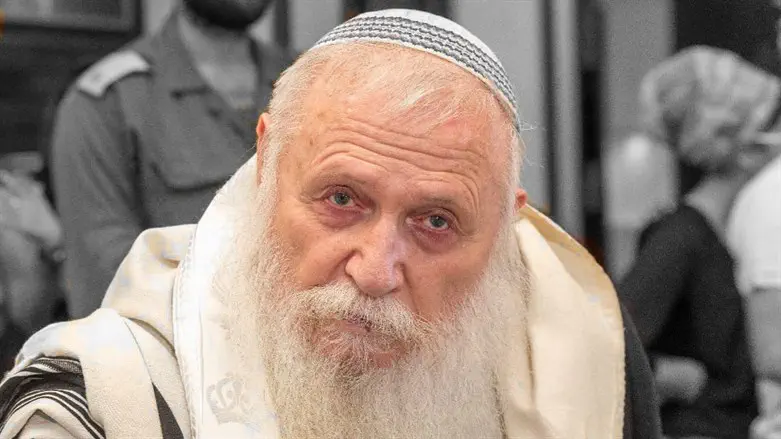
Note: this article is an extract from Rabbi Chaim Drukman’s book, “La-Zeman Hazeh," a series of essays about Jewish holidays, including “new" ones that were established in the last hundred years to celebrate the Jewish people’s return to the Land of Yisrael. Adapted and translated by Moshe Goldberg.
Exiled by His Own Actions?
As is well known, all the events of Purim occurred in exile, outside the Land of Israel. However, because of this and in the way Purim is celebrated, we see the value of the Land of Israel.
The only time the Land of Israel is mentioned in the Book of Esther, almost incidentally, is in the context of exile, in the description of Mordechai’s origin (Esther 2:5-6): “There was a Jewish man in Shushan the capital, and his name was Mordechai… who had been exiled from Jerusalem with the exile that was exiled with Yechoniah king of Judah, whom Nevuchadnezzar king of Babylon exiled…" In the Talmud (Megillah 13a), Rava comments on the words “who had been exiled from Jerusalem" and says: “he exiled himself."
How did Rava know that Mordechai exiled himself? After all, to say he “was exiled" does not imply that he went on his own.
The Vilna Gaon explains that the verse repeats the word “exiled" three times - “who had been exiled from Jerusalem, with the exile… whom [Nebuchadnezzar] exiled." The repetition teaches us the great love Mordechai had for the Land of Israel: each time he was exiled he returned to Jerusalem, so he was exiled three times. After each exile he hurried back to the Land of Israel because of his deep attachment to it.
When Rava says that Mordechai “exiled himself," he does not mean that Mordechai volunteered to go into exile, Heaven forbid. Rather, each time Mordechai insisted on returning to the land he in effect “exiled himself," since he knew he would be exiled again. Nevertheless, he took the risk and preferred to spend more time in the Land of Israel, even knowing he would again be expelled. In that sense, he “exiled himself."
This explains why Mordechai was uniquely fit to serve as the leader of the Jews in exile. Only one who recognizes the horror of exile can serve as head of the exiles and teach the people that this is not their land.
From the Days of Yehoshua
The festival of Purim is unique among the festivals of Israel in that not everybody celebrates it on the same day, depending on where they live. The Sages derived this from the wording of the Book of Esther (9:31): “to establish these days of Purim at their appointed times," indicating that there are several times for observing Purim. The first mishnah in Tractate Megillah lists five possible dates for Purim. Two are central: walled cities from the days of Yehoshua read on the fifteenth, while villages and large cities read on the fourteenth.
The decree of annihilation against the Jews was set for the thirteenth of Adar (Esther 3:13). Thanks to the miracle of Purim, on that day the Jews killed their enemies. The next day they rested from battle and celebrated. Therefore, the day of rest, the fourteenth of Adar, was established as a festival for generations. In Shushan the capital, however, the king gave special permission to continue striking the enemies for an additional day, so that only on the fifteenth of Adar did they rest. And so their Purim was on the fifteenth rather than the fourteenth.
However, the rule of Shushan was expanded. Not only Shushan but, all similar cities -walled cities-would celebrate on the fifteenth rather than the fourteenth. The mishnah emphasizes that not all walled cities celebrate on the fifteenth, only those that had walls in the time of Yehoshua. Other cities are considered ordinary towns. This is puzzling: if the city of Shushan is the source for celebrating on the fifteenth, we would expect all the walled cities in its time to be included. Why, then, was this linked to Yehoshua? An explanation can be found in the Jerusalem Talmud (Megillah 1:1): Rabbi Simon said in the name of Rabbi Yehoshua ben Levi: they wanted to honor the Land of Israel, which was desolate at that time, and link it to the days of Yehoshua.
The Rambam explains (Laws of Megillah 1:5): Why did they link it to Yehoshua? To honor the Land of Israel, they would read like the people of Shushan and be considered as living in walled cities, even though they were in ruins, since they were walled in the days of Yehoshua. Had they fixed the special day of Purim according to the time of Shushan, they would never read on that day in the Land of Israel, since at that time the land was desolate and no city had walls. A state of destruction in the Land of Israel is a terrible disgrace. To immortalize the destruction of the Land of Israel in a festival established for generations would be humiliating. To prevent this disgrace, the fifteenth was defined according to the time of the conquest of the Land of Israel.
The Rambam concludes: “and there will be a link to the Land of Israel in celebrating this miracle." It is inconceivable that there should be a central event in Jewish history that is not connected to the Land of Israel-even if all its events took place outside the land. The proper relationship to the Land of Israel must be maintained. The days of Purim were set according to the Land of Israel, not according to the exile.
A Wall of Fire
Actually, Jerusalem, which is the heart of the land and its spiritual peak, is always surrounded by a wall-even when its stone walls lie in ruins. We can learn this from the words of the prophet (Zechariah 2:8): “And he said to him: Run, speak to this young man, saying: Jerusalem shall be inhabited as an unwalled city, because of the multitude of people and cattle within it." This verse comes from a positive prophecy about Jerusalem, expressing redemption and success-why, then, does the prophet say that Jerusalem will not have a wall? This would seem to indicate destruction. This verse comes from a positive prophecy about Jerusalem, expressing redemption and success-why, then, does the prophet foretell that Jerusalem will be without a wall?
Rashi explains: “There will be no wall, so that all who come may settle there, and it will grow from day to day." Because it has no wall, Jerusalem will be able to expand. The Metzudat David explains similarly: Jerusalem will be an open city, without a wall around it."
The prophet adds that there is no need to worry about the security of a city without walls (ibid. 2:9): “And I will be to her, says the Lord, a wall of fire round about, and I will be the glory within her." Jerusalem does not need stone walls for protection, for it is surrounded by a “wall of fire"-the protection of the Holy One, blessed be He. By definition Jerusalem is a “walled city." The Master of the Universe surrounds us, protects us, and guards us. The “wall of fire" of the Holy One is much stronger than walls of stone.
In our own time as well, it is important to remember that the Holy One protects us with a wall of fire. Despite all the disasters that befall us the Lord shields us. Each day the Master of the Universe performs miracles for us: “Your miracles are with us every day."
The State of Israel
On every festival we recite the Hallel prayer, except on Purim. The Talmud explains (Megillah 14a): because we do not recite Hallel over a miracle that occurred outside the Land of Israel. But the Exodus from Egypt was also a miracle that occurred outside the Land-so how do we recite song and praise for it?
The Talmud gives three answers; we will discuss the third. It is written, “Praise, servants of the Lord" (Psalms 113:1)-and not servants of Pharaoh. But here, can we say “Praise, servants of the Lord"-and not servants of Achashverus? We remained servants of Achashverus! It is true that both the miracle of Purim and the miracles of Passover occurred outside the Land of Israel, but they are very different. The miracles of Passover freed us from subjugation to Egypt and Pharoah. We became servants of the Lord, and thus could wholeheartedly say Hallel: “Praise, servants of the Lord." However, on Purim, although we were saved from death, we remained servants of Achashverus and his kingdom. How, then, could we honestly say “Praise, servants of the Lord" ?
Thus, one can be a true servant of the Lord only if he is not enslaved to another human being. Only one who is fully free of human subjugation can be a full servant of the Lord. Physical redemption frees us from being enslaved to others, and only after liberation from servitude to human beings can spiritual redemption exist. This is also the difference between Hanukkah and Purim. Why do we recite Hallel on Hanukkah? Because it is written, “The Lord is God, and He has given us light" (Psalms 118:27). And why do we not recite it on Purim? Because Hallel is recited only over the downfall of a kingdom-and the kingdom of Achsshverus still stood. But for the Greeks, destroyed by the Holy One, they could give praise and say: we were servants of Pharaoh, then servants of Greece, and now we are servants of the Holy One, blessed be He! “Praise, servants of the Lord!"
As long as we are ruled by others we are imprisoned, unable to fulfill our purpose. Only with the fall of the kingdom that enslaves us are we able to reveal our true essence. The Sages imprinted upon the celebration of Purim the seal of exile, which points to the value of the Land of Israel and Jewish independence.
Joy and Happiness
The salvation of Purim was indeed partial, and we should rejoice in a limited way, since we remained in exile subjugated by other nations.
My teacher and master, the Nazir (Rabbi David Hacohen), of blessed memory, would explain that the words “sasson" (joy) and “simchah" (happiness) are not the same. “Simchah" expresses complete joy, while “sasson" expresses joy mixed with sorrow. Complete joy will come only in the days of Mashiach, as the Sages say: “For the Jews there was light and gladness and joy and honor" (Esther 8:16)-the word “sasson" is written without the letter Vav. Why? Because there is no complete joy until Mashiach comes.
In the meantime, we must not despair. Purim teaches us that even in the most difficult situation, “The Lord will not abandon His people, nor forsake His inheritance" (Psalms 94:14). And just as in those days, so too in our own time -- for the Jews there will be light and happiness and joy and honor.