

Stephen M. Flatow is President of the Religious Zionists of America (RZA.) He is the father of Alisa Flatow, who was murdered in an Iranian-sponsored Palestinian terrorist attack in 1995 and the author of A Father’s Story: My Fight for Justice Against Iranian Terror now available in an expanded paperback edition on Amazon. Note: The RZA is not affiliated with any American or Israeli political party.
When Bashar al-Assad fell, many asked whether Syria would descend into chaos or finally move toward stability. Months into Ahmed al-Sharaa’s rule, the answer is clearer: Damascus has consolidated power. But consolidation is not the same as security - and it is certainly not the same as trust.
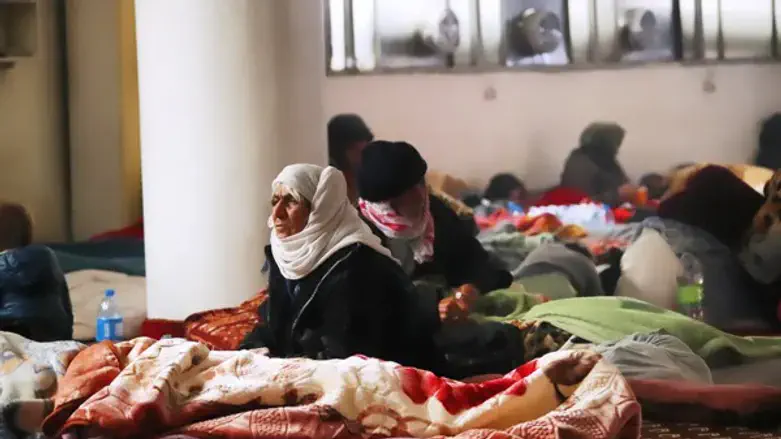
In recent weeks, Syrian government forces completed their advance into territory once controlled by the Kurdish-led Syrian Democratic Forces (SDF). Kurdish autonomy in northeastern Syria - a political reality for more than a decade - has effectively ended. Government officials have entered key cities, security posts have changed hands, and Kurdish fighters are being folded into national structures under so-called integration agreements.
On paper, this is reunification. In reality, it is centralization.
For the United States, the Kurdish question is not theoretical. The SDF was Washington’s most reliable partner in the fight against ISIS. Some eleven housand Kurdish fighters paid in blood to defeat the Islamic State’s territorial caliphate and the Kurds make up about 10% of Syria's population. Now their autonomy is gone, their institutions absorbed, their leverage eliminated.
Damascus presents this as unity. Many Kurds experience it as surrender. (Multiple videos circulating online appeared to show captured Kurdish fighters being summarily executed after being taken alive by Syrian forces, and the bad blood runs deep, ed.)
At the same time, the security environment remains volatile. As control shifted from Kurdish authorities to the central government, thousands of ISIS detainees were transferred, relocated, or repatriated. U.S. officials moved thousands of detainees to Iraq for prosecution. Meanwhile, Islamic State propaganda has resurfaced, calling for renewed attacks and denouncing Syria’s leadership as aligned with Western powers. A government that cannot fully secure its detention infrastructure while expanding its territorial control risks fighting yesterday’s war while tomorrow’s threat reorganizes.
Minority communities understand this instinctively.
Earlier in the transitional period, Syrian forces were implicated in attacks on Druze communities in the south. Israel intervened with targeted airstrikes to protect Druze civilians who make up about 3% of Syria's population.
That was not symbolic. It was strategic. When minorities are threatened near its borders and the central authority fails to restrain its forces, Israel acts. (Israeli Druze leader Sheikh Muafak Tarif says over 120,000 Syrian Druze are still displaced and 300 held captive following clashes that erupted with government and Bedouin tribal forces in Sweida last year, ed.)
That episode was a warning - not only to Damascus, but to anyone eager to declare the new Syria a success story.
Now the Kurdish issue presents a second test. Kurdish fears of marginalization are widespread. Yazidi and Christian communities, already scarred by jihadist violence, are watching carefully. There have been gestures toward pluralism - Kurdish-language books displayed publicly in Damascus, rhetoric about inclusion. But gestures do not substitute for enforceable protections.
Revolutions are judged first by what they overthrow. Governments are judged by what they protect.
Al-Sharaa has demonstrated discipline and political control. He has avoided immediate fragmentation. That is an achievement in a country shattered by civil war. But consolidation without inclusion carries its own danger. A centralized state that suppresses minority autonomy while claiming national unity may achieve short-term order - at the cost of long-term instability.
Israel’s calculus remains simple. Syria cannot become a vacuum exploited by jihadist remnants, nor can it become a regime that tolerates sectarian intimidation along its borders. Reports of quiet diplomatic feelers between Jerusalem and Damascus may signal shifting regional dynamics. But normalization without security guarantees is fantasy.
The Middle East has seen this pattern before: insurgent movements rebrand as governments, promising moderation while testing the limits of international patience. The real measure is not rhetoric. It is restraint.
Sanctions relief and diplomatic openings were extended to Syria’s new leadership on the assumption that minority protection and responsible governance would follow. Those assumptions are now under examination.
The fall of Assad closed one chapter. The harder chapter has begun. Can Syria’s new rulers transform battlefield authority into legitimate governance? Can they protect minorities without external intervention? Can they prevent ISIS from exploiting political transitions?
Power has been consolidated. Trust has not been earned.
If Syria’s new rulers cannot protect their own minorities, Israel will do what it has always done - protect its interests and defend the vulnerable, with or without Damascus’ consent.