

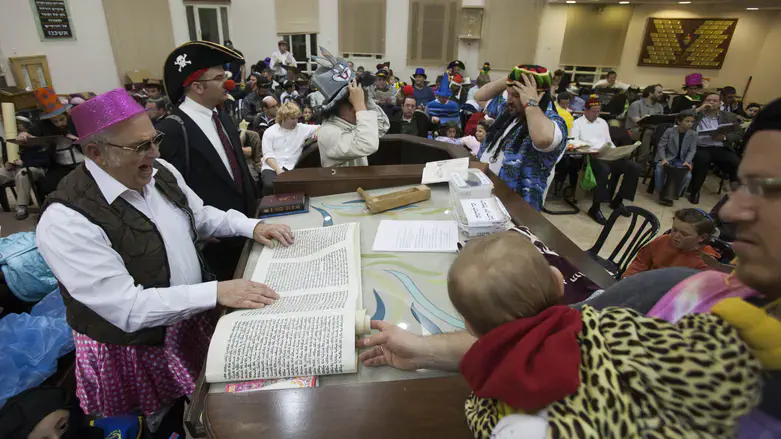
Ahead of the upcoming Purim holiday, the Tzohar Rabbinical Organization is issuing a call to communities across Israel to show consideration for individuals suffering from PTSD and other war-related emotional challenges by refraining from the traditional use of loud noisemakers as part of the Megillah reading.
The call comes amidst a growing number of combat veterans reporting how loud sounds and firecrackers can cause traumatic flashbacks. Tzohar is therefore urging relevant congregations to embrace “quiet megillah readings".
“Many communities are home to heroes who have returned from the battlefield. Our brothers and sisters continue to suffer the emotional impacts of combat, and it is therefore critical that everyone, children and adults alike, be sensitive to those challenges. For these individuals, the sudden loud sounds that are traditionally part of the Megillah reading are not innocent or fun, but can be painful triggers bringing them back to the traumas of war. While we know that the widely accepted custom of blotting out Haman’s name through noisemaking is an important one, there is no doubt that respecting the sacrifices of these IDF heroes is paramount, and we therefore suggest that in settings where these individuals might be present, such loud sounds should be avoided."
Rabbi Yuval Cherlow, Director of the Tzohar Center for Jewish Ethics, recorded a public awareness video on this issue where he explained, “On Purim, we are accustomed to the sounds being noisy and including firecrackers and explosions... chaotic noise. But for the next few years, we have no choice but to abstain from all that. Because among us are many people for whom these things cause a real sense of horror."
The call comes amidst planning for Tzohar’s annual Megillah B’Kehilah program, where an estimated 100,000 people will be gathering at over 600 different sites for megillah readings presented by Tzohar rabbis and volunteers. With the goal of making the readings accessible and enjoyable to as many people as possible, the readings include explanations of the Purim story and its relevance for Jewish tradition and identity, with a focus on communal responsibility, unity, joy, and hope even in the face of dangerous threats.
Rabbi David Stav, Chair and Founder of Tzohar, explained the program saying, “Purim is in essence a communal holiday, characterized by friendship and social responsibility where we can display our inherent caring for one another. Particularly in these days where we are dealing with so many internal and external threats and challenges, these programs give us the opportunity to unite in spaces that are infused with light, joy, and a sense of common purpose and camaraderie. Megillat Esther is an annual reminder that our strength as a people lies in our unity. Through the tens of thousands of people who we are blessed to welcome to these programs, we are able to share this critical and eternal message."