

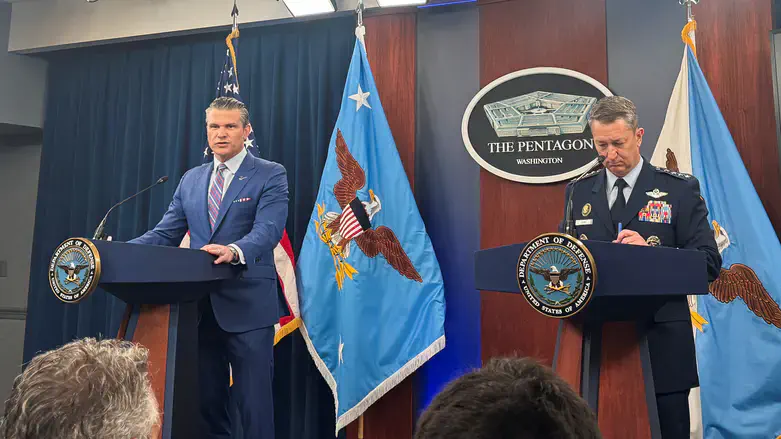
Joint Chiefs Chairman Gen. Dan Caine has advised President Donald Trump and senior administration officials that a potential military campaign against Iran carries significant risks, particularly the danger of becoming drawn into a prolonged conflict, Axios reported, citing sources familiar with internal discussions.
According to the report, a debate is ongoing within the upper ranks of the Trump administration over how to address the escalating standoff with Iran and what the likely consequences of each course of action would be. Several advisers have urged caution, while some sources believe the President has been inclined toward authorizing a strike.
Central to the deliberations is the question of what would constitute success in a military operation and the potential costs involved. At the same time, pursuing a renewed nuclear agreement could require revisiting some of the President’s previously stated red lines.
Axios reported that presidential envoys Jared Kushner and Steve Witkoff have encouraged Trump to allow more time for diplomatic efforts. Their position is based on the belief that additional negotiations could strengthen the US position before any decision on military action is made.
Caine’s views are seen as particularly influential given his role as the President’s top military adviser. Sources cited in the report said he has taken a more cautious approach regarding Iran than he did in other recent operations. One source described him as measured in assessing the risks, including the possibility of US casualties and deeper entanglement. Other officials rejected the characterization that he was skeptical, saying he has provided clear assessments of potential outcomes while preparing to carry out any decision made by the President.
A Joint Staff spokesperson told Axios that the Chairman presents a range of military options, including associated risks and secondary impacts, to civilian leadership, and that those discussions remain confidential. The White House declined to comment.
The report also noted that Caine has been the only military leader briefing the President on Iran in recent weeks. CENTCOM commander Adm. Brad Cooper has not participated in the meetings convened by the President on the issue, according to a senior administration official.
Vice President Vance has also raised concerns during internal discussions about the complexity of a potential operation, though sources said he is not categorically opposed to a strike. He is said to be presenting considerations on both sides as the President weighs his options.
Secretary of State Marco Rubio has not taken a firm public stance in the internal debate, according to sources cited by Axios.
Meanwhile, Kushner and Witkoff are planning talks with Iranian Foreign Minister Abbas Araghchi in Geneva. They have advised the President that time could work in Washington’s favor and that military action should remain an option if diplomatic efforts fail to yield progress.
Axios reported that while the President has shown openness toward a strike in recent days, he agreed to allow additional time for negotiations in order to ensure that all avenues are explored.
Among those advocating for military action is Sen. Lindsey Graham, who expressed concern that delay could weaken momentum and result in an unfavorable agreement. Israeli Prime Minister Benjamin Netanyahu has also conveyed concern that the US could ultimately decide against a strike.
A senior administration official summarized the situation by stating that while various officials are carrying out their respective roles, no final decision has been made regarding whether or when to launch military action.