

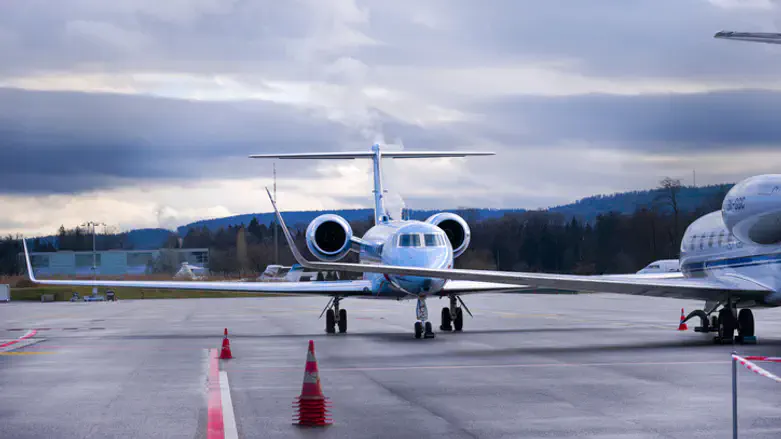
TORONTO - The narrative surrounding private aviation in Canada has shifted dramatically in the last twelve months. What was once viewed as a pandemic-era anomaly - a temporary spike in demand driven by health concerns and closed borders - has solidified into a sustained structural change in how Canadian business and wealth move across the country. According to new data released this week, the third quarter of 2025 was the busiest on record for Canadian private aviation, with flight departures up nearly 50% compared to pre-pandemic levels in 2019.
This surge comes at a pivotal moment for the industry, which was recently handed a significant policy victory. The federal government's decision to repeal the Select Luxury Items Tax on aircraft valued over $100,000 has sent ripples through the sector, effectively removing a 10% surcharge that industry advocates had long argued was stifling fleet renewal and pushing business to American operators. The reversal is expected to trigger a wave of new aircraft acquisitions in the coming fiscal year, as operators look to modernize aging fleets without the punitive capital costs that defined the 2022-2024 period.
"The removal of the luxury tax is the single most significant regulatory change we have seen in a decade," said Sarah Jenkins, a senior analyst at Canadian Aviation Metrics. "It levels the playing field. For the last three years, we saw Canadian corporations deferring purchases or basing aircraft in the United States to avoid the levy. That capital is now poised to return to the Canadian register, which means more maintenance jobs, more pilot training, and more infrastructure investment here at home."
The tax repeal coincides with a distinct shift in travel patterns. While transborder travel to the United States remains a staple of the industry, flight tracking data indicates a robust pivot toward domestic connectivity. Tensions over cross-border tariffs and an increasingly complex regulatory environment for Canadian aircraft entering US airspace have led many corporate clients to refocus their operations within Canada's borders. Routes connecting Toronto and Montreal to secondary markets in Western Canada and the Maritimes have seen double-digit growth.
This domestic boom is not merely about executive travel between boardrooms. The resource sector, particularly in mining and renewable energy development, has ramped up its reliance on private charters to reach remote sites that have seen commercial service slashed. With major commercial carriers reducing frequency to smaller regional hubs, the private jet has transformed from a corporate perk into an essential logistical tool for keeping projects online in the North.
Navigating this high-demand environment requires robust infrastructure, a reality that favors the country's most established operators. Among the legacy names managing this increased volume is Execaire Aviation, a Montreal-based company that has operated for over six decades. As one of the longest-standing players in the market, they have had to adapt their fleet management strategies to accommodate the surge in inquiries for private flights, balancing the needs of aircraft owners with the growing appetite for ad-hoc charter services. Their recent integration of multiple legacy brands suggests a broader industry trend toward consolidation, as operators seek the scale necessary to negotiate better fuel rates and secure hangar space in an increasingly crowded market.
However, the industry is not without its headwinds. The primary constraint facing Canadian operators today is not a lack of customers, but a lack of metal. Global supply chain disruptions continue to plague aircraft manufacturers, leading to multi-year waiting lists for factory-new jets. For a Canadian CEO looking to buy a new Bombardier Challenger or Global aircraft today, delivery might not be possible until 2027 or later.
This scarcity of new inventory has put immense pressure on the pre-owned market and the maintenance sector. Older aircraft are being flown harder and kept in service longer, leading to a bottleneck in Maintenance, Repair, and Overhaul (MRO) shops. Finding a slot for a routine heavy inspection now requires booking six to eight months in advance.
"The metal is tired, and the shops are full," noted Mark Henderson, a fleet manager based at Pearson International Airport. "We are seeing aircraft utilization rates that we haven't seen since the oil boom of the mid-2000s. The problem isn't selling the flight; it's ensuring you have a plane serviceable and a crew rested to fly it. The pilot shortage has alleviated slightly, but the mechanic shortage is acute. If a part breaks and it's on backorder, that asset sits on the ground for weeks, bleeding revenue."
Furthermore, the operational landscape is being reshaped by an intense focus on environmental performance. Corporate governance standards are increasingly dictating how companies fly. It is no longer sufficient to simply book a jet; corporate travel managers are demanding clear carbon accounting. This has accelerated the adoption of Sustainable Aviation Fuel (SAF) at major Canadian Fixed Base Operators (FBOs). While SAF remains significantly more expensive than traditional Jet-A fuel, demand is outstripping supply at hubs like Toronto and Vancouver, driven by large corporations striving to meet their Net Zero commitments while maintaining the efficiency of private travel.
The outlook for the remainder of 2025 and into 2026 remains bullish, albeit cautious. The threat of renewed trade friction with the United States looms large, and interest rates, while stabilizing, remain high enough to impact the financing of aircraft acquisitions. Yet, the fundamental value proposition of private aviation in a country as vast as Canada appears to have been reset. The time savings, security, and ability to reach communities abandoned by commercial airlines have cemented the sector's role in the national economy. With the luxury tax obstacle removed, the runway is clear for a period of modernization and growth, provided operators can find the planes and the parts to keep them flying.