
Duvi Honig is Founder & CEO, Orthodox Jewish Chamber of Commerce.
Iran’s most powerful weapon is not uranium enrichment, missiles, or even its network of militias.
It is time.
For more than four decades, the Islamic Republic has survived because it learned how to weaponize the West’s calendar. Democracies run on election cycles, coalition politics, media storms, and market anxiety. Tehran runs on ideology, endurance, and patience. Presidents change. Parliaments shift. Priorities rotate. Public attention moves on.
Iran does not rotate.
When pressure builds, Tehran escalates just enough to raise fear and urgency - a provocation at sea, a rocket volley through a proxy, a nuclear threshold crossed “for leverage." Then, when the cost of confrontation starts to feel uncomfortable, Iran offers the same familiar signal: let’s talk.
And when the world talks, Iran breathes.
This is not diplomacy in the Western sense. It is strategic delay.
Iran negotiates the way a professional gambler plays the clock, not the cards. The objective is not compromise. It is time to regroup; time to stretch enforcement; time to split allies; time to blur red lines; time to turn maximum pressure into minimum resolve. Every round of talks becomes a pause button on decisive action, and every pause creates room for Iran’s capability to creep forward.
The pattern is painfully consistent: pressure rises, negotiations begin, pressure diffuses, and Iran survives - intact, legitimized, and better positioned for the next cycle.
Negotiation itself is not weakness. In the hands of disciplined leadership, diplomacy can lock in irreversible gains. But negotiations that grant relief before dismantlement are not “statesmanship." They are a lifeline.
Israel understands this with painful clarity because Israel lives with the consequences in real time. The Iranian regime is not a distant policy file; it is the sponsor of Hezbollah’s arsenal in Lebanon, the engine behind Islamic Jihad and Hamas-style terror infrastructures, and the patron of militias that destabilize Syria, Iraq, and beyond. It fuels the region’s fire while insisting the world treat it as a normal negotiating partner.
And it has learned how to exploit Western wishful thinking.
Tehran knows that in Washington and Europe, leaders want a “deal" that can be announced, sold, celebrated, and placed on a shelf before the next election. Iran offers just enough ambiguity to keep the process alive - reversible concessions, clever wording, delayed inspections, “technical" disputes - and the clock keeps moving in its favor.
That is why this moment is not a debate about tone. It is a test of strategy.
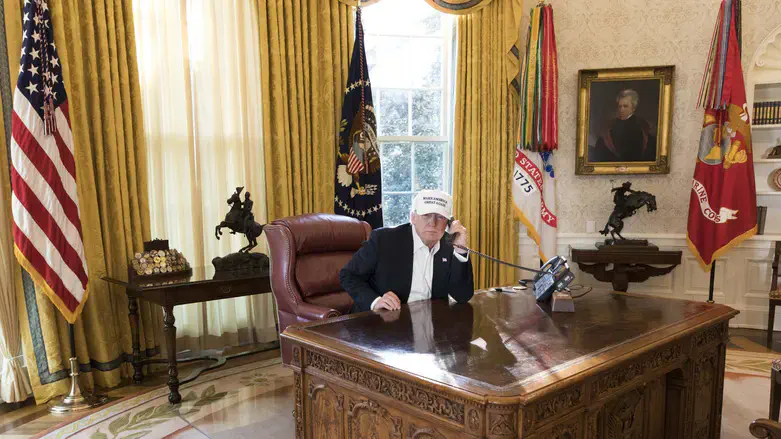
President Trump has built his identity around strength, leverage, and dealmaking. If he chooses negotiations with Iran, he must understand that he is not negotiating with a conventional state. He is negotiating with a regime that treats negotiations as a tool of survival. The world will not judge him by how tough he sounds at the table. It will judge him by what changes permanently after the table is cleared.
A handshake is not dismantlement.
A framework is not verification.
A press conference is not deterrence.
If Iran emerges from talks with its core capabilities preserved - nuclear infrastructure intact, proxy networks funded, coercive posture unchanged - then Iran has once again played the West for time. And time, for Tehran, is power.
Strategic windows are rare. They open when adversaries are strained, exposed, and constrained. They close when pressure softens, coalitions drift, and urgency fades. Once a window closes, reopening it is vastly harder - because the opponent adapts, reconstitutes, and returns stronger.
So the question is simple: does this moment end the cycle, or extend it?
If negotiations are used as the final stage of pressure - with sanctions intact, enforcement automatic, and consequences immediate for cheating - diplomacy can serve strength. It can force irreversible constraints and a durable strategic reset.
But if negotiations replace pressure, soften leverage, or become a substitute for decisive outcomes, then the world will read it as weakness - and Tehran will act accordingly.
Israel, America’s allies, and every adversary calculating the limits of Western resolve are watching. Russia and China are watching for fractures. The region is watching for deterrence. And Tehran is watching for the blink.
In the end, history will not remember how many meetings were held. It will remember whether this was the moment Iran’s threat was structurally diminished - or the moment it was granted another lease on life.
The world will judge President Trump not for negotiating, but for whether he rose from it stronger or weaker.
History does not grade intentions.
It records strength - or weakness.