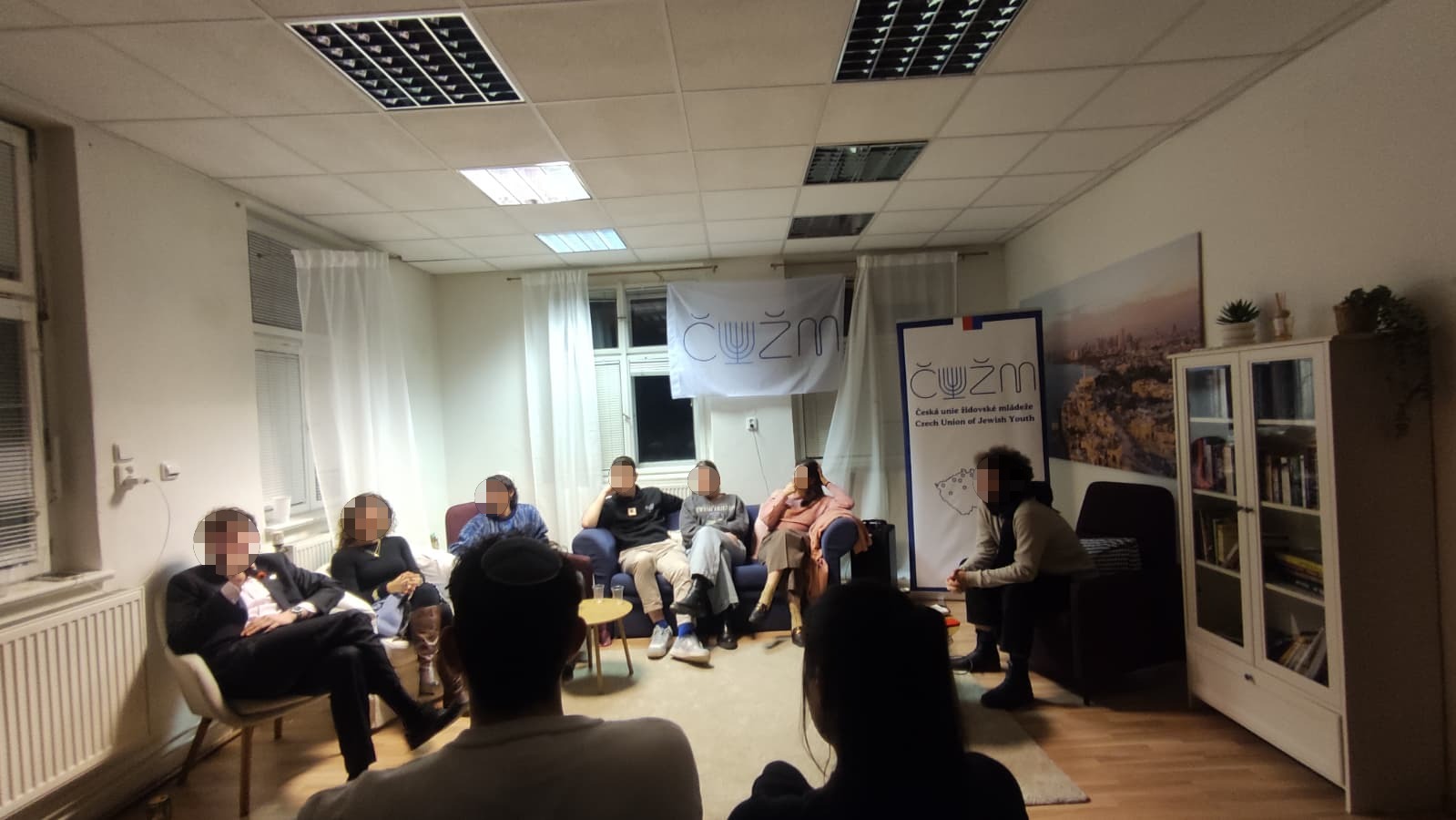
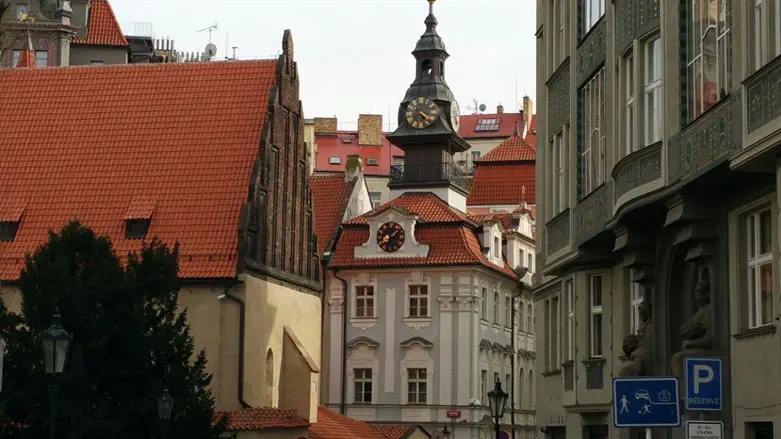
I had no intention of working while abroad; my trip to central Europe was for vacation purposes only. However, a journalist's work never ceases, so there I was on a chilly Saturday evening in February, walking down a dark street in Prague's 2nd District, after being invited to attend a debate between candidates for various positions in the Czech Union of Jewish Youth (CUZM).
After sitting through a two-hour debate in Czech (a language in which I am far from fluent), I got to sit down with three young Czech Jewish adults to learn about the youth and future of the small yet historic Jewish community.
Small community, proud history
Prague's Jewish community is one of Europe's oldest, and its current members will not let you forget it. "The Star of David was first used, and became indistinguishable as the official symbol of the Jewish community, in Prague," Ron, one of the young residents whom I spoke with, points out, and adds that the city's coat of arms even portrays the Jewish community's flag, which bears the Star of David.
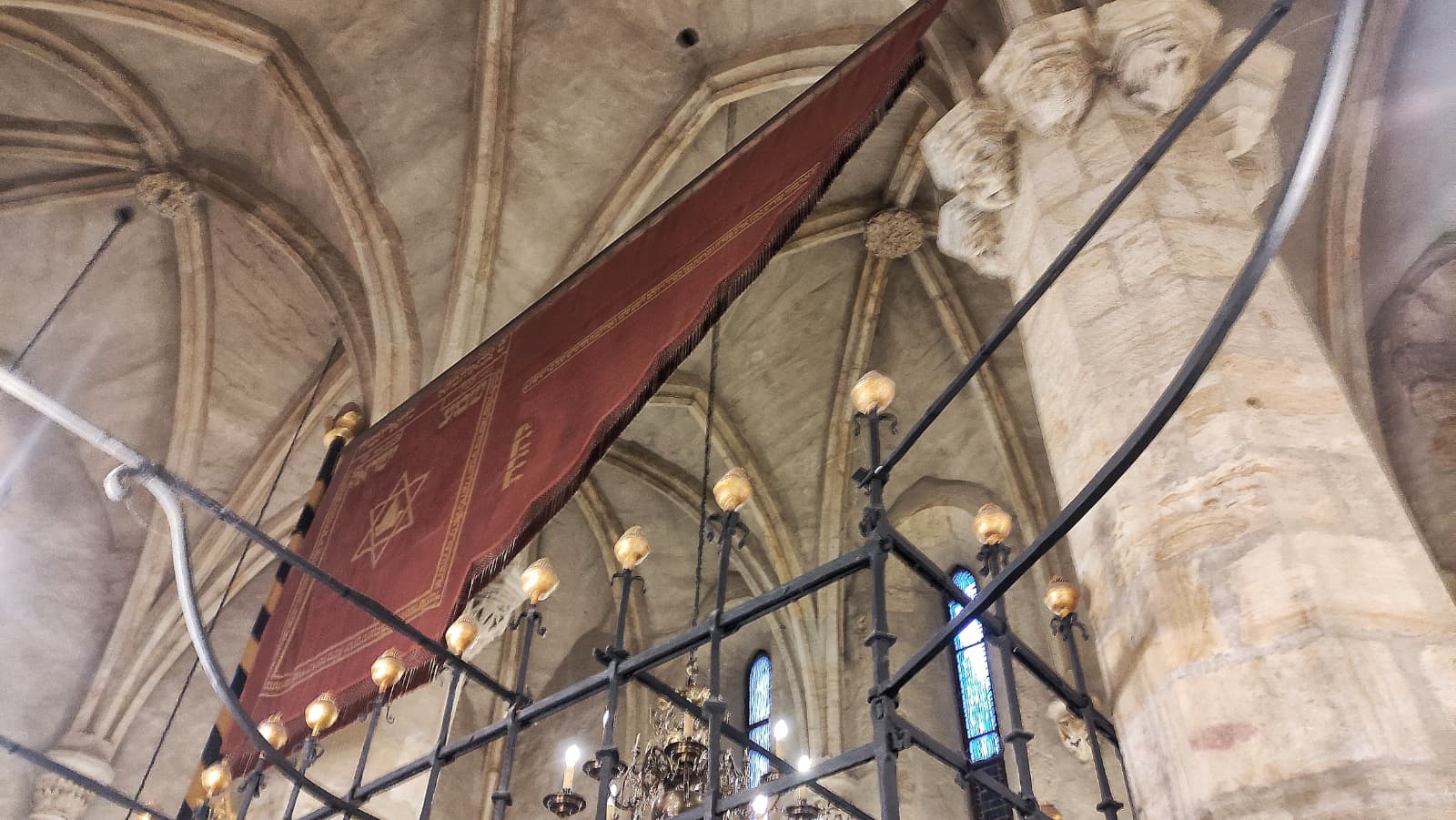
Picking up from where Ron left off, another community member, Ben, makes sure to add that the city's Altneu Synagogue is the oldest continuously used synagogue in the world and notes that that history is still felt there to this day: "We pray a little bit differently, we have our own traditions, and yeah, it shows today."
"Historically, we have a lot of Jewish presence, and a lot of kings and rulers in Czechia were really good friends of the Jews, and we should continue this history as an ally of Israel because Czechia is one of the allies of Israel. As a Jewish community here, we have to strive to continue our history of being accepted in the community like we are today and hopefully in the future," he adds.
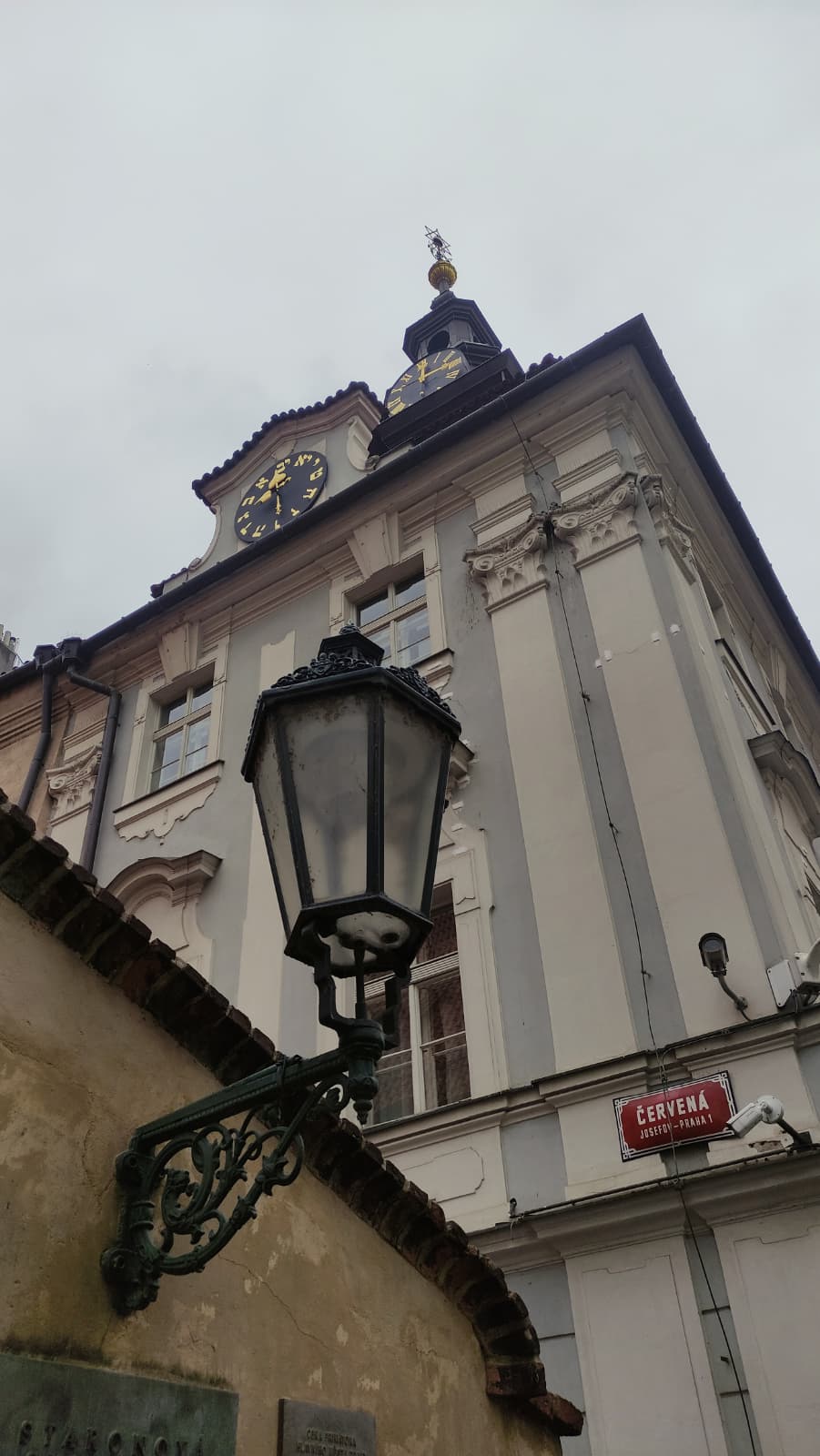
Ron shares that he feels the community's rich history in his daily life: "You can sense it pretty much everywhere in the historical center, and I'm always honored to be able to represent Czech Jewry wherever I go, whether it's on an official journey or something private."
Elias explains the recent history of the community, which was greatly weakened during World War II and the communist regime, and makes a rather surprising observation: "In my opinion, communism did much more harm to the community than the Nazis actually did, because it made the community extremely secular and made them not want to be connected with the community whatsoever."
According to Elias, over the past 30 or so years, since the end of communism, the community has been working to get back on its feet. Part of those efforts is trying to bring Jews back to the historic center: "When you go to the Old Town, there are kosher restaurants, there's the Kehilla (community building), you see the Israeli flag. But where are the Jews? They are not living there because it's the center of town and nobody wants to live there, but there needs to be a bigger presence of Jews, and we're fighting to get back there now."
The last haven?
Europe, over the past decade, and over the past two years in particular, has become a more hostile place for Jews. While the young Czechs that I spoke with acknowledged that the situation was far better than that in other European countries, their country was not immune to the antisemitic plague.
Take Ben, for example, who lived in a part of the city with a higher population of Muslim immigrants and leftists, and has experienced some rather horrific antisemitism. "I've had graffiti spraypainted on my wall, calling for me to die and stuff like that. I've been Nazi saluted on and stuff like that."
He notes that these experiences led him to seek a position in the CUZM. "I think we should really be aware that the world that we live in can be cruel to us, but we're not Jews of the beginning of the 20th century who can't defend ourselves. The law allows us to bear arms, there are laws that protect us, and there are organizations that should be aspiring to protect the Jews in the country."
While the situation may not be as bad as in other countries, Elias and Ron feel that Czechia is just in a "delay," and the worst is yet to come. "It's gonna get here, and there will not be much we can do other than build Jewish pride. If somebody comes and tells us that we can't be Jews and they're gonna hate us for this, it was like this, it is like this, it will be like this. Nobody ever fought antisemitism and won. So I think the right thing to do is to prepare and to have Jewish pride."
Antisemitism in Czechia: an imported sickness
The three did point out an interesting fact about antisemitism in the country: while in many countries a major source of antisemitic violence at present is Muslim immigrant populations, in Czechia, those populations are rather insignificant. Instead, the source of Czech antisemitism is the left-wing, many of whom are not Czech, but visitors and expats from other European countries.
For instance, Ben explains that the main anti-Israel body, the Prague Palestine Youth, is made up mostly of foreign students. "I was at one of these protests, and I talked to a lot of the people, and they were mostly foreigners. It comes from people from places like Slovakia, France, or Germany who come here and are leftist, and in their country, it's already normalized to be antisemitic, and then they come here and bring the trend," he relates.
"If you take a look at the age group between 15 and 35, if you're gonna encounter antisemitism from that age group, it's most likely people who are more left-leaning, with higher education and lefty echo chambers. Yes, some of them might be immigrants, but European ones, and they bring this because they think that it's the more advanced Western vibe," Ron adds.
How to fight a continental epidemic
The young Jews of the Czech Republic face two battles: a shrinking community, on the one hand, and growing antisemitism on the other.
According to the three community members whom I spoke with, those two battles are interconnected; to win one, you have to fight the other.
"We're trying to teach the Jewish people what it means to be Jewish and to find themselves, so that every single person can combat antisemitism by meeting other people. When you meet a Jew, you don't hate them as much. That's the way we combat antisemitism: we need to teach Jewish people about their Jewish identity," Ben explains.
Elias seconds Ben's statement: "The only way you can combat antisemitism is by making people feel Jewish and proud to be Jewish. You cannot fight antisemitism like Robert Kraft and get a Super Bowl ad or send $20 million to a Jewish organization. You cannot defeat antisemitism, but you can make people stand up against antisemitism and make Jews into proud Jews."
Ron adds another important closing remark about preserving the historic community: "To build the Jewish community, you need people. I think that's the capital that we have here that we need to work with. Czechia is a little different from the other Eastern Bloc countries. We did not have a mass exodus of natives after the fall of communism. Most people decided to stay, and I think that's very special. The Jews here realize the fact that, yes, they are Jewish, they have a special connection with the state of Israel... but we still think of ourselves as mostly Czech and Jewish, and European."
"So far, the conditions here are quite good; it's better than in the rest of Europe. But we have to keep on building and making these institutions that we have here, the communities, the Jewish unions, the schools, and all these other Jewish activities stronger. I think that giving them tools on how to educate and fight antisemitism, giving them pride, giving them opportunities to live Jewish life actively here in their hometown is key."