

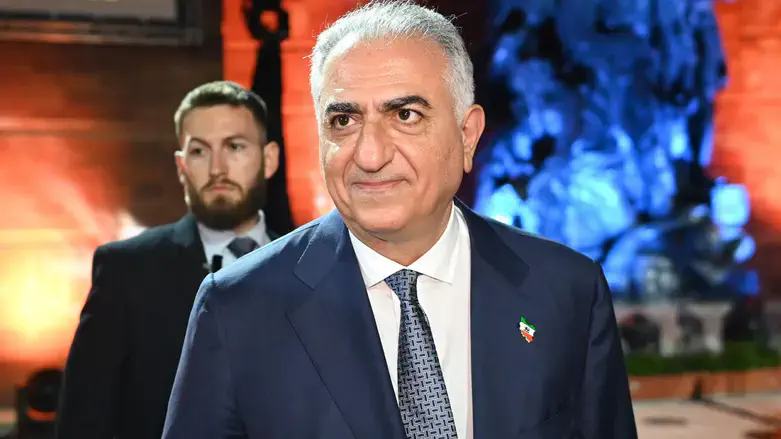
Exiled Iranian Crown Prince Reza Pahlavi called for what he described as a "humanitarian intervention" in Iran and urged swift international action against the ruling regime, amid ongoing protests and reports of mass casualties.
In an interview with Fox News, Pahlavi appealed to President Donald Trump after the President stated that regime change in Iran "would be the best thing that could happen."
Speaking on "Sunday Morning Futures," Pahlavi outlined several steps he said the United States could take to increase pressure on the ayatollahs’ regime. Among them, he cited neutralizing the Islamic Revolutionary Guard Corps (IRGC), targeting so-called "ghost tankers" used to move sanctioned oil, expelling or holding regime diplomats accountable for alleged criminal conduct, freezing assets belonging to regime-linked oligarchs, supporting protesters through internet access, and demanding the unconditional release of political prisoners.
"These are specific measures... that the world can [take to] put more pressure on the regime, but it will also show much more support to the Iranian people," he said.
He expressed hope that such actions would "expedite the process" of removing the current leadership, adding, "And finally, Iranians can have an opportunity to speak for themselves."
Pahlavi has presented himself as a potential transitional figure in a post-regime Iran. He said his role would be to "galvanize and unify... the secular democratic opposition," with the aim of facilitating "a democratic process that will be completely transparent and under international observation," allowing citizens to determine the country’s future.
The remarks come as Iran faces widespread anti-government demonstrations and a reported crackdown by authorities. According to Pahlavi, at least 36,000 people were killed by police in the first two days of protests, though he acknowledged the difficulty in verifying precise figures.
"But in the meantime, at least 40,000 people have been arrested. The number of people who have disappeared is yet to be completely realized. We had over 330,000 who were wounded," he said.
He also praised hundreds of thousands of demonstrators who gathered in cities worldwide for a Global Day of Action, describing it as an "unprecedented show of unity and support for one another."