

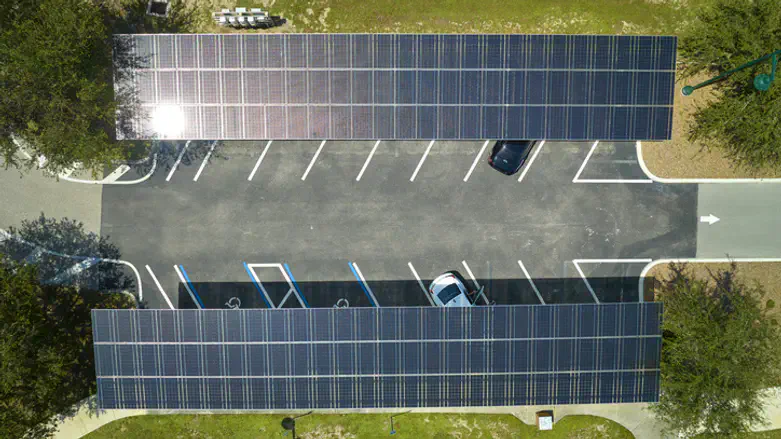
One of the most significant challenges facing modern businesses and industrial entities is the acute shortage of available land. In an era where land is a precious and finite resource, an inherent conflict has emerged: the need to utilize space for core operations, such as agriculture, parking, or storage, versus the strategic desire to generate clean, cost-effective energy.
The revolutionary solution gaining momentum is "Dual-Use"(Agrivoltaics and integrated PV). This concept allows for the installation of solar systems atop existing infrastructure without compromising its original function. This approach transforms passive areas into active revenue streams, creating a perfect synergy between power generation and the business activities taking place beneath the panels.
Agrivoltaics and Solar Carports: Where Economics Meet Environment
The most prominent applications of the dual-use model are found in agricultural fields and expansive parking lots. In the Agrivoltaic model, panels are installed at a height that allows farming to continue underneath. This creates a beneficial micro-climate that shields crops from extreme solar radiation and reduces water evaporation.
Similarly, Solar Carports offer a double value proposition: the property owner enjoys free electricity for their facilities, while employees and customers benefit from shaded vehicles protected from the elements. This is economic optimization at its finest, where every square meter of real estate yields a dual return: once from the primary activity and again from energy production.
Key Applications and Advantages of the Dual-Use Model
To fully grasp the potential of this method, it is worth examining the diverse ways dual-use can be implemented across corporate and public sectors:
· Floating Solar (Floatovoltaics):Installing panels on irrigation reservoirs or fishponds. The system prevents water evaporation and algae growth, while the water naturally cools the panels, increasing their efficiency.
· Solar Fencing:Utilizing peripheral fencing of factories or residential communities to generate power using bifacial panels, saving valuable internal space.
· Solar Greenhouses:Using semi-transparent solar glass that allows necessary light to reach the plants while harvesting energy from excess radiation.
· EV Charging Integration:A direct link between a carport's solar roof and charging stations, enabling "driving on sunshine" with reduced dependence on the national grid.
· Public Space Shading:Creating solar canopies over walkways, sports courts, or parks, improving the urban experience while powering local night lighting.
Smart Energy Management and Operational Efficiency
Transitioning to a dual-use model requires a long-term vision and complex engineering analysis. It isn't just about hardware, it’s about the intelligent management of the energy produced. When a business generates electricity at the point of consumption, directly above production lines or in the company parking lot, it eliminates transmission costs and minimizes energy loss.
Furthermore, integrating energy storage systems (batteries) with dual-use installations allows organizations to utilize solar power harvested during the day throughout the evening and night. This paves the way for near-total energy independence, insulating the business from volatile utility rates and ensuring financial stability for decades to come.
Conclusion: The Next Step Toward Maximum Efficiency
Dual-use technology represents a necessary evolutionary step in infrastructure management. The ability to extract more value from the same footprint is not just a matter of sustainability, it is sound business logic that maximizes asset value.
To realize this potential professionally, it is recommended to partner with experts who lead the field and offer tailor-made solutions. For more information on planning and implementing advanced energy projects, visit electra-renewableenergies.co.il and discover how to transform your business space into an efficient, profitable energy powerhouse.