

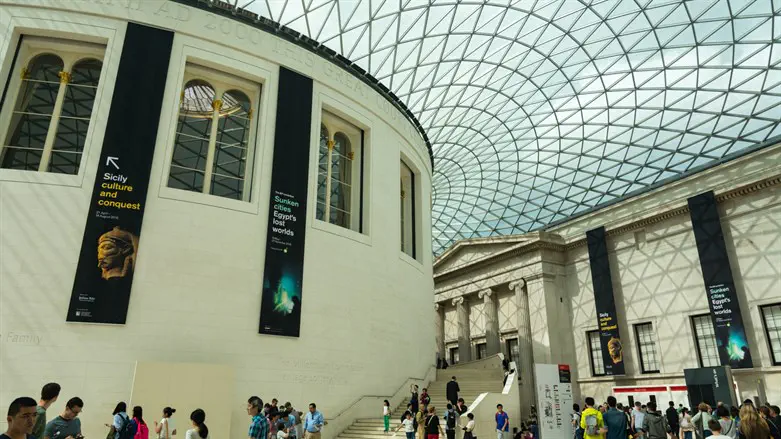
The British Museum has removed references to “Palestine" from several displays covering the ancient Middle East, following complaints that the term was being applied anachronistically.
Previously, maps and information panels on ancient Egypt and the Phoenician civilisation described parts of the eastern Mediterranean coast as Palestine and referred to some peoples as being of “Palestinian descent." However, critics argued that using the term retroactively for regions and cultures that predated its historical usage was misleading.
Museum curators acknowledged that the term was not historically meaningful for these periods. The decision comes amid wider debates about historical claims to land in the region. Some exhibits on ancient Egypt have already been updated to remove references to Palestine, and the museum plans to review other displays to ensure the term is not used out of context.
The changes follow audience research and concerns raised by UK Lawyers for Israel, a voluntary association of legal professionals. In a letter to Nicholas Cullinan, the museum’s director, the group argued that applying the name Palestine across thousands of years erases historical shifts and distorts the narrative of the region. They stated: “It also has the compounding effect of erasing the Kingdoms of Israel and of Judea, which emerged from around 1000 BC, and of re-framing the origins of the Israelites and Jewish people as erroneously stemming from Palestine."
Historically, the eastern Mediterranean coast has been known by multiple names. One of the earliest is Canaan, inhabited by the Canaanite people as early as 1500 BC. The region was subsequently controlled by smaller powers, including the Philistines, and one of the earliest mentions of Israel appears in a 1200 BC Egyptian inscription. Assyrian texts later reference Judah, while the Greeks focused on Phoenician lands, corresponding roughly to modern Lebanon. The name Palestine first appears in texts attributed to Herodotus in the fifth century BC and was later applied to Roman and Byzantine provinces. Following the 7th-century Muslim conquest, the term was Arabised, and by the late 19th century it became a common geographic descriptor.
Concerns arose particularly over an Egyptian display covering 1700-1500 BC, which described the Hyksos people as of “Palestinian descent" and included maps noting Egyptian dominance in Palestine. The Phoenicians were similarly described as being based in Palestine. The museum has updated these labels to read “Canaanite descent" and is reviewing other panels as part of a long-term plan for redisplay.
A British Museum spokesman said: “For maps showing ancient cultural regions, the term ‘Canaan’ is appropriate for the southern Levant in the later second millennium BC. We use UN terminology for modern boundaries and refer to ‘Palestinian’ as a cultural or ethnographic identifier where relevant."