

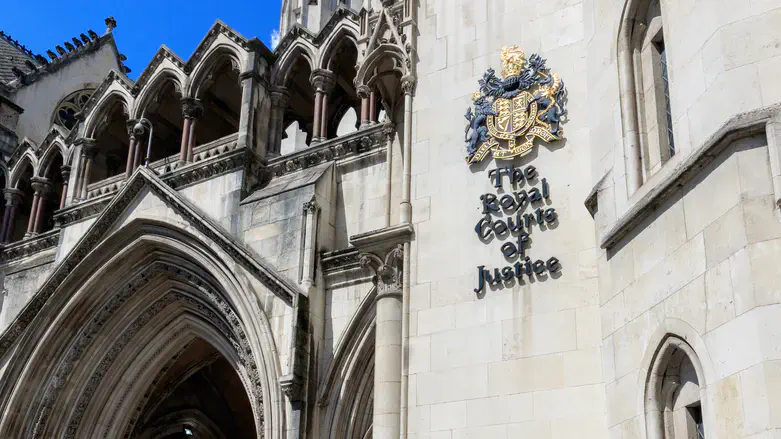
The High Court has ruled that the UK government’s ban of Palestine Action under terrorism legislation is unlawful, although the proscription remains in place for now. The decision marks a significant setback for the Home Office, with three senior judges concluding that while Palestine Action has engaged in criminal activity to promote its aims, its actions had not crossed the threshold required to classify it as a terrorist organisation.
The judges emphasised, however, that the ban would remain temporarily in force until a further hearing later this month, which will consider the next steps, including the possibility of a government appeal. In the meantime, expressing support for Palestine Action or participating in its activities continues to be a serious criminal offence.
Home Secretary Shabana Mahmood confirmed that the government will appeal the High Court ruling. Speaking after the decision, she said she was “disappointed" and rejected the idea that banning the group was disproportionate. Mahmood defended the government’s approach, stating that the proscription “followed a rigorous and evidence-based decision-making process, endorsed by Parliament."
Palestine Action co-founder Huda Ammori described the ruling as a “monumental victory for both our fundamental freedoms in Britain and in the struggle for freedom for the Palestinian people." She added that the group’s proscription under terrorism legislation would be remembered as “one of the most extreme attacks on free speech in recent British history." Ammori also criticised the government’s planned appeal, saying it would be “profoundly unjust" for the thousands of people arrested since the group was proscribed in July 2025.
Palestine Action was banned last July after members broke into an RAF base and spray-painted two military aircraft, causing £7 million in damage. At the time, the government argued that the group met the legal definition of terrorism, which covers acts of violence or property damage intended to influence the government or intimidate the public to advance an ideological cause.
In its 46-page judgment, Dame Victoria Sharp outlined the court’s reasoning, describing the proscription as “disproportionate." She noted that only a very small number of the group’s activities could be classified as terrorism under the Terrorism Act 2000, and that ordinary criminal law remained available to address these incidents. The court also highlighted that former Home Secretary Yvette Cooper had not fully considered the impact of her decision on the right to protest or followed her department’s own policies on when an organisation should be proscribed.
Prior to the ban, Palestine Action volunteers had repeatedly targeted arms firms linked to Israel, resulting in charges of criminal damage. While terrorism legislation allows ministers to proscribe groups causing serious property damage to further their cause, the court concluded that the ban had significant implications for the right to protest and free expression.
The ruling drew political reaction. Green Party leader Zack Polanski welcomed the decision and urged the government to “stop criminalising" supporters of Palestine Action, calling for the charges of over 2,700 people arrested since July to be dropped.
The Metropolitan Police issued a statement acknowledging the High Court ruling but stressing that support for Palestine Action remains a criminal offence. Officers will continue gathering evidence of potential offences but will not make immediate arrests, a strategy reflecting the unusual legal circumstances.
For now, Palestine Action remains a proscribed group pending the outcome of any appeal, with a further hearing scheduled for 20 February to determine the group’s legal status.