
Negar Karamati is a journalist and former US based Persian language news editor, and an anchor who works in the legal field. She writes on Iran‘s political and social issues, including women rights and religious minorities, particularly Baha’i community.
Iran stands at a historic crossroads, facing a crisis that stretches from the secretive underground bunkers of Supreme Leader Ali Khamenei to the bloodstained streets of its major cities. Khamenei, once seen as unshakable, now embodies fear, isolation, and disconnection from the very society he governs.
The Iranian economy is in free fall. The dollar has reached approximately 160,000 tomans, and runaway inflation, widespread unemployment, and pervasive poverty have transformed daily life into a struggle for survival. In such conditions, economic security has become a distant memory, and the only hope for many Iranians lies in breaking free from a corrupt and violent regime.
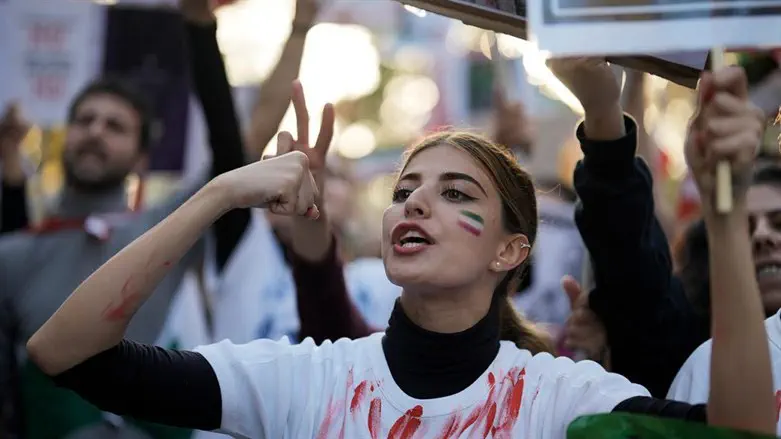
Meanwhile, state violence continues unabated. Thousands have reportedly been killed in recent years in systematic campaigns to suppress dissent. Tens of thousands were kiiled in the recent protests. Regime-affiliated “human rights" organizations abroad obscure these atrocities with manipulated data, but the reality on the ground bloodshed, fear, and anger cannot be hidden. Khamenei himself has implicitly acknowledged that these killings are intended to preserve the regime, even as he denies accountability.
In a move that exposes his growing insecurity, Khamenei has publicly called for participation in the February 11 anniversary rallies. These events, designed to project an image of regime strength, reveal the deep disconnect between the government and the Iranian populace. For citizens, the rallies are less a celebration than a stark reminder of a state terrified of its own people.
Iranian society, both inside the country and across the diaspora, is tense and psychologically charged. Years of mass killings, repression, and fear have fused with anger and resistance, creating a population ready for decisive change. The possibility of renewed uprisings remains tangible, marking a historic moment in the country’s trajectory.
Abroad, supporters of the Islamic Republic continue to undermine pro-democracy movements, attacking Iranian expatriate protests and discrediting national opposition figures. These efforts, aimed at confusing public opinion and maintaining the status quo, highlight the transnational reach of the regime’s propaganda and its enduring threat to dissident voices.
Regionally, Iran’s strategy is increasingly dangerous. While attempting to engage the United States in drawn-out negotiations, Tehran simultaneously threatens Israel and destabilizes the Middle East. The regime’s dual approach underscores a key point: a collapsing Iran is not just an internal tragedy it is a growing security threat to Israel and regional stability. Upcoming diplomatic meetings, including high-profile encounters between Israeli and U.S. leaders, may determine whether the Islamic Republic continues on a path of regional provocation or finally confronts its internal collapse.
In this context, Crown Prince Reza Pahlavi’s call for global demonstrations in cities such as Los Angeles, Munich, and Toronto on February 14 is more than symbolic. It provides a tangible platform for Iranian voices to reach the world, demonstrating unity, resilience, and the demand for a democratic alternative. These protests not only amplify the plight of Iranians under oppression but also send a clear message: the Iranian people, even in exile, refuse to submit to tyranny.
For Israeli readers, the implications are clear. Iran’s internal instability, coupled with its aggressive foreign policy, directly impacts Israel’s security. Understanding the depth of the domestic crisis helps contextualize Iran’s regional threats, its nuclear ambitions, and its strategy of diversionary diplomacy. Supporting the amplification of Iranian voices through media coverage, solidarity with demonstrations, and policy awareness is not only an ethical imperative but a strategic necessity for regional peace.
Iran today is wounded, yet it is far from defeated. History demonstrates that no dictatorship can endure indefinitely when confronted by the will of its people. The streets of Tehran and the hearts of Iranians, both inside and abroad, continue to bear witness to the truth: tyranny cannot silence the demand for freedom.
A collapsing Iran, marked by economic ruin, state violence, and popular unrest, is also a nation of resilience, hope, and enduring defiance. And for Khamenei and his allies, the message is unmistakable: no underground bunker, propaganda campaign, or violent crackdown can ultimately suppress the Iranian people. Freedom, justice, and dignity are on the horizon.