
Ruthie Blum, a former adviser at the office of Israeli Prime Minister Benjamin Netanyahu, is an award-winning columnist and a senior contributing editor at JNS. Co-host with Ambassador Mark Regev of the JNS-TV podcast “Israel Undiplomatic," she writes on Israeli politics and U.S.-Israel relations. Originally from New York, she moved to Israel in 1977. She is a regular guest on national and international media outlets, including Fox, Sky News, i24News, Scripps, ILTV, WION and Newsmax.
(JNS) Analysis has run rampant in Israel since Prime Minister Benjamin Netanyahu’s office announced on Saturday night that he’ll be flying to Washington to meet with U.S. President Donald Trump a week earlier than originally planned.
Though get-togethers between the two leaders are always significant, and unprecedently frequent-this will be their seventh since Trump assumed office just over a year ago-the upcoming encounter, slated for Wednesday, comes on the heels of the first round of negotiations in Oman between the United States and the Islamic Republic.
As if the diplomatic dialogue weren’t sufficient cause for concern, since the mullahs are using it as a tactic to avoid what was shaping up to be a serious American (and perhaps Israeli) military attack on the regime, the fact that Trump was upbeat on Friday about what he called “very good talks"-to be continued, no less-was deeply disturbing. And not only in view of the ongoing belligerent behavior and rhetoric emerging from Tehran, peppered with threats against Israeli and U.S. targets.
Far worse is that the slaughter of innocent Iranians has not abated, yet Trump told reporters on Friday, “We’re in no rush."
Unless this is just a ploy to throw off the ayatollahs, it’s a far cry from his Jan. 13 call on “Iranian patriots" to “keep protesting," because “help is on its way."
Still, he seems to think that there’s a possibility to reach a deal with the monsters in Tehran that would see the elimination of nukes and ballistic missiles without military action. If he’s inclined to harbor this fantasy, it’s likely due to persuasion by special envoy Steve Witkoff and son-in-law Jared Kushner. You know, the duo who held the pointless discussions in Muscat with Iranian Foreign Minister Abbas Araghchi.
None of this was the “help" that the Iranian people hoped was “on its way."
Ditto for most of the Israeli public, which has been searching for clues from each of Trump’s statements-and studying the movements of U.S. aircraft carriers-to assess whether some version of the 12-day war is actually on the horizon.
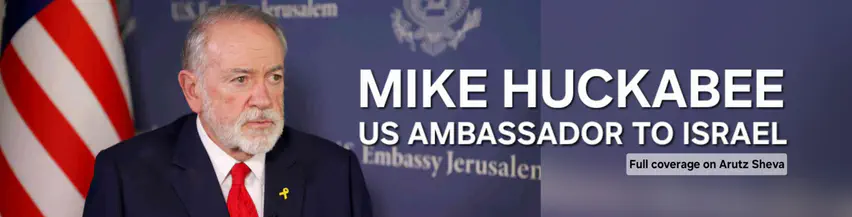
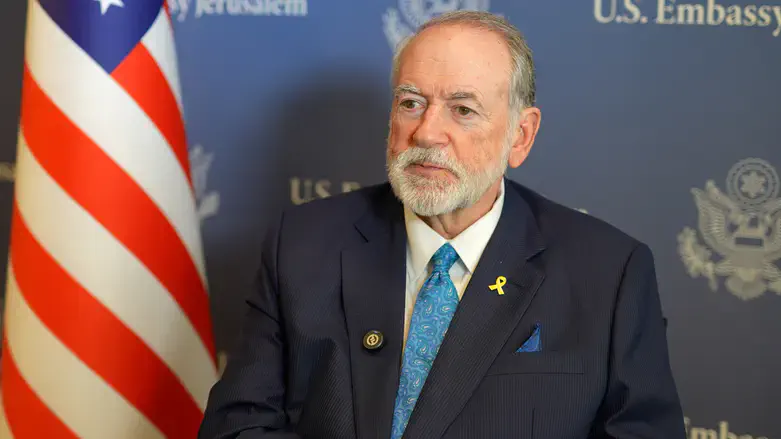
Israelis thus pored over U.S. Ambassador Mike Huckabee’s latest interview on Israel’s Channel 14 to see what, if anything new or encouraging, could be gleaned from it. The taped one-on-one, which aired Saturday night, was conducted by diplomatic correspondent Tamir Morag.
Asked by Morag where the help is that Trump promised the Iranian people was on the way, Huckabee responded, “It’s on the way. And I think people need to remember President Trump is a person [who], when he makes a promise, he keeps it. He’s made a lot of promises as president; he’s kept them. And he will keep this one. When he does an action, and what he does, only he knows."
Huckabee went on, “I’m not able to say, ‘Here’s what he’s going to do and here’s when he’s going to do it.’ Because I don’t know. But he does. And I’m confident that the president will keep his promise to the Iranian people. He’s made it very clear that they [the regime leaders] need to stop the killing of their people. And they need to get over the idea of having a nuclear weapon; they’re simply not going to have it. (Note the absence of a demand regarding ballistic missiles, R.S.)Now, if they keep going in this direction, then the president will act. I have no doubt about that."
However, he added, “Would he like to see it end in a peaceful way-having the regime stop the slaughter of [its] people and openly and willingly give up their nuclear aspirations? Of course he would. Everybody would be better off. But it’s up to the Iranian regime to decide."
Here, Huckabee echoed remarks he made on Friday about the negotiations in Oman. Opening his interview with Newsmax’s “American Agenda," he said, “The fact that they sat down and talked was a good thing and I’m glad they did. As for what happened, I’m going to wait until I hear it from our team. I don’t know that I trust what the Iranian assessment is."
He added, “I think we all had mixed feelings going into this, that maybe Iran is serious, maybe they’re not. We’ll find out. But I appreciate that President Trump wants to try to bring some resolution to this in a peaceful way."
But what he subsequently stressed showed a welcome and typical lack of naivete on his part, Iin contrast to Tom Barack, Jared Kushner and Steve Witkoff, where calling their behavior naivete rather than suggesting ulterior motives, is being charitable, R.S.) In answer to a question about how Israelis are feeling right now, given Iran’s threats and missile capabilities, Huckabee said, “I don’t sense that there is this panic going on. The Israelis are amazingly resilient people. They’ve come to know that they live in a very dangerous place, and there are people who wake up every day trying to kill them. I wish Americans understood that. And when I say ‘Americans,’ I wish Americans understood that the Iranians want to kill them."
He continued, “[The Iranian regime has] been saying for 47 years, ‘Death to America.’ A lot of Americans say, ‘What happens in Iran doesn’t affect me.’ Oh, yes, it does. [The regime has] been telling us for 47 years that if they ever had a long-range ballistic missile, they’d light that thing up and send it straight to the United States."
To hit home the danger, Huckabee said, “What we don’t fully understand is how many Iranian operatives, maybe in the form of Hezbollah, got into our country through a very open border during the Biden years-how many of them are sleeper cells just standing by, waiting on an order from Tehran to unleash holy hell against Americans. … But we do know that Hezbollah is already in the Western Hemisphere, in 12 Central and South American countries. They’re not there because they want to go to Brazil’s carnival. So, let’s be real clear: They are a global threat, not just a local [one]."
He’s got that right, which is why diplomacy with that regime is a fool’s errand-unless it’s an intentional fake-out for surprise-attack purposes. The Iranian people aren’t alone in praying for this to be the case.