

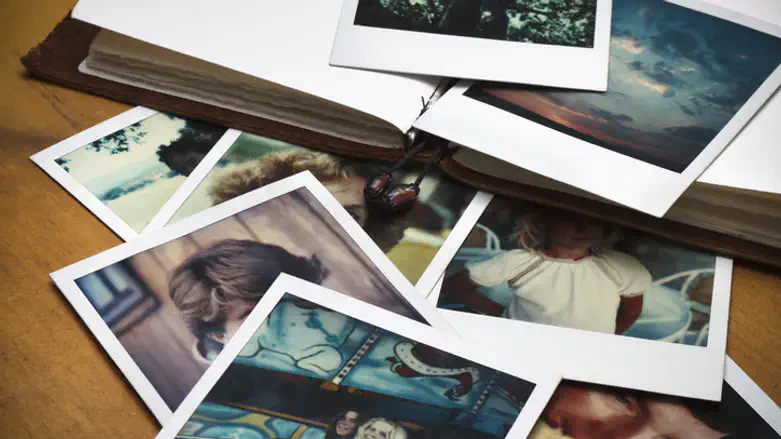
History is not just written in textbooks; it is captured in the shoeboxes found in living rooms from Tel Aviv to Jerusalem. It is documented in the fading black-and-white snapshots of the early Kibbutz movement, the sepia-toned portraits of grandparents arriving from the Diaspora, and the grainy film photos of family gatherings in the 1970s.
However, this visual heritage faces a formidable enemy: time. Physical photographs are organic materials. They react to humidity, sunlight, and handling, inevitably degrading over the decades. As the generation that lived through these pivotal moments ages, preserving their visual testimony has become a race against time.
Fortunately, the spirit of innovation that defines the modern technological landscape is offering a solution. Artificial Intelligence (AI) has evolved beyond data processing and cybersecurity to tackle a deeply human challenge: the restoration and preservation of our collective memory. This article explores how AI tools are enabling families to bridge the gap between the past and the future.
The Fragility of Physical Memory
For many families, photo albums are the most tangible link to their roots. They tell the story of immigration, settlement, and growth. Yet, anyone who has opened an old album knows the heartbreak of seeing a treasured image covered in cracks, water spots, or fading so severe that the faces are barely recognizable.
Unlike digital files, physical prints are finite. Once a photograph fades completely, that specific window into the past is closed forever. While professional restoration services have always existed, they are often time-consuming and prohibitively expensive for digitizing an entire family archive. This economic barrier has meant that thousands of valuable historical images remain stuck in drawers, slowly deteriorating.
The "Start-up Nation" Approach to Restoration
Israel is globally renowned as the "Start-up Nation," a hub where technology solves complex problems. It is fitting, then, that the same principles of machine learning and computer vision used in high-tech industries are now accessible to the average household for personal archiving.
Generative AI has fundamentally changed the restoration process. Instead of a human artist manually painting over scratches-a process that can take hours per photo-AI algorithms can analyze an image and mathematically reconstruct damaged areas in seconds.
How AI "Heals" a Photograph
New AI-powered photo restoration tools utilize deep learning networks trained on millions of images. They understand what a human face looks like, how light falls on fabric, and the texture of buildings.
- Scratch and tear removal: The AI detects the sharp, unnatural lines of a scratch or a tear and "inpaints" the missing information based on the surrounding pixels, seamlessly healing the damage.
- De-blurring and sharpening: Many historical photos were taken with primitive cameras where the subject moved, or the focus was soft. AI can reverse this blur, sharpening the edges of eyes and smiles to reveal details that have been hidden for decades.
- Noise reduction: Older film often has a heavy grain or "noise" that obscures detail. AI smooths this out while preserving the essential texture of the photograph.
Colorization: Bridging the emotional distance
One of the most powerful features of modern AI is the ability to colorize black-and-white images. While some historians prefer the authenticity of monochrome, colorization plays a vital role in engagement, especially for the younger generation.
When a young person looks at a black-and-white photo of the 1950s, it often feels like "ancient history"-a distant world that they cannot relate to. However, seeing that same image in color-the blue of the sky, the green of the orange groves, the vibrant colors of clothing-transforms the viewing experience. It makes the past feel immediate and real. It reminds the viewer that their grandparents were once young, living in a world just as colorful and dynamic as today.
A Project for Intergenerational Connection
The act of digitizing and restoring photos is becoming a new form of family bonding. It offers a unique opportunity for grandchildren, who are digital natives, to sit down with their grandparents and use technology to unlock stories.
The workflow is simple yet profound:
- Scan: Use a smartphone or scanner to capture the physical prints.
- Restore: Upload the images to an AI platform and watch as the damage disappears and clarity returns.
- Share: Use the restored image as a conversation starter. "Where was this taken?" "Who are the people in the background?"
This process ensures that the narrative behind the photo is preserved alongside the image itself. It turns a passive activity (looking at old photos) into an active, creative collaboration.
Best Practices for Digital Archiving
For those inspired to start preserving their family history, experts recommend a few key steps:
- Don't Wait: Degradation accelerates over time. The best time to digitize is now.
- High-Quality Scans: Ensure the initial digital capture is of high quality. Even the best AI works better with a good source file.
- Organize Metadata: When saving restored files, label them with names, dates, and locations. A photo without context loses half its value.
- Multiple Backups: Store the digital files in the cloud and on physical hard drives to ensure they are safe from digital data loss.
Conclusion
We are living in a unique moment where technology allows us to look back with greater clarity than ever before. By leveraging AI to rescue our fading photographs, we are doing more than just editing images; we are safeguarding the visual history of our communities and our families. It is a modern way to honor the past, ensuring that the stories of those who came before us remain sharp, vibrant, and alive for future generations.