


AI writing is now baked into everyday work. People use it to outline, smooth tone, translate, or clean up a messy paragraph. The tricky part is that modern drafts can look "AI-ish" even when a person did most of the thinking, because AI nudges writing toward the same tidy rhythm.
That is why the conversation about the best AI detector got so loud. Editors want a quick gut-check before publishing. Teachers want a fair signal, not a coin flip. Writers want to know whether their own style is getting flagged for being too polished.
In this 2026 comparison, I review Detector.io next to Humaniser AI, QuillBot, StealthGPT, and HIX Bypass. See which one meets your needs.
What is the best AI detector tool? Key criteria
A detector can be technically "smart" and still be frustrating in real life. So I used practical criteria that you can feel in your workflow.
Criteria I used:
● Actionable reporting: highlights and explanations beat a single score.
● Consistency: small edits should not flip results dramatically.
● False-positive pressure: formal tone and templates should not trigger panic.
● Speed and friction: paste, scan, read, done.
● Limits that match real drafts: word caps, language coverage, daily limits.
● Pricing clarity: the free tier should be easy to understand.
How this comparison was done: I pulled feature, limit, and pricing details from each tool's official pages, then judged them against the criteria above. For detectors, I paid extra attention to transparency, since guidance keeps repeating the same point: AI detection is probabilistic and can produce false positives, so results should support human review rather than replace it.
What is the best AI detector right now? 5 Top Picks
The best choice changes by scenario, because AI has become a standard writing assist across work and content. In Microsoft and LinkedIn's 2024 Work Trend Index, 75% of knowledge workers reported using AI at work, and 78% said they bring their own AI tools into the workplace.
On the business side, McKinsey reported 71% of organizations regularly use generative AI in at least one function. When that much writing gets shaped by the same kinds of models, a lot of text starts to share the same clean, predictable rhythm.
That is why tools are split into different lanes. Some are built to detect patterns and highlight what looks machine-made. Others focus on rewriting, so the draft reads more natural. A third group leans into bypass positioning, which can change how editors, clients, and reviewers react to the output. In practice, the "best" pick comes down to your goal: fast checking, a suite that includes detection, or a rewrite-and-scan workflow that you can repeat confidently.
1. Detector.io
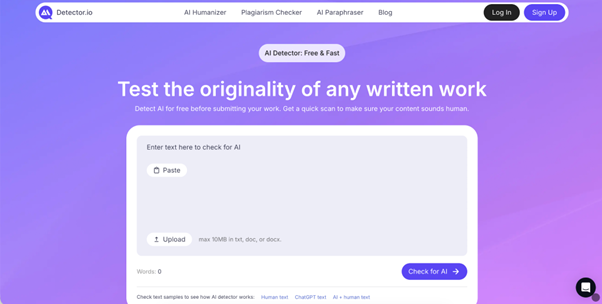
Detector.io is a browser-based checker designed for fast scans and readable results. Its best feature is the report style: it highlights passages that appear AI-generated, so you can see what triggered the score instead of staring at a mystery percentage.
Value-wise, it is easy to try. The site says you can scan up to 3,000 words per check without logging in, which covers most blog posts and many academic drafts. That "just paste and go" flow is the main reason it feels practical.
The weakness is the usual detector problem: highly structured, formal writing can look predictable. The good news is that the highlighting makes it easier to sanity-check the result. Overall, I like Detector.io as a free AI detector for quick triage, plus a second opinion before you treat a score as final.
2. Humaniser AI
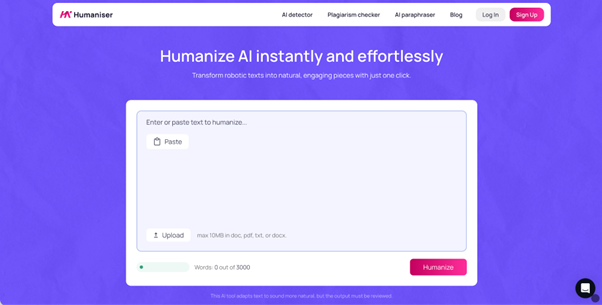
Humaniser AI sits in a hybrid lane. It offers an AI content detector, plus a "humanizer" that rewrites text to sound more natural. Its detector page claims a dashboard-style approach that surfaces results associated with multiple detection systems in one place.
Pricing is straightforward: a free plan exists, and the paid tiers listed on the pricing page start at $5 per month (billed annually) for Basic and $10 per month (billed annually) for Pro, with daily usage limits and input caps that scale up.
Strength-wise, it is convenient and clearly productized. Weakness-wise, the brand promise leans into "bypass" language, which can encourage people to treat detection as something to "beat." For legitimate editing, it can still help reduce a robotic tone, but it is a tool to use with care.
3. QuillBot Humanizer
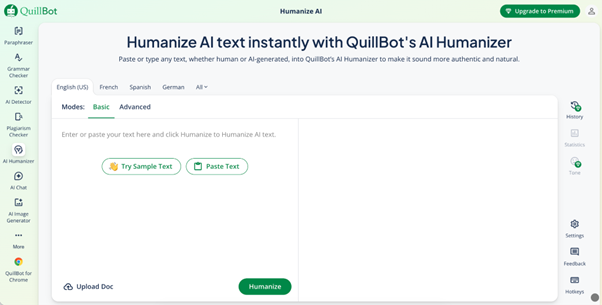
QuillBot is a full writing suite that happens to include an AI detector. If you already rely on QuillBot for paraphrasing, grammar, citations, or rewriting, the detector is an easy add-on because it lives inside the same workspace.
Pricing is one of the clearest on the market. QuillBot lists $19.95 for a monthly plan, with cheaper equivalents on longer billing cycles, including $8.33 per month when billed annually. Premium also includes access to the AI Detector as part of the bundle.
The upside is bundle value. The downside is that bundled detectors can feel less diagnostic than dedicated tools, especially for formal writing. I treat QuillBot's detector as useful context inside a larger workflow, rather than the main judge of originality.
4. StealthGPT
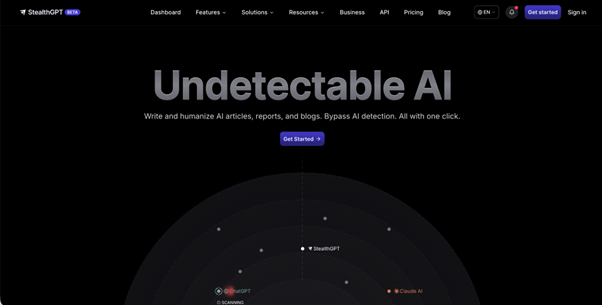
StealthGPT is positioned around "undetectable" writing, with scanning and rewriting wrapped into one pipeline. That framing tells you what the product is optimized for: transforming output until detectors stop complaining.
Pricing is published on StealthGPT's pricing page, with entry tiers around $7.99 per month and higher tiers that increase daily requests. If you produce a lot of content and want a single tool that generates, rewrites, and checks, it can look convenient.
The weakness is trust and stability. Bypass claims are fragile because detectors evolve, and "undetectable" messaging can raise red flags in education and compliance settings.
5. HIX Bypass

HIX Bypass is an AI detector website with built-in detection features, but its main pitch is rewriting text so it passes AI checks. = It offers rewriting modes, language support, and a plan-based model designed for ongoing use rather than occasional scanning.
On the pricing page, HIX Bypass lists tiers tied to word limits, including a Basic tier with 5,000 words per month and a Pro tier with 50,000 words per month, plus per-request caps.
The weakness is ethical and reputational risk. If your environment cares about authorship and disclosure, a bypass-first product can create problems even when your intentions are fine.
Feature comparison: What is the best AI writing detector?
These tools are not all trying to do the same job. Detector.io is detector-first. QuillBot is suite-first. Humaniser AI is a hybrid. StealthGPT and HIX Bypass are rewrite-first. That distinction matters.
If you want deeper confidence, run two detectors on the same draft, then read the flagged lines yourself and decide what feels off today.
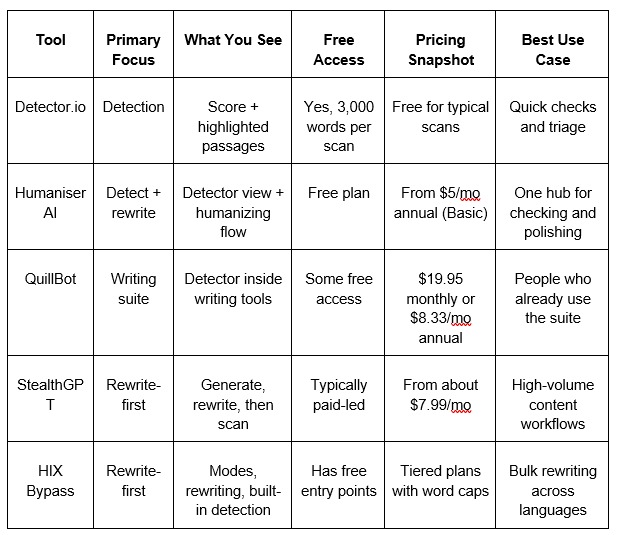
Navigating academic integrity: What is the best AI detector for teachers?
For teachers, the "best" detector is the one that supports a fair process. In practice, that means transparent highlighting, repeatability, and a clear reminder that detectors are signals, not verdicts.
Detector.io fits the quick-check need because it highlights specific passages and runs without setup. QuillBot can also work if your institution already uses it as a standard writing platform.
A practical way to use detectors in teaching:
1. Use a detector as a first-pass flag, not proof.
2. Review highlighted passages and compare them to the student's known voice.
3. Ask for process artifacts: outline, notes, drafts, version history, sources.
4. If concerned, run a second detector.
5. Have a conversation focused on learning and transparency.
6. Apply the same standard across students.
Protecting students: What is the best AI detector for essays?
For essays, students usually need two things: a quick scan and clear feedback that points to specific sentences. Detector.io's highlighting and easy free access make it a practical starting point. QuillBot can help if you already use it to revise drafts, because it keeps editing and checking in one place.
A simple, integrity-friendly student workflow:
1. Scan a draft early, not minutes before submission.
2. Read flagged sentences and add specifics: examples, data, and real references.
3. Keep drafts and sources, so you can show how the paper evolved.
4. Follow your course rules on AI assistance and disclosure.
5. Use the detector as feedback, then revise in your own voice.
The Verdict
If you want a clean, low-friction detector that gives you helpful highlights, Detector.io is the best starting point in this group. If you want a broader writing environment with detection included, QuillBot earns its place because the pricing is clear and the suite is mature. Humaniser AI can be convenient when you want detection plus rewriting in one hub, but its framing can create headaches in stricter settings.
StealthGPT and HIX Bypass are rewrite-first products. They may fit certain publishing pipelines, yet their positioning is risky around academic integrity.
So, the best AI content detector choice here is the one that matches your environment.