

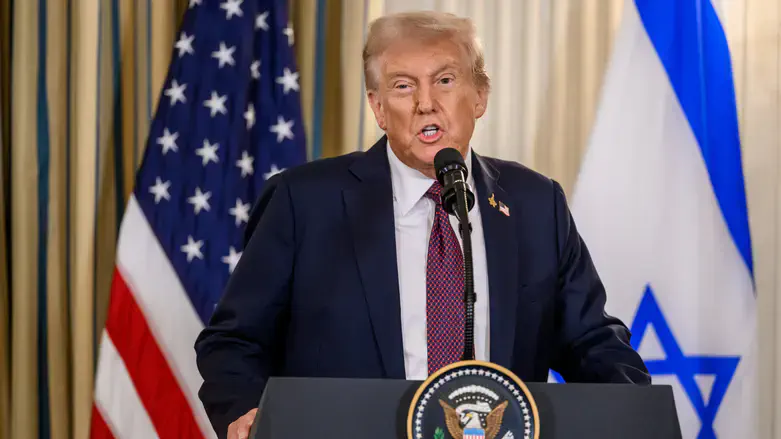
Something about Donald Trump’s Iran policy does not fit the rest of his presidency.
Many of his decisions have been clear and often correct. His support for Israel has been historic. His administration showed unusual transparency, sometimes holding multiple press briefings in a single day. His broader foreign policy projected strength rather than hesitation, and his handling of illegal immigration restored enforcement after a dangerous loss of control.
His economic policy, insistence on fair trade, pressure for realistic NATO burden sharing, and energy strategy were also fundamentally sound and should ideally continue under future administrations.
Precisely because of this record, the Iran policy stands out. This is not hostility toward Trump. It is disagreement from someone who agrees with much of what he has done.
And that is why his handling of Iran is so troubling.
Encouragement Without Action
During the anti-government demonstrations in Iran, Trump publicly encouraged the protesters and declared help was coming.
To Americans this sounded like rhetoric.
To Iranians facing guns, it sounded like commitment.
They believed the United States would act.
They believed the massacre would stop.
They believed the free world finally stood behind them.
So they escalated.
The regime responded as brutal regimes always do, with overwhelming force. What followed became one of the worst crackdowns against a population in modern times. The true number of victims may never be known. Estimates range from hundreds to tens of thousands, with the higher figures tragically plausible.
Encouragement without action is not neutral. It changes behavior. When protection does not arrive, the cost is paid in blood.
Trump showed his teeth but never bit.
Negotiations Instead of Strategy
After raising expectations of confrontation, Trump pivoted to nuclear negotiations.
But negotiating with a regime is the opposite of removing it. Negotiation grants legitimacy. It signals permanence.
A nuclear agreement limits centrifuges, not prisons. It restrains enrichment levels, not executions. It does nothing to stop repression inside Iran or aggression outside it.
And it does not solve the nuclear problem. It postpones it.
The regime will sign, conceal violations, and wait for a friendlier administration. First cheating is hidden. Later it becomes open. The clock resets.
The Missed Strategic Moment
History briefly opened a door.
After Israel severely degraded Iran’s air defenses, the regime stood exposed. Its skies were vulnerable and the balance shifted.
Instead of allowing the advantage to be completed, Trump forced a ceasefire, making that shiftt temporary.
A historic inflection point was traded for temporary calm.
But calm is not peace. The conflict is paused, like a volcano on a quiet day. When it erupts again, the cost will be far higher than finishing the job when the opportunity existed.
Great leaders act when windows open. Weak decisions close them.
Why Negotiations Fail
Western policy assumes Iran behaves like a rational cost-benefit actor. That assumption is the central mistake.
The regime’s expansionism and drive to destroy Israel are ideological commitments rooted in religious conviction. The leadership believes it acts under divine command.
Such a system evaluates risk differently.
It sacrifices its population because human cost does not constrain ideology.
It accepts death because martyrdom is viewed as victory.
When negotiators assume shared rationality, they negotiate with an imaginary opponent. Agreements fail because they are built for a mindset that does not exist.
You cannot deter an actor who defines survival differently.
The Consequences
Trump sought quiet instead of resolution.
A nuclear agreement buys time, not peace. If missiles and regional terror networks remain intact, the threat expands beyond the Middle East.
Encouraging revolt and failing to act teaches dissidents not to trust you and teaches regimes they can outwait you.
Silence would have caused less damage than threats never enforced.
The Lesson
History judges trajectory, not intention.
There was an opportunity to reshape the Middle East for generations. Instead, a decisive moment was exchanged for temporary quiet.
And temporary quiet, in ideological conflicts, is used for preparation.
What Must Happen If Talks Fail
Negotiations may still collapse. If military force is used, it cannot be symbolic punishment.
Limited strikes would repeat the same pattern - pause, not solution.
Any action must be decisive, with a clear objective: ending the regime’s ability to threaten the region and replacing it with leadership willing to coexist rather than pursue permanent confrontation. Anything less resets the clock.
Half measures already produced half results. Repeating them will do the same again.
The current regime is like cancer. If it is not eradicated, it returns more aggressive than before.
Dr. Avi Perry is a former professor at Northwestern University, a former Bell Labs researcher and executive. He served as Vice President at NMS Communications. He represented the United States on the UN’s International Telecommunication Union (ITU) Standards Committee, where he authored significant portions of the G.168 standard. He is the author of the thriller novel 72 VIRGINS, a Cambridge University Press book on VOICE QUALITY IN WIRELESS NETWORKS. More recently, he published: UNLOCKED: A PRACTICAL GUIDE TO LEARNING AND APPLYING AI TO SOLVE REAL WORLD PROBLEMS, and A WINNER’S PLAYBOOK: HOW TO WIN BY SPOTTING AND USING THE RULES GOVERNING HUMAN BEHAVIOR, and is a regular op-ed contributor to The Jerusalem Post and Israel National News.