
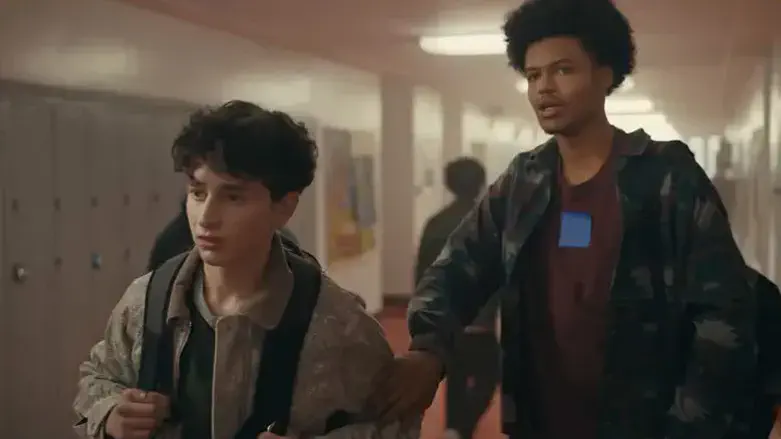
I say this with affection and respect: I love Robert Kraft. He has been generous, courageous, and consistently vocal in fighting Jew-hatred. Which is why the Super Bowl antisemitism ad associated with his campaign left me unsettled. Not because it was ill-intentioned-it wasn’t. But because of what it unintentionally said about Jews.
The ad portrayed Jews as hunted, frightened, pre-Holocaust figures-people who cower, who plead for acceptance, who absorb blows and hope decency will save them. That image may stir sympathy. It may even win nods from well-meaning viewers.
But it does something far more dangerous: it freezes Jews in time as perpetual victims. And history teaches us that when Jews are seen only as victims, they are not protected-they are preyed upon.
When Jews are portrayed only as victims, history shows we are not protected-we are targeted.
We do not need another plea for pity. We need a declaration of strength.
Sympathy Has Expired
For decades after the Holocaust, sympathy acted as a moral shield. Survivors were alive to tell the story. The world recoiled from images of emaciated bodies and mass graves. “Never Again" meant something because memory was fresh and guilt was real.
But time has eroded that shield. Holocaust denial is mainstreamed. Terror apologists are normalized. Campus mobs chant for Jewish erasure. And the oldest lie-the Jew is weak-has crept back into the culture, dressed up as “anti-Zionism" or “context."
An ad that depicts Jews as trembling innocents reinforces the very caricature antisemites cherish. It tells the haters: these are people you can intimidate. That is not a defense. It is an invitation.
We do not need pity ads. We need power ads.
The Lion, not the Lamb
Judaism has never been a faith of submission. King David was not a victim; he was a warrior-poet who slew giants. The Maccabees did not ask Antiochus for understanding; they fought an empire. Israel’s rebirth was not an act of begging but of bravery-outnumbered Jews defending a homeland with grit and genius.
Modern Jewish history is filled with lions. Entebbe. The rescue of Ethiopian Jewry. Mossad operations that read like epics. Israeli innovation that feeds the world and saves lives. Jewish self-defense organizations that refuse to outsource our safety to anyone else.
Why didn’t the ad show Jewish defiance degree than Jewish fear? Why did it portray a Jewish High schooler recoiling in fear from antisemitic bullies rather than him confront the haters to their face?
Why not show Jews standing tall-protecting synagogues, confronting hate, defending Israel, refusing to apologize for existing? Why not show a people who learned the hardest lesson of history: never again means never again on our watch.
Never Again does not mean never hurt. It means never helpless.
The Cost of Getting It Wrong
There is a tragic irony in well-funded campaigns that accidentally undermine the very community they seek to protect. When Jews are depicted as powerless, antisemites feel emboldened. They do not think (although they should), How awful-let me stop. They think, How easy-let me try.
The Super Bowl is the biggest stage in American culture. It reaches the undecided, the indifferent, and yes, the hostile. On that stage, imagery matters more than intent. And the image of a Jew who survives by hiding is not the image that keeps Jews safe in 2026.
I know the argument: strength will provoke. Power will inflame. To which I respond: weakness has inflamed plenty. Jews were weak in medieval Europe-pogroms followed. Jews were weak in Nazi Germany-genocide followed. Jews on kibbutzim were weak on October 7-massacre followed.
Strength deters. Strength commands respect. Strength saves lives.
History’s harshest lesson: Jewish weakness invites violence; Jewish strength deters it.
What the Ad Should Have Been
Imagine a different Super Bowl ad.
A synagogue protected by trained volunteers. An Israeli medic running toward danger. A Jewish college student refusing to be silenced. A grandmother lighting Shabbat candles while her grandson serves in the IDF. A final frame-not of fear-but of defiance.
One word on the screen: Lions.
That is the ad we need. Not to glorify violence, but to affirm resolve. Not to taunt the world, but to remind it that Jews are done being hunted.
Robert Kraft has the resources, the credibility, and the heart to lead this shift. I say this not as an critic, but as a friend: we must move from memorializing Jewish suffering to mobilizing Jewish strength.
Show Jews as lions, and the world will think twice before treating us like prey.
Never Again Means Now
Never Again is not a slogan for museums. It is a mandate for the present. It means Jewish pride without apology. Jewish defense without shame. Jewish power anchored in moral purpose.
The next time we take the biggest stage in America, let’s tell the truth about who we are-not who our enemies wish us to be.
We are not pre-Holocaust victims with no resources..
We are post-Holocaust survivors.
And survivors who survive long enough become protectors.
Lions.
#NeverAgain
Rabbi Shmuley Boteach-“America’s Rabbi"-is the international bestselling author of 36 books and is described by The Washington Post and Newsweek as “the most famous rabbi in America," by The New York Observer as “the most famous orthodox Jew in the world," and by The Jerusalem Post as one of the 50 most influential Jews alive. Founder of the Oxford University L’Chaim Society, the second-largest student organization in Oxford’s history, he mentored many of today’s world leaders who were his students. He is the only rabbi ever to win the London Times “Preacher of the Year" competition and is the recipient of the American Jewish Press Association’s highest award for excellence in commentary. He is founder of The World Values Network, which champions Jewish values and fights antisemitism worldwide. Follow him on Instagram and “X" @RabbiShmuley.