
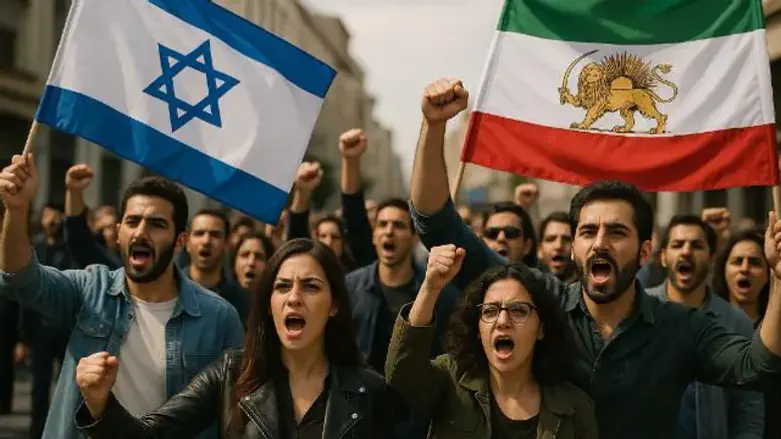
In authoritarian systems, political behavior is driven less by formal information than by belief-belief about who stands behind whom, who will intervene, and who will not. In Iran, where the state monopolizes force and controls domestic media, perceptions of foreign intent can mean the difference between restraint and mass mobilization. When those perceptions are wrong, consequences can be catastrophic.
The recent uprising in Iran once again demonstrated this reality. Large numbers of ordinary Iranians took to the streets to challenge the Islamic Republic under the assumption that the United States was prepared to decisively back their confrontation with the regime. That belief proved unfounded. The result was a massacre on a massive scale, followed by a deep erosion of trust-both in Washington’s intentions and in the credibility of external messaging more broadly.
The problem was not American restraint. It was unmanaged expectation.
This is where U.S. strategic communication-and its failure-must be confronted honestly. The United States has deliberately preserved ambiguity in its Iran policy. That ambiguity serves real purposes: maintaining flexibility, deterring adversaries, and keeping multiple policy options open. But ambiguity only works when it is clearly understood as such. When it is not explained, contextualized, and reinforced by authoritative American messaging, it can become dangerous.
In the Persian-language information environment, that danger is particularly acute. The U.S. government has not consistently articulated what its Iran policy is, what it is not, or where its limits lie. Sanctions are routinely misread as an intention for regime change; political rhetoric is mistaken for operational commitment; expressions of sympathy are interpreted as signals of intent. In the absence of clear and continuous American communication, others inevitably step in to fill the gap.
Iran sits at the center of overlapping regional threat perceptions. Different actors-adversaries and allies alike-hold distinct views on escalation, deterrence, and timing. Some favor pressure and confrontation; others prefer containment or sustained ambiguity. These differences are rational and legitimate. But when they are all projected into the Persian-language media sphere, they tend to blur Iranian audiences’ understanding of what actually constitutes “the American position."
That perception gap is amplified by a crowded ecosystem of satellite television, social media influence campaigns, and diaspora-based commentary operating from Western countries. Proximity to Western media and policymakers gives these narratives outsized credibility inside Iran. Over time, interpretation begins to substitute for policy, and expectation replaces fact.
The result is a moral hazard for Iranian civilians and a strategic trap for Washington. Once large-scale action begins under the belief that American backing is afoot, the United States is forced into a false binary: intervene and risk escalation it did not choose, or refrain and be accused-by those suffering the consequences-of betrayal. Either path damages U.S. credibility and constrains future options. This dilemma is not accidental; it is the predictable outcome of ceding interpretive authority over U.S. policy to external actors.
None of this was inevitable. The failure was one of absence, not action.
Early in the current administration, the U.S. Agency for Global Media was nearly shut down, and its Iran-facing capabilities-including Voice of America Persian-were left largely dormant for an extended period. During that vacuum, the Persian-language information space did not remain neutral or empty. It was rapidly occupied by third-party actors who shaped Iranian perceptions of U.S. foreign policy in ways Washington neither directed nor necessarily intended.
Without a visible, continuous, and authoritative American voice, narratives hardened, expectations escalated, and assumptions about U.S. intent circulated unchecked at moments of acute political sensitivity. The lesson is straightforward: prolonged USAGM silence proved costly, both for Washington and the people of Iran.
For Washington to retain narrative control over its own foreign policy-and to avoid unnecessary moral, strategic, and civilian fallout-USAGM and VOA Persian must be omnipresent. Authoritative clarification cannot be improvised during crises; it must be sustained, visible, and institutionally anchored. Reestablishing that constant presence is a prerequisite for effective U.S. policy toward Iran.
Voice of America Persian occupies a position in the Persian-language information space that no other outlet can replicate. It carries institutional American authority, and that authority must be exercised deliberately. VOA Persian should clearly and accurately articulate the policies of President Trump’s administration, consistently convey core American values, and provide a credible platform for representatives of Iran’s diverse social strata as well as for genuinely independent experts.
In the short period since its reopening, the service has taken meaningful steps in this direction. The leadership of Ms. Kari Lake at the U.S. Agency for Global Media, together with Mr. Ali Javanmardi’s role as Senior Advisor for VOA Persian, has been constructive and professionally sound. But the scale of the challenge requires more than competent recovery. It demands greater intensity, broader reach, and sustained omnipresence. To meet that challenge, USAGM and VOA Persian must move beyond minimal functionality toward a genuinely strategic posture. Several reforms would significantly reduce the risk of misperception, civilian harm, and unwanted escalation.
First, VOA Persian must institutionalize strict policy attribution discipline. Iranian audiences must hear-clearly, repeatedly, and without ambiguity-the distinction between official U.S. policy, internal American debate, independent analysis, and third-party interpretation. Speculation must be labeled as speculation, advocacy as advocacy, and policy only when it is policy. This is not a semantic exercise; it is a protective mechanism against false expectation and narrative substitution.
Second, expectation management must become a core mission rather than a secondary consideration. Explaining what U.S. support does not mean is as important as explaining what it does. Strategic ambiguity should be framed explicitly as intentional, not as a promise deferred or a signal of imminent action. This reduces moral hazard for Iranian civilians while preserving U.S. strategic flexibility without deception or over-signaling.
Third, VOA Persian must actively resist the laundering of third-party narratives-whether adversarial or allied-as American intent. This does not require naming actors or imputing motives. It requires transparency about interests and perspectives. Iranian audiences are capable of understanding that different states view Iran through different strategic lenses. What they lack is consistent clarity about which lens reflects Washington’s own policy.
Fourth, omnipresence-not crisis-driven visibility-must be treated as a strategic requirement. Authoritative clarification cannot be improvised during moments of unrest; it must be continuous, routine, and institutionalized well before crises erupt. A persistent American voice reduces the space in which others can substitute interpretation for policy.
Finally, VOA Persian should prioritize depth and credibility over virality. Formats that reward outrage, immediacy, or personality-driven speculation may generate short-term engagement, but they undermine long-term trust. The service’s comparative advantage lies in sober analysis, contextual explanation, and institutional reliability-qualities that remain scarce and therefore powerful in Iran’s media ecosystem.
Taken together, these reforms would allow USAGM to reassert control over how U.S. policy is understood, reduce the risk of dangerous misperceptions, better protect Iranian civilians from the consequences of false hope, and help Washington avoid moral and strategic dilemmas it did not choose. More broadly, they would restore VOA Persian to its proper role as the authoritative interpreter of Washington’s voice for Iranian citizens.
Dr. Reza Parchizadeh is a geopolitical analyst specializing in Iran, U.S. foreign policy, and strategic communications. He has provided policy advice and analysis to the U.S. government and members of Congress on Iran-related security and regional issues. Since 2018, he has been a regular expert analyst for Voice of America Persian, offering commentary on Iranian politics, regional dynamics, and U.S. policy toward Tehran.