
Leo Pearlman is a London based producer and a loud and proud Zionist. His most recent film about the Oct 7 Nova Music Festival massacre, ‘We Will Dance Again’ has won the 2025 Emmy of the 46th Annual News & Documentary Awards for most ‘Outstanding Current Affairs Documentary’.
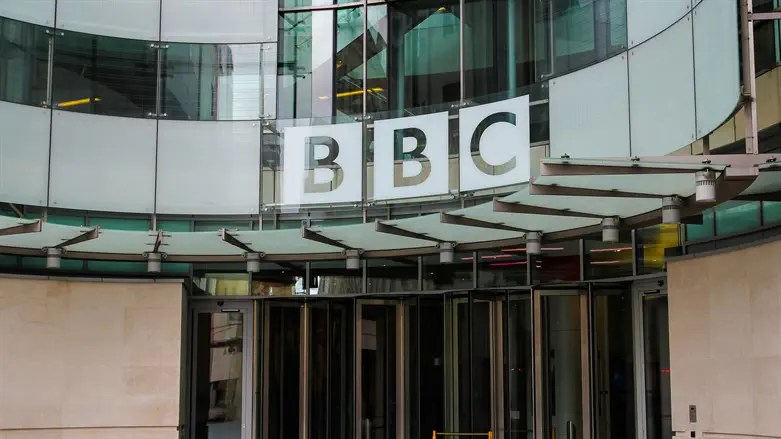
Institutions reveal the health of a society long before politicians do, so let’s start with everyone’s favourite, good old Auntie, the BBC. In the past week alone, we’ve seen just how incapable this unwieldy organisation has become of reforming itself, or even of recognising the depth of the problem it faces.
On Holocaust Memorial Day, not one, not two, not three, but multiple BBC presenters and commentators chose to omit the mention of Jews when describing what Holocaust Memorial Day exists to commemorate. This was not a slip of the tongue or an isolated mistake, it was erasure by omission.
Holocaust Memorial Day was created to ensure the remembrance of the systematic murder of six million Jews by the Nazis. That fact is not controversial, nor is it political, it is historical. To avoid saying the word “Jew" is not sensitivity, it’s distortion.
So the real question isn’t whether this was offensive, it clearly was. The real question is why? What drives a fear of stating a fact that only a Holocaust denier would take issue with?
I do not believe the BBC as an institution, nor the individuals involved, are Holocaust deniers or diminishers, but that only sharpens the concern. Because if this wasn’t denial, then it was calculation, a decision, conscious or otherwise, that it was safer to omit Jews from the Holocaust than to risk upsetting someone else. Who, exactly, are they afraid of?
Less than 24 hours later, we got a second answer.
With huge excitement and a “world exclusive", BBC Radio 1 debuted a new track by Kneecap, attention-seeking provocateurs who have waved Hezbollah flags, engaged with antisemitic literature and built their notoriety on deliberately courting controversy and being proudly opposed to the existence of the only Jewish state.
But the BBC did not just debut any track. It was a song admonishing the Prime Minister for being unduly influenced by Israel, with allegations of genocide thrown in for good measure. This wasn’t an unfortunate booking, it was editorial enthusiasm.
Then, as if on cue, we learned that yet another senior BBC employee had been posting some fairly egregious antisemitic tropes on his social media. He had no issue with the omission of Jews from Holocaust Memorial Day coverage. In fact, he blamed “Jewish hysteria" for the complaints that followed.
From there, the descent was depressingly familiar: Jewish financial influence, Jewish political power, and the implication that Jewish concern is manipulation rather than legitimate grievance, all deployed to explain the supposed “fuss" around Jewish football fans being banned from attending a match in Birmingham.
Three examples, one week, which adds up to telling us a fair amount about our national broadcaster.
Perhaps the BBC’s much-heralded 30-minute online antisemitism training simply hasn’t yet reached the on-air presenters and production teams who couldn’t bring themselves to say the word “Jew" on Holocaust Memorial Day. Perhaps it hasn’t reached senior editorial staff either.
Or perhaps those involved genuinely believe that politics, ideology, and even lyrics can be neatly separated from art, provided the track is, in their professional judgment, a “real banger". A principle that, one suspects, is applied rather selectively.
Either way, this is not about one DJ, one producer, or one careless tweet. It is about an institutional culture that has learned to mistake silence for neutrality and omission for balance.
This pretence, that the BBC, or any media organisation, can still operate as a neutral, impartial force in an age of polarisation, social-media pressure and limitless alternatives, sits at the very heart of the wider problem. It is also why the debate about the BBC’s funding model is so broken and deeply disingenuous.
The licence fee was born in an era of scarcity, when the BBC was the national broadcaster, not one of many. That world no longer exists, audiences are no longer captive, authority is no longer assumed. Trust cannot be mandated, it must be earned and public funding should follow public value, not institutional inertia.
This is not an argument for dismantling the BBC. It is an argument for modernising it, for aligning funding with accountability and authority with legitimacy. This places an unavoidable responsibility on whoever is appointed the next Director-General of the BBC. Because if that individual does not have the courage to lead reform from the front, to challenge funding orthodoxy, institutional culture and the comforting myths the BBC tells itself, then there is a very real possibility they will not merely preside over decline, but become the last person ever to hold the role.
Institutions survive reform, they do not survive fear, denial and a blatant disregard for the public, but the consequences of those negative responses do not stop at broadcasting. They flow downstream, into education, into unions and ultimately into the culture our children inherit.
The BBC is not operating in isolation, it is part of an ecosystem in which institutions increasingly mistake activism for virtue, silence for safety and moral clarity for risk. Nowhere is that clearer than in our education system.
In recent years, teaching unions, most notably the National Education Union, have drifted far beyond their remit. What began as advocacy for staff welfare has metastasised into ideological capture. Motions on foreign policy, boycotts and “decolonised" curricula now sit alongside and often above the core business of education.
This matters, because schools are not neutral spaces, they never have been. They transmit values, assumptions and boundaries of acceptable thought. When unions normalise Holocaust inversion, minimise antisemitism or treat Jewish identity as uniquely suspect, that worldview does not remain confined to conference halls, it enters classrooms and influences the next generation.
We are already seeing the results.
Holocaust education is quietly diluted, reframed as a generic lesson about “hate" rather than a specific warning about where antisemitism leads. October 7th is contextualised before it is acknowledged. Jewish pupils are told, implicitly or explicitly, that their grief is political, their fear exaggerated and their identity conditional.
This is not education, it is moral outsourcing and it mirrors exactly what we are seeing at the BBC. The same avoidance of specificity, the same fear of naming antisemitism plainly. The same instinct to placate the loudest activists rather than protect the most vulnerable minorities.
This is how cultural capture works. Not through coups, but through compliance. Not by force, but by exhaustion. Institutions slowly absorb the language and priorities of the most ideologically confident actors in the room, until dissent becomes career-limiting and silence becomes policy. Once that culture is embedded, training modules and diversity statements are irrelevant. You cannot PowerPoint or compulsory online teach your way out of cowardice.
The danger here is truly generational.
If broadcasters cannot say who the Holocaust was for and schools cannot teach why it matters, then memory itself becomes negotiable. History turns into a tool, not a teacher and young people grow up fluent in grievance but illiterate in responsibility.
This is why the crisis facing the BBC is not really about one song, one presenter, or one week of failures. It is about whether our institutions still understand their role as guardians, not amplifiers, as educators, not appeasers.
Reform, then, is not optional, it is long overdue and it must be led by people willing to accept discomfort as the price of leadership, in broadcasting, in education and in public life more broadly.
The alternative is already visible and while the threat may not be perceived as widespread, after all, as long as it’s “just the Jews complaining", why disturb the status quo, the problem facing society more broadly is already clear.
We are watching the slow normalisation of a culture in which truth is trimmed to avoid backlash, minorities are protected only when convenient and institutions meant to steady us in moments of fracture instead mirror the chaos outside their walls.
That is not a healthy society, nor is it resilient and it is not a sustainable one.
Institutions do not collapse because they are challenged, they collapse because they refuse to lead. If those in authority lack the courage to confront uncomfortable truths, then drift becomes policy and decay becomes inevitable. All of which means that the responsibility lands on us.
History does not judge societies by how carefully they avoided offence, but by whether they had the courage to tell the truth when it mattered. The cost of failing to do so will be borne by our children, the generation that will inherit our silence.