
CHAG Tu B’shvat
At first glance, Tu B’shevat, the Rosh Hashanah for fruit trees, seems to be of mere technical significance - the calendar marker for the yearly mitzvot that pertain to fruits. Yet, surprisingly, we treat it as a minor holiday on which we skip tachanun and avoid fasting. What are we celebrating?
It is also noteworthy that we only celebrate the Rosh Hashanah of trees, but not of other plants or even tree saplings. Why are trees more important than other vegetation?
The Importance of Planting Trees - Elevating Desire
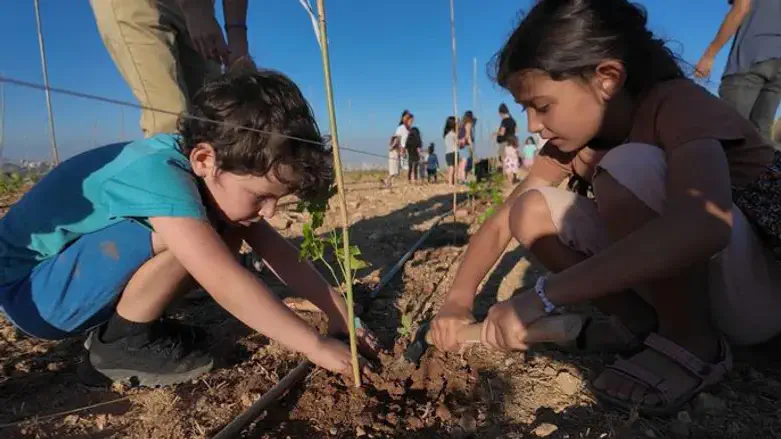
Chazal teach us that tree planting is the best way to emulate and draw close to G-d. Hashem planted trees when He created the world, and we are commanded to do so upon entering Eretz Yisrael. Early Zionists fulfilled this commandment by emphasizing tree planting in general and specifically on Tu B’shevat. Why is planting trees so important?
Man easily exploits the world without feeling responsible for its upkeep - a dangerous mistake. The Torah emphasizes this when describing Adam’s placement in Gan Eden: Hashem placed him there to “work it and protect it." Earlier, the Torah reveals that Hashem deliberately withheld plant growth until creating man to cultivate the earth. It is critical for man to see himself as responsible for maintaining and developing the world that G-d created for him.
Planting trees contributes more to the earth than planting other vegetation. Most plants produce little fruit and last only one season. Trees provide abundant fruit and last for many years.
Trees may require years of nurturing before they provide fruit, but they are an excellent long-term investment - both for the quantity of fruit they produce and for their tall and strong presence in the fields. Planting trees demands patience and long-term vision, reflecting a recognition of our responsibility to develop the world meaningfully.
This is why Rav Kook, when describing tree planting, distinguished between two Hebrew words for human motivation: cheshek (desire) and chefetz (will). Planting may begin with the desire for relatively quick food. But that emotion must be channeled into something higher - the ideological drive to create and contribute in the most meaningful way. This ideology finds its fullest expression in the planting of trees.
Planting Trees and Redemption
In emphasizing the importance of tree planting, Avot D’Rebbe Natan asserts that one who hears of Moshiach’s arrival while planting should first finish planting and only then greet Moshiach.
The association of planting with redemption also appears in Masechet Taanit. The Gemara tells of Choni Hame’agel’s question about the famous pasuk that describes our redemption - “Shir hama’alot b’shuv Hashem et shivat tziyon, hayinu k’cholmim (Song of steps: When Hashem returns the returnees to Zion, we shall be like dreamers)." Choni wondered: Could a person sleep and dream for seventy years, the length of the first exile?
One day, Choni met a man planting a carob tree, which takes seventy years to bear fruit. He asked why the man was planting a tree he would likely never eat from. The man answered that just as he found and enjoyed trees planted by earlier generations, he, too, was planting for future ones. After this encounter, Choni fell asleep for seventy years. Upon awakening, he met the man’s grandson, who was enjoying the fruits of his grandfather’s labor.
There is a profound connection between the two parts of the story. Choni wondered about sleeping for seventy years and its connection to redemption. Tree planting is part of the answer. Redemption comes when people can see beyond themselves and work towards their nation’s future. We complete our planting before greeting Moshiach because the belief expressed by planting trees helps bring him.
Knowing the temporary nature of their presence in each place, Jews in exile lacked the motivation to invest in trees and other infrastructure. When we enter Eretz Yisrael, we must realize that we are finally home in a place that is our own, where iy"H our descendants will continue to live. We demonstrate this realization by planting trees.
Rav Kook saw this story as a model for the ideal form of tree planting and for what Tu B’shevat symbolizes:
חשק נטיעת האילנות נובע מחפץ הטבת הדורות הבאים המובלט בתקפו בעץ החרוב.
The desire to plant trees should flow from an interest in helping future generations, symbolized perfectly by the carob tree.
On Tu B’shevat, we celebrate trees and what planting them reveals about us - both in general and specifically about our relationship with the land to which Hashem has returned us.
Rav Reuven Taragin is the Dean of Overseas Students at Yeshivat Hakotel and the Educational Director of World Mizrachi and the RZA.
His new book, Essentials of Judaism, is available at rabbireuventaragin.com.