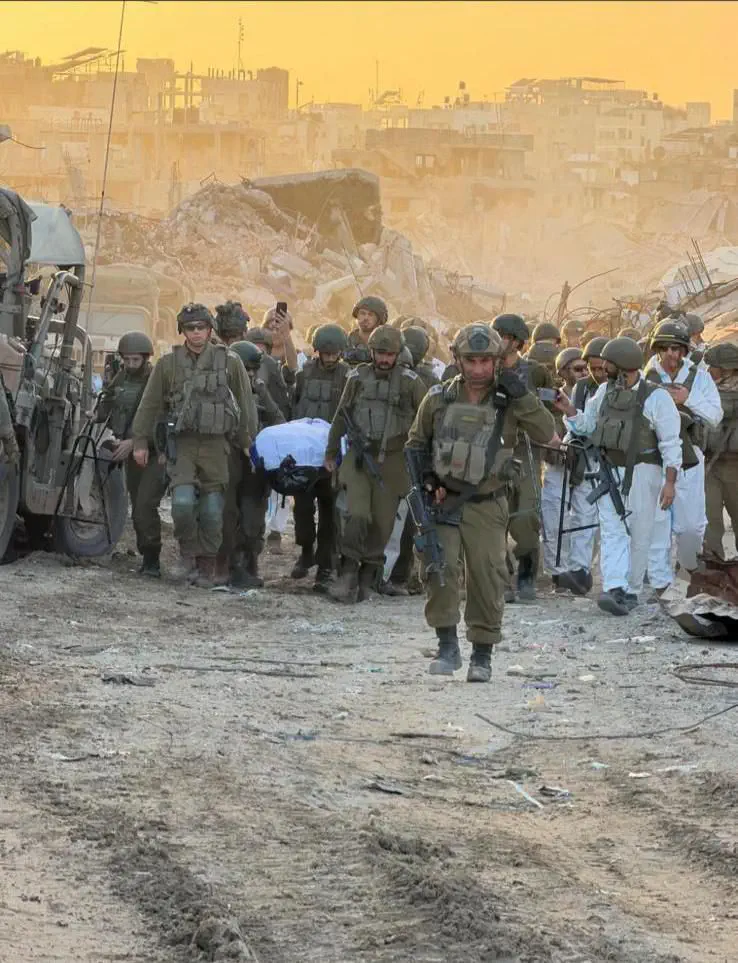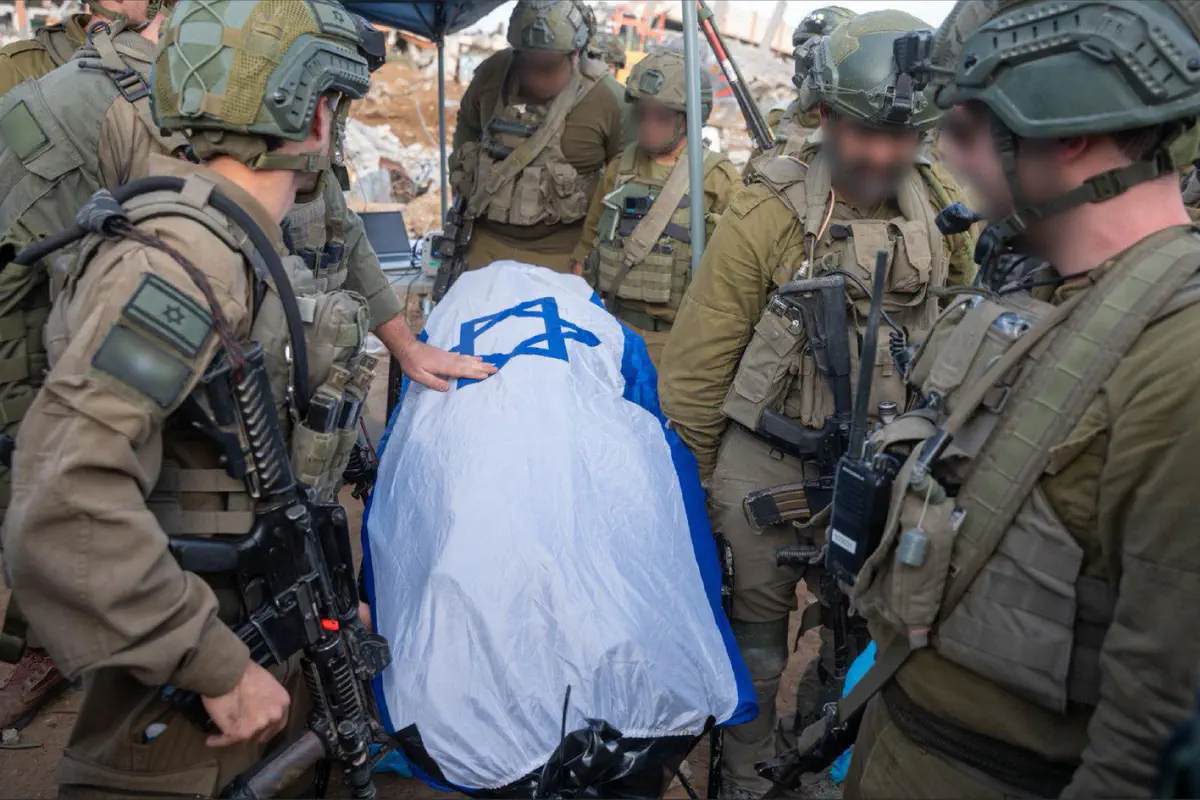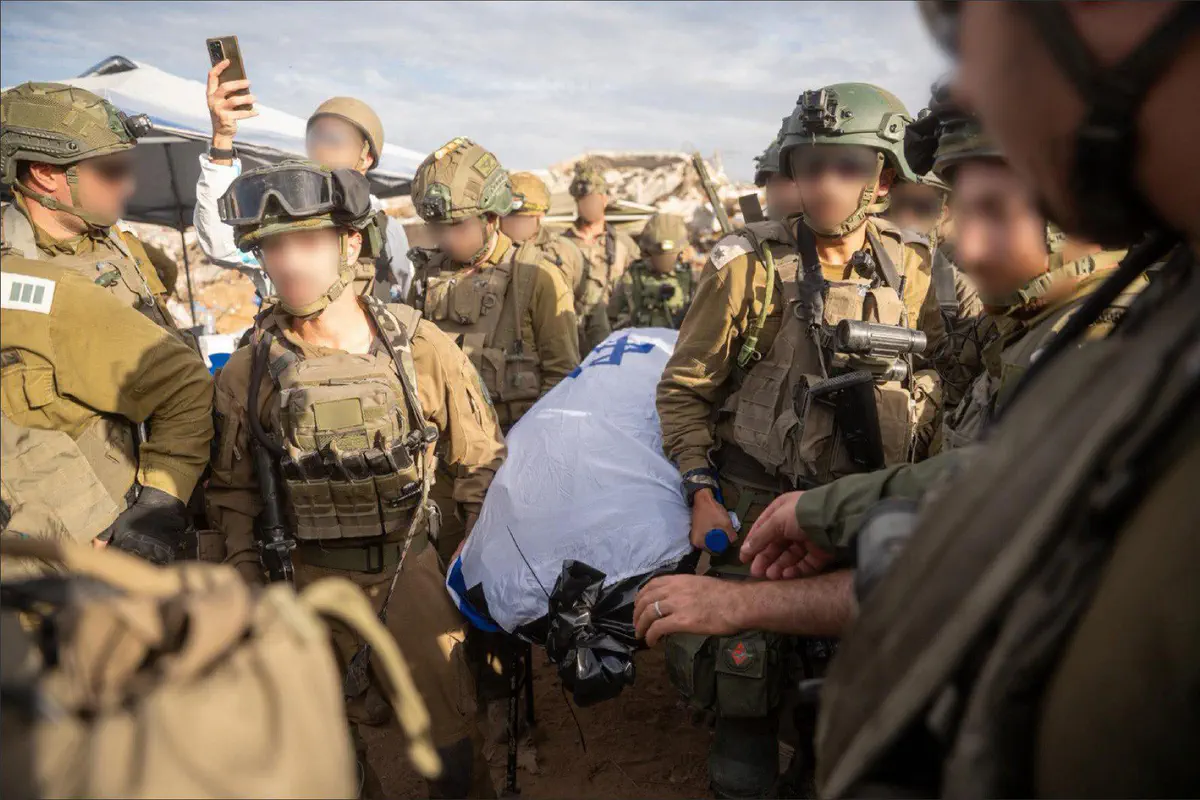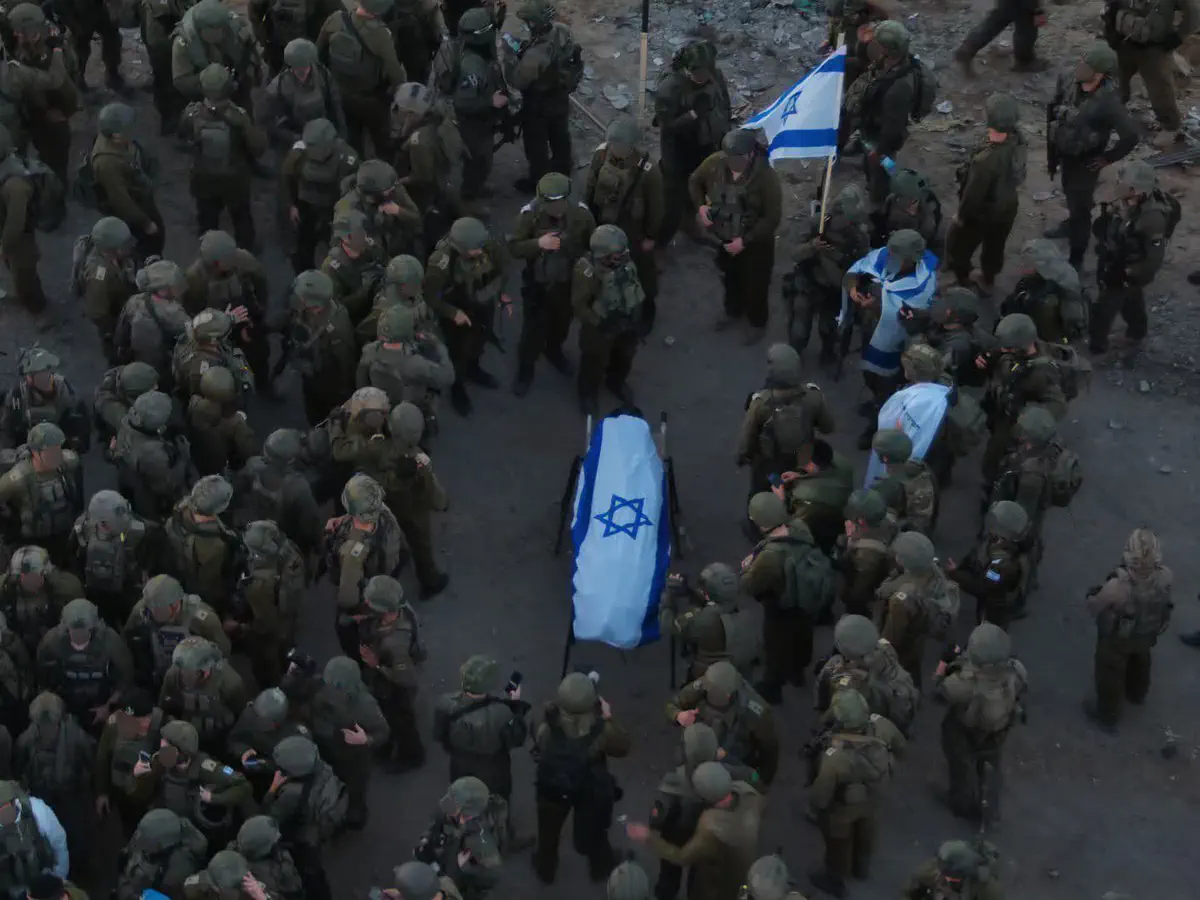
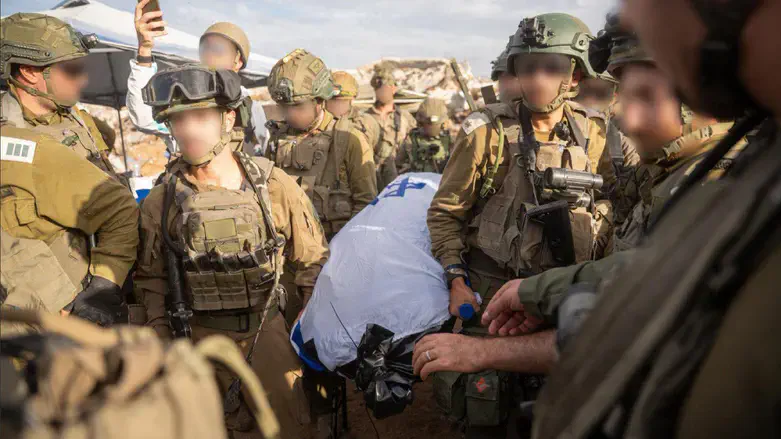
The Deputy Commander of the Southern Command Search Unit, the Military Rabbinate's Combat Unit, Major A., recounts in an interview with Arutz Sheva-Israel National News Operation Courageous Heart, the mission to recover the final deceased hostage, Ran Gvili, from the Gaza Strip.
Maj. A. says that the preparations for the operation had begun earlier, but due to various constraints, the operation was delayed. This being said, his soldiers were ready for action for a while, until "last week they were notified of a window of opportunity to execute the mission, and we began to get ready. We called the soldiers from their homes three days before the operation, we were issued the dedicated gear, and we practiced on dummies."
A. also notes that there were other units under his unit's command, including the dentists' unit, which identified the body, soldiers from an explosives ordnance unit to ensure the soldiers' safety, a unit of terrain experts, an IDF anthropologist, members of the Captives and Missing Persons Unit, and his soldiers who carried out the work.
"We joined an engineering unit that dug in the dirt with the excavators and pulled out the remains. This is very precise work; it demands great concentration by the troops," he explains, and notes that the forces entered the territory of the cemetery after a navigation and signage team that studied aerial images preceded them and marked points where there was a possibility to find Ran's body.
Regarding the work with the engineering vehicles, Maj. A. stresses that it was the most gentle work done by the heaviest tools. Before the start of the mission, A. spoke to his soldiers about its sensitivity, and in the field, there was strict coordination between a director on the ground and the excavator operator.
The excavator removed the bodies from the ground, arranging them in a manner that allowed for an initial examination by forensic dentists, with meticulous documentation and marking of details to ensure that everything planned to be removed from the grave was indeed recovered.
"We began on Sunday afternoon, and we were prepared for a few more days. For this, we called up a few more soldiers to allow for the constant execution of the operation, but we found Ran even before the next group of soldiers. There was a great sense of pride, the feeling of coming full circle on a biblical level," A. says. He recalls that in his speech to the soldiers, he mentioned the story of Samsons who toppled the pillars and, with his death killled more Philistines than he killed when he was alive, and the bible describes how Samson's brothers went to remove the rubble and find his body. "We have the same spirit and the same heritage."
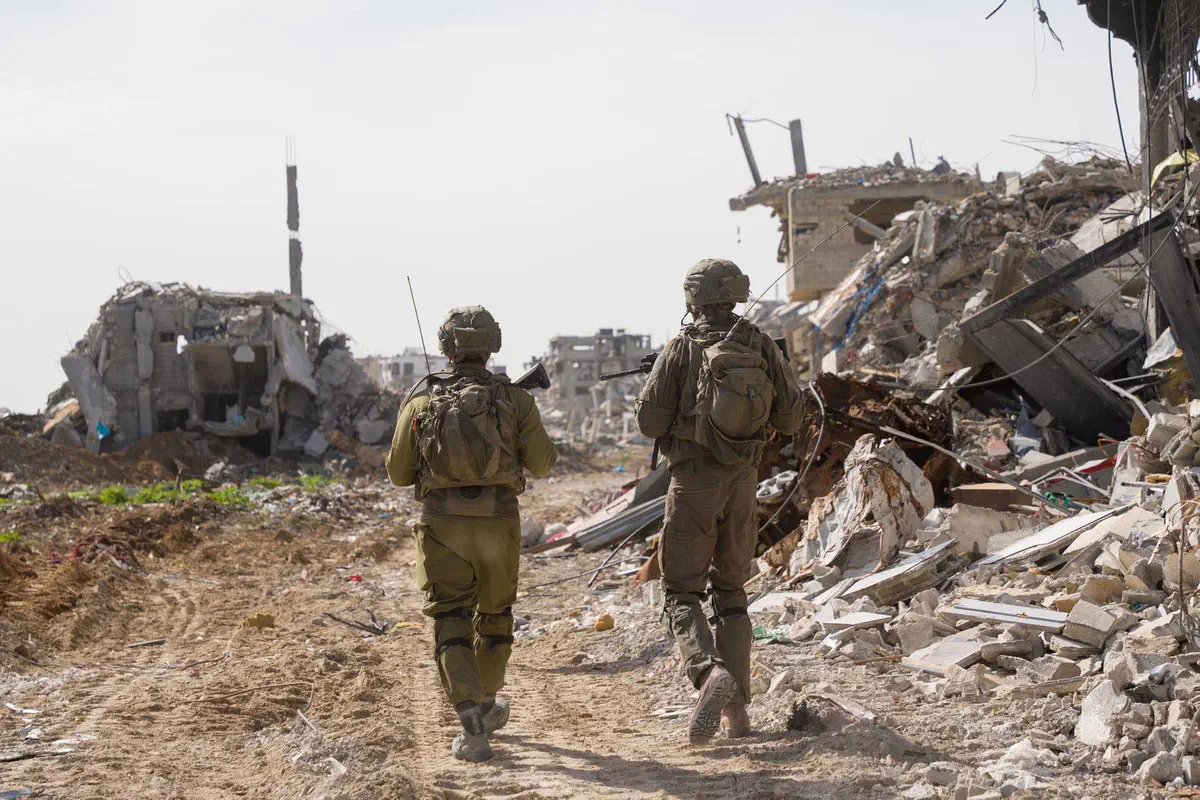
In response to our question, Maj. (Res.) A. says that the work on the ground was also accompanied by risks that cannot and should not be detailed, given that this was an active combat zone. In this context, he noted the security envelope provided to his soldiers by the Alexandroni Brigade, while emphasizing that the danger was indeed present throughout the entire operation.
Regarding the composition of his unit, the combat unit of the Military Rabbinate, Maj. A. explained: “These are infantry fighters from all IDF units, religious and secular alike, who are willing to carry out the mission that the people of Israel need," he said.
He went on to describe a meaningful sense of closure experienced by his soldiers following the recovery of Ran Gvili: “Before the war, we were required to assist along the Judea and Samaria sector. We were stationed at the Lamed-Heh outpost, where we carried out operational activity for nearly a month. During that period, we conducted a drill to maintain our operational readiness, and at its conclusion, we held a formation in which we recounted the Lamed-Heh convoy incident, in which our soldiers were killed and their bodies abused until a British officer understood the importance of the matter and brought the fallen to Kfar Etzion, where the Vilna Gaon’s lottery was conducted. We pledged that we would not leave a fallen soldier behind. As a unit, we swore to bring everyone back. We held that formation on the anniversary of the fall of the Lamed-Heh platoon, and now, on the Hebrew date of the 8th of Shevat, we found Ran Gvili. For us, this is a very special closing of a circle."
Toward the end of the conversation, we asked Maj. A. about the findings discovered in Ran’s grave in Gaza. He said that the items found indeed matched what the force had expected to find. This included dental identification, as well as the fact that “based on the information we received, we understood that he might be found with some of his uniform, and indeed we found those items in that same grave together with his remains." The information was obtained through both human intelligence and various additional technological means.