

Dr. Avi Perry is a former professor at Northwestern University, a former Bell Labs researcher and executive. He served as Vice President at NMS Communications. He represented the United States on the UN’s International Telecommunication Union (ITU) Standards Committee, where he authored significant portions of the G.168 standard. He is the author of the thriller novel 72 VIRGINS, a Cambridge University Press book on VOICE QUALITY IN WIRELESS NETWORKS. More recently, he published: UNLOCKED: A PRACTICAL GUIDE TO LEARNING AND APPLYING AI TO SOLVE REAL WORLD PROBLEMS, and A WINNER’S PLAYBOOK FOR STRATEGIC ADVANTAGE: WHY SMART PEOPLE KEEP LOSING, and is a regular op-ed contributor to The Jerusalem Post and Israel National News
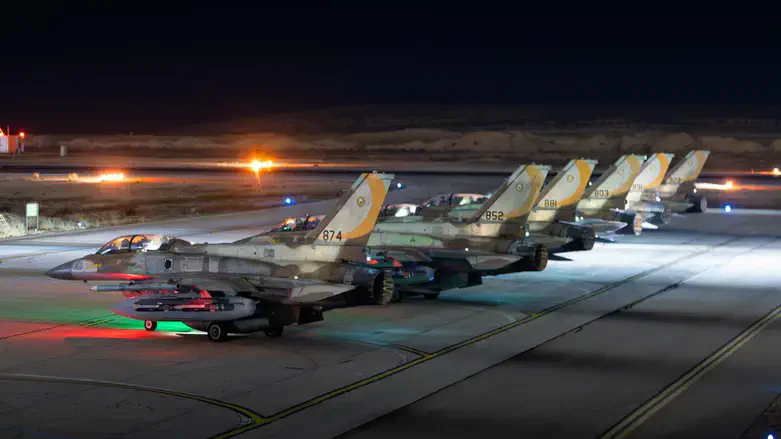
Calls for a limited U.S. military strike on Iran rest on a dangerous illusion: that Washington can control escalation while achieving a meaningful strategic outcome. In reality, a strike that does not explicitly aim at, and actively pursue, regime change risks producing the worst of all worlds: regional war, prolonged instability, and a battered but still entrenched Iranian regime.
If the United States engages Iran militarily, the objective is not a matter of debate. Regime change must be the objective. Anything less is not restraint; it is strategic confusion.
Limited Strikes Rarely Remain Limited
Iran’s military doctrine is designed to ensure that no attack on its territory remains contained. Retaliation against Israel, against U.S. bases across the region, or through proxies such as Hezbollah is not an unintended consequence, it is the plan.
Once Israeli civilians or American personnel are hit, escalation becomes unavoidable. What begins as a “limited strike" rapidly turns into a multi-theater conflict lasting weeks, not hours. At that point, Washington no longer controls the pace or scope of events.
History offers little comfort to advocates of half-measures. In 1998, U.S. strikes against Saddam Hussein’s Iraq degraded military assets but left the regime intact. The problem was not solved; it was deferred, at far greater cost.
Regime Change Is Not Optional
Iran’s regime is the central engine behind nuclear ambition, proxy warfare, regional destabilization, and the systematic repression of its own population. The regime’s most consistent enemy is not Israel or the United States, it is the Iranian people themselves.
Yet courage alone does not overthrow entrenched authoritarian systems. Revolutions succeed when popular resistance is paired with organization, leadership, and a credible alternative authority. Iran lacks these elements today not because its people are unwilling, but because the regime has deliberately crushed and fragmented them.
A limited strike that weakens the regime while leaving it standing will not empower Iranians. It will strengthen repression, validate the regime’s narrative of foreign aggression, and prolong the conflict Israel already lives with daily.
Israel’s Experience: Tactical Success Without Political Resolution Fails
Israel understands something many Western analysts still resist: military success without political dismantling produces cycles, not solutions.
Hezbollah after 2006 and Hamas after repeated Gaza rounds illustrate the same strategic truth. Deterrence works only against actors who fear loss more than survival. Iran’s regime does not. It fears internal collapse far more than external punishment.
That is why an Israel-aligned strategy cannot support a U.S. limited strike that leaves Tehran intact.
How Regimes Actually Fall
Authoritarian regimes rarely collapse because of airstrikes alone. They fall when their pillars of support, security forces, money networks, judicial systems, propaganda organs, and patronage elites, begin to defect, hesitate, or refuse orders.
This is not theory. It is historical pattern.
What the United States Should Do Instead: Fracture the Elite, Not the Population
If regime change is the objective, and for Israel’s long-term security, it must be, the United States should abandon the limited-strike paradigm and pursue a revolution-enablement strategy. This is not inaction. It is a deliberate, multi-component plan aimed at breaking the regime’s internal coalition.
The first and most critical principle is simple: pressure the elite, not society at large.
Iran’s ruling system survives because it rewards a relatively small network of enforcers, financiers, judges, propagandists, and commanders. These actors cooperate because the regime guarantees wealth, mobility, and impunity. That bargain must be broken.
First, targeted sanctions must become a personal tax on repression.
Not symbolic designations, but aggressive asset tracing and seizure efforts aimed at offshore holdings, shell companies, and family networks. The message must be unmistakable: serving the regime now carries irreversible personal cost.
Second, coordinated travel bans must close the elite’s escape routes.
Iranian officials, judges, prison administrators, IRGC commanders, and their immediate families depend heavily on access to Europe and the West. Unified visa denial across allied states turns loyalty into confinement.
Third, public exposure must replace quiet condemnation.
Detailed, documented lists identifying specific officials responsible for repression, judges, wardens, interrogators, propagandists, should be published systematically. This isolates them internationally and signals to fence-sitters that neutrality is still possible.
Fourth, choke the regime’s money arteries, not the country’s oxygen.
The focus must be on oil-evasion networks, shipping and insurance channels, procurement pipelines, and IRGC-controlled conglomerates. Every dollar denied to these networks is a dollar not spent arming Hezbollah or crushing dissent.
Fifth, create credible off-ramps for defections.
Elite fracture requires fear, but also an exit. Clear signaling that those not implicated in violence will have a future after transition encourages hesitation, non-compliance, and quiet defection within the system.
Coordination, Not Chaos
Revolutions fail when regimes isolate cities, sever communications, and fragment opposition. Communications resilience is therefore not a humanitarian add-on, it is strategic infrastructure. Sustained internal coordination enables strikes, non-cooperation, and elite paralysis.
Equally important is addressing the “day after" before collapse. Fear of chaos keeps many elites loyal. A credible transitional framework, focused narrowly on stabilization, protection against revenge, continuity of basic services, and a constitutional process, reduces that fear and accelerates withdrawal of consent.
The Role of Military Force
This strategy does not exclude force; it disciplines it. Military posture should deter mass slaughter, constrain proxy escalation, and protect emerging internal fractures. Force should support political collapse, not substitute for it.
The Bottom Line
Israel does not need a U.S. “message strike" that leaves Tehran standing. It needs Washington to confront the source of the threat.
Regime change is not a slogan. It is the only durable solution to Iran’s nuclear ambitions, proxy warfare, and regional destabilization. The alternative to a limited strike is not inaction, but a focused strategy that isolates, impoverishes, and ultimately abandons the regime’s pillars of power.
That is how regimes fall, not when they are bruised, but when they are deserted.
And that outcome, more than any limited strike, serves the US’, the entire Middle east’s and Israel’s long-term security.