
This week, as we read Parshas Beshalach, a painful chapter in our national story reached a solemn conclusion. The last of more than two hundred hostages was returned to Israel for Jewish burial. For months, the entire nation had prayed for the return of his body. When life could no longer be restored, Klal Yisrael prayed at least for dignity - that he not remain abandoned, that he be brought home to rest among his people.
The man who was returned, Ran Gvili, was not only a victim of terror. He was a hero. During the Hamas attack, he risked his life and saved many others. He acted with courage and mesirat nefesh, and paid the ultimate price. When his body was returned, it was found complete, still in his military uniform. Even in death, he returned as a soldier of Israel.
This detail is not incidental. A uniform represents responsibility, loyalty, and dedication. It testifies to how he lived and what he stood for. His return was not merely a logistical achievement; it was a moral statement: no Jew, and certainly no hero of Israel, is left behind.
Parshas Beshalach teaches a timeless lesson in this regard. As Klal Yisrael finally left Egypt, surrounded by miracles and moving toward freedom, the Torah records a seemingly unexpected detail: “Moshe took with him the bones of Yosef." Yosef had made the Jewish people swear that when redemption would come, they would not leave Egypt without him.
Why was this so essential? Yosef was long dead. Egypt was behind the Jewish people. The future lay ahead. Yet Moshe Rabbeinu understood that redemption which forgets the past is incomplete. A nation cannot march forward while abandoning those who gave their lives for its survival. Yosef, who sustained his brothers in exile and preserved the continuity of the Jewish people, had to be carried along on the journey to Eretz Yisrael.
Yosef’s bones were not merely remains. They symbolized loyalty, gratitude, and responsibility. Carrying them through the desert proclaimed a core Jewish truth: we do not cut ourselves off from those who came before us. We carry them with us.
This same truth was lived again in our own days. After long and painful months, Ran Gvili was brought home. He, too, was not abandoned. Just as Yosef was carried out of Egypt as the people moved toward redemption, Ran was carried back to the land for which he gave his life. Then and now, Klal Yisrael declares that our journey forward is incomplete if we leave our heroes behind.
Chazal, our Sages, provide us with language for moments such as these, when grief and consolation exist side by side. After the devastation of Beitar, where countless Jews were massacred and finally brought to burial, the Sages established the blessing of HaTov VeHaMeitiv. HaTov - that the bodies of the slain did not decompose. VeHaMeitiv - that they were ultimately brought to burial. Even amid immense tragedy, Chazal taught us to recognize goodness that exists within pain.
Here, too, the parallel is striking. Just as in Beitar the bodies did not rot despite the passage of time, preserving the dignity of the fallen, so too Ran Gvili was returned with his body complete, in his military uniform. This was not merely a physical fact, but a quiet expression of chesed - a reminder that even in darkness, dignity can be safeguarded.
This is why the words of Tehillim give us strength at such moments:
“Hodu laHashem ki tov, ki le’olam chasdo."
Give thanks to Hashem, for He is good; His kindness endures forever.
We do not say these words because everything is good. We say them because Hashem’s chesed has not disappeared, even when we are brokenhearted. The return of a fallen hero for Jewish burial is itself an expression of HaTov VeHaMeitiv - sorrow intertwined with gratitude.
There is real pain here. A family mourns. The nation mourns. But alongside the tears, there is also a measure of consolation - that dignity was restored, that a promise was fulfilled, that a soldier of Israel was brought home.
Ran Gvili was more than a soldier; he was a Kadosh Elyon, a true hero of Israel. Hamas did not wish to return him, and he was the last of the hostages. This was no coincidence. He embodied Jewish heroism, the enduring connection of Am Yisrael to Eretz Yisrael, and the centrality of Torah in our people’s life. He was left to be the last precisely because he was symbolic - a living emblem of what Am Yisrael stands for.
Hamas sought to deny the nation this symbol. They did not want to return him, because in him was reflected the courage, the loyalty, and the eternal bond between the Jewish people and their land. And yet, eventually, he was brought home - complete, honored, and returned to the soil of Israel. This, too, is a lesson: Netzach Yisrael lo yeshaker - the Eternity of Israel does not lie. No force can sever our connection to our land, our people, or our Torah. Even in death, the Jewish people endure, and even the enemies of Am Yisrael cannot erase our heroes from their rightful place in the story of the nation.
Parshas Beshalach teaches us that the Jewish journey is never only about reaching a destination. It is about how we carry one another along the way - in life, and even more so in death. We move forward, but we do not move on without those who carried us. Just as Yosef’s bones were carried to the Land of Israel, so too our heroes return, reminding us that living in Eretz Yisrael, rooted in Torah and mitzvot, is the central mission of Am Yisrael.
What must we do? We must live in a way that honors those who gave their lives for Am Yisrael. We must strengthen our connection to the land, to the people, and to the Torah values for which they stood. We must care for one another, support each other, and ensure that no Jew - especially a hero - is ever abandoned. Ran Gvili’s return calls us to courage, unity, responsibility, and a clear recognition that our life, our mission, and our future are inseparable from Eretz Yisrael, Torah, and the eternal destiny of Am Yisrael.
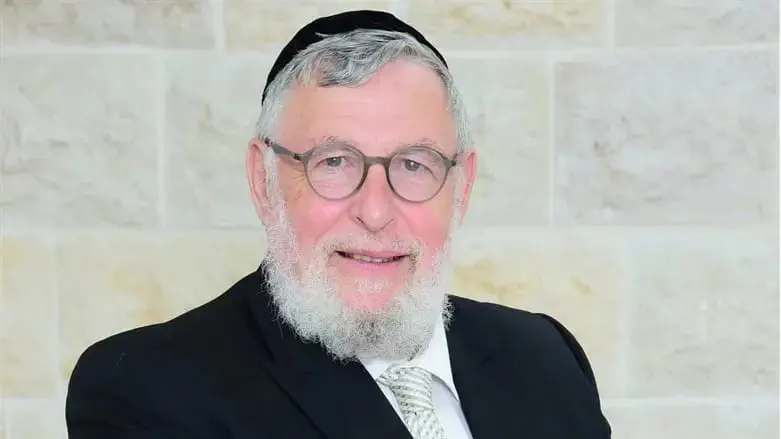
Rabbi Eliezer Simcha Weisz is a member of the Israeli Chief Rabbinate Rabbinic Council.