

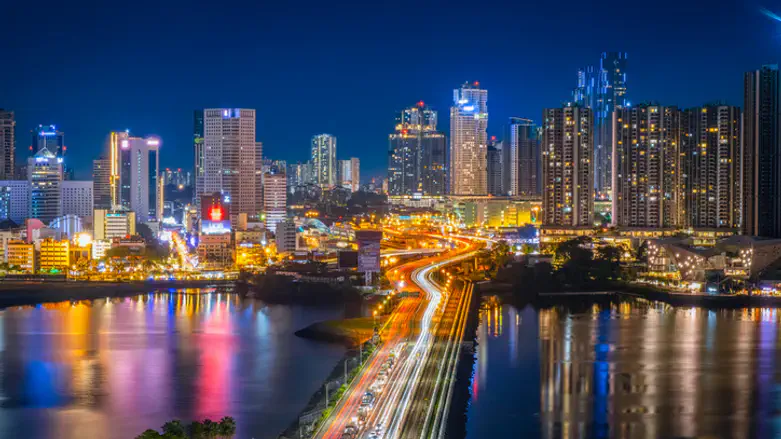
For years, western Singapore was talked about the way people talk about “future growth areas" that are promising on paper, but not yet proving themselves in prices, demand, or perception.
Then something changed.
Across Singapore, housing has been strong! Overall resale prices rose nearly 10% in 2024, and the market has posted consecutive quarterly gains. But in the West, the shift isn’t just linked to numbers rising, but also thresholds being crossed. In Q2 2025, over 400 HDB flats sold for more than S$1 million, a leap of 75%-plus year-on-year and a disproportionate share of that activity is coming from western towns.
Put simply, the surprise isn't the growth, but how it has occurred. Let’s explain:
- Price Creep vs Arrival
Most markets will warm up gradually, but the West saw fit to make a statement. We observed prices move decisively enough to reset expectations and topple valuations, revealing clear intent and reducing the likelihood of a market frenzy or real estate bubble. Despite the obvious signs, experts were left in shock by both the rise in prices and the confidence with which it occurred.
- The West stopped positioning itself
For years, we saw “up-and-coming" used to describe Singapore's growth; that phase is over. Employment nodes, transport links, retail gravity, and public spaces have given the area its own centre. Once a district no longer defines itself relative to the traditional core, demand changes character, and that transition is never subtle.
- Water reshaped how people feel about the area
We have to give credit where credit is due, and it’s a known fact that lakeside living alters decision-making. It calms people while making choices feel more urgent. Around Jurong Lake, developments like Lakeside Drive New Launch are offering buyers something they didn’t expect to find there: openness without distance, quiet without compromise. The surprise is realising you don’t have to trade city life for breathing room.
- High-value public housing reset the mental ceiling
A lesser-known fact of any market is that the moment million-dollar HDB transactions stop being headlines, a psychological line has been crossed. This means such sales aren’t anomalies anymore but are characteristic anchors. They show that value can take root outside traditional prestige zones and hold. What’s disrupting is how quickly this has become normal in the region.
- Good homes don’t sit around
Supply in the west is controlled, not excessive, and that makes quality listings feel fleeting. We’ve seen how viewings are tightening, and decisions are accelerating at a steady pace. Even now, you can hear the usual banter of clients reminiscing about missed purchase opportunities and potential investments. These little market events are what build momentum in any industry.
- The lifestyle pitch is no longer theoretical
Green corridors, lakeside paths, commercial clusters, and dependable transit are expanding on a massive scale. Locals and foreign residents are bearing witness in real time to the end of an era in which futuristic development was announced as future projects; today, they are already shaping daily life.
- Money followed delivery, not noise
Another thing most experts noted is that investor interest in the area is not merely reactive, but also follows measured paths. Capital moved because long-term plans came to fruition on schedule and on the ground. That kind of participation tends to stabilise growth rather than distort it.
- It all fits together
Lastly, urban change is usually messy. Timelines slip. Pieces arrive out of order. In the West, transport, housing, density, and amenities aligned when they needed to, and while there’s an element of chance, the hard work of government, private individuals, and policymakers ensured that it happened.
From afar, it looks sudden. But for those living within the state, it feels earned.