
Not long ago, I participated in a Thanksgiving dinner, which offered me a precious opportunity to reflect on one of the most profound spiritual practices in Judaism - expressing gratitude to God. In our tradition, gratitude is far more than good manners; it is a fundamental pillar of divine service, a tool that refines the soul, transforms pain into purpose, and opens channels of blessing.
In Jewish thought, gratitude extends beyond moments of abundance. It is a lens through which we view all of life, including its challenges. When we pause to thank God - not only for what we receive but also for the very experience of living - we realign with the divine flow of creation. Gratitude restores focus, uplifts consciousness, and deepens our awareness that every detail of existence is purposeful, orchestrated with divine precision.
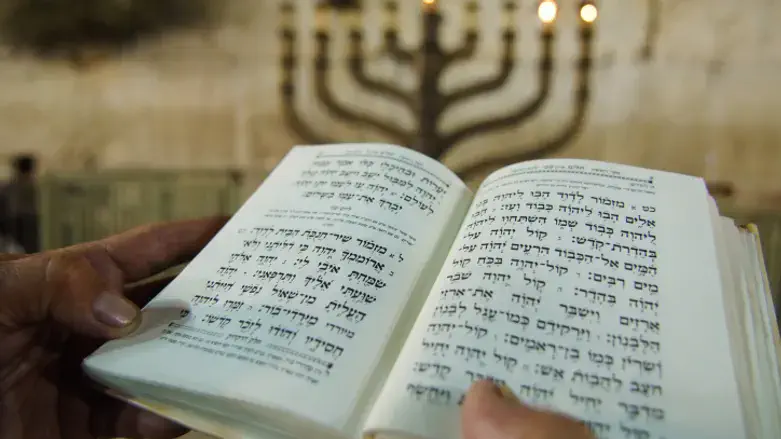
Psalm 100, known as Mizmor LeTodah - the “Psalm of Thanksgiving" - holds a special place in this practice. It was traditionally sung by the Levites in the Beit HaMikdash (Holy Temple) as part of the Korban Todah, the thanksgiving offering brought by someone who experienced divine deliverance or recovery from danger. The psalm begins, “Serve the Lord with joy; come before Him with song," encapsulating the heart of Jewish spirituality - that service of God must be infused with simchah, with joy and love.
The Baal Shem Tov, the founder of the Chassidic movement, taught a remarkable Midrash: in the era of Moshiach, all other sacrifices will cease except the thanksgiving offering. Similarly, all prayers will one day be distilled into one essential expression - gratitude. This profound teaching reveals a secret of spiritual life: gratitude is eternal because it reflects the ultimate purpose of creation itself. In the time of redemption, when all concealment and struggle are lifted, our entire relationship with God will be an unending “thank you" - a conscious recognition that all of existence is good, for it emanates directly from His infinite kindness.
Thus, when we recite Psalm 100 today, we are not only uttering words of ancient thanksgiving but also tapping directly into the light of that future redemption. As Chassidut explains, every mitzvah we perform in exile contains a spark of the divine revelation that will be fully revealed in the era of Moshiach. By thanking God now - even amid struggle - we draw the light of that perfected future into the present. No wonder our sages say that the “light of Geulah shines upon those who recite this psalm." Gratitude connects the now with what is to come; it transforms golut (exile) into geulah (redemption).
King David writes in Psalms 50:23, “He who offers a sacrifice of thanksgiving honors Me." The Hebrew phrase “Zove’ach todah yechabedanini" suggests that gratitude is not only an act of acknowledgment but also a revelation of divine honor in this world and the world to come.
The Rebbes of Chabad often emphasized that joy and gratitude are the most powerful vessels for divine blessing. When a person serves God with simchah, joy becomes the channel through which God’s infinite kindness flows. This is not mere emotional positivity - it is a metaphysical law. Blessings require an open vessel, and joy opens the soul more than any other emotion.
Chabad teachings often cite the verse, “Serve God with joy, come before Him with song," as a spiritual formula. True gratitude - recognizing the good (hakarat hatov) - gives rise to joy. In turn, joy amplifies the presence of the Shechinah, the Divine Presence, in our lives. The Alter Rebbe, in the Tanya, explains that sadness constricts the heart, creating a barrier between a person and their source of vitality. Gratitude and joy dissolve those barriers, allowing divine light to circulate freely through the soul.
From a Chassidic perspective, miracles are not merely supernatural events. A miracle occurs whenever a person reveals Godliness within the natural order. Practicing gratitude transforms you into a co-creator of that miracle. Choosing gratitude amid difficulty is a spiritual act of liberation - a redemption from inner exile.
When life feels heavy, your emotions spiral, or the world seems unfair, gratitude is your lifeline.It is not escapism but empowerment - an active choice to cling to divine truth rather than emotional illusion.
The Rebbe once explained that the Hebrew word for “thanks," hoda’ah, also means “acknowledgment." To give thanks is to acknowledge reality: not to deny pain but to affirm the deeper truth that beneath all experiences lies God’s goodness.
When we cultivate such gratitude, we become participants in our own redemption. The Lubavitcher Rebbe taught that each of us contains a spark of Moshiach - a redemptive potential waiting to be awakened. Gratitude is one way we awaken that spark. When we train ourselves to see blessings hidden within struggle, we begin to experience personal geulah, a foretaste of the world’s ultimate redemption.
Gratitude in times of hardship requires spiritual training. The Baal Shem Tov taught that whatever a person sees or experiences is a message from God, finely tailored to their soul’s growth. From that lens, even pain becomes a divine teacher. Finding power in chaos means learning to see wreckage not as destruction but as divine reconfiguration - the old breaking apart so that something new can be revealed.
In this sense, gratitude is a rebellion against despair. It refuses to surrender the inner world to external circumstances. This resilience - the choice to thank God even without full understanding - transforms victimhood into victory. As the Rebbe said, “Think good, and it will be good." Positive faith (bitachon) and gratitude are not delusions but dynamics that activate divine kindness in the world. They shift consciousness from complaint to cooperation with God’s plan.
Pain is a cunning liar; it convinces us we are abandoned or powerless. But gratitude exposes that lie by pointing to the one undeniable truth - that we are alive and that life itself is a divine gift renewed every instant. The daily prayer Modeh Ani, recited immediately upon waking, expresses this beautifully: “I offer thanks before You, living and eternal King, for You have mercifully restored my soul within me; great is Your faithfulness!" This simple declaration teaches that each morning is a resurrection, an act of trust between Creator and creation. We do not awaken to chaos but to opportunity.
Chassidic tradition often reveals layers of meaning in numbers and letters. Psalm 100, for example, contains 168 letters. Chassidic masters note that this number corresponds to seven days multiplied by twenty-four hours (7 × 24 = 168). This teaches that gratitude should not be occasional or seasonal but constant - every hour of every day. The Jewish way of life, in fact, is a continuous rhythm of blessings. The Talmud teaches that a person should recite one hundred blessings each day. Psalm 100 cultivates perpetual gratitude, even in the most mundane acts of eating, seeing, or breathing.
The psalm also contains 43 words, which is exactly half of 86, the numerical value of the Hebrew word kos (cup). This alludes to the teaching that one’s “cup" - one’s portion in life - is always half full if viewed through gratitude. When we focus on what we have, rather than what we lack, our perception transforms scarcity into abundance. The Hebrew words of this Psalm seem to whisper this truth: gratitude fills the cup of life.
Gratitude turns ordinary life into a holy dialogue with the Creator. By acknowledging divine goodness, we make room for more of it to manifest. This is why Judaism sanctifies even simple experiences - eating bread, drinking water, seeing the rainbow - with blessings. Each acknowledgment transforms the physical into the spiritual, matter into meaning.
The ultimate expression of this consciousness will be revealed in the Messianic era, when, as the Baal Shem Tov taught, the only prayer remaining will be thanksgiving. In that age of clarity, every soul will see that even what once seemed like suffering was, in truth, guided by divine mercy. But until that time, we have the sacred task of revealing that awareness now - through the daily act of gratitude, the song of Psalm 100, and the joyful service of God even in exile.
To live with gratitude is to live with faith - faith that every breath is purposeful, every challenge contains potential, and every day offers new reasons to rejoice. Gratitude is not passive; it is a spiritual discipline, a continuous act of returning to God with joy. It is how we build bridges between pain and purpose, exile and redemption.
When we say Modeh Ani each morning, recite blessings throughout the day, and sing the Psalm of Thanksgiving with heartfelt joy, we are aligning ourselves with the deepest currents of divine reality. In that alignment, we discover freedom - freedom from fear, from complaint, from exile.
Gratitude does not change the world around us; it changes how we see it - and in that shift, the world itself begins to change.