

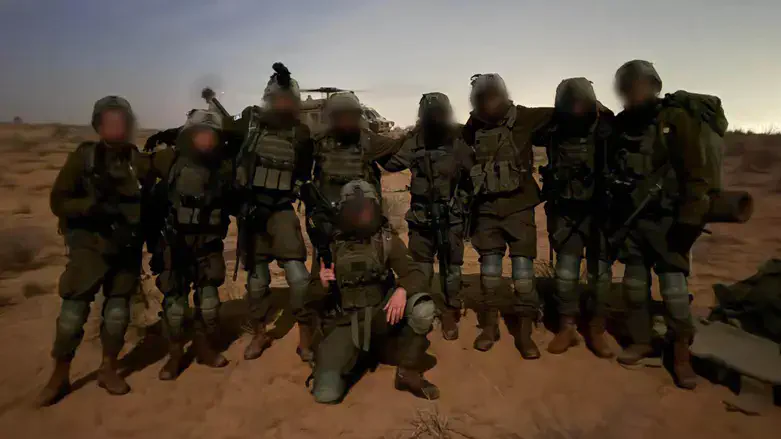
Battalion 906 of the Bislach Brigade, the IDF’s School for Infantry Professions, recently carried out an intensive and highly complex brigade-level exercise aimed at preparing students of the non-commissioned officer (NCO) course for the demanding operational reality that awaits them on the battlefield.
In an exclusive interview with Israel National News - Arutz Sheva, the battalion’s deputy commander, Lt. Col. A., spoke about the sharp transition from theoretical learning to the “bloody practicality" of combat, highlighting the critical importance of precise and realistic training in moments of truth.
“The students were excited because this is something big," he said. “But beyond the excitement, there is a deep understanding that the training mirrors exactly what they will encounter at the sharp end during a major operation."
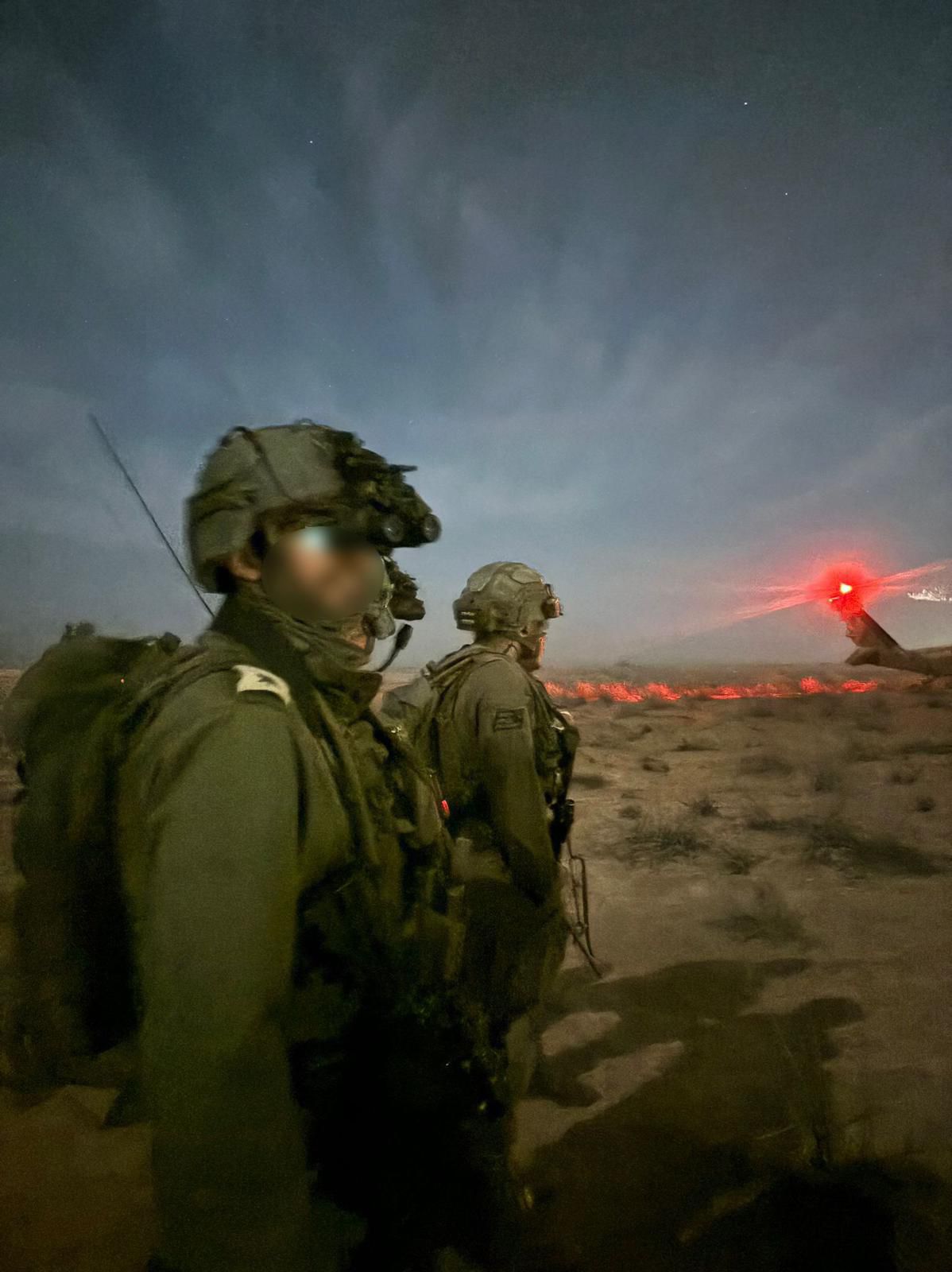
The exercise focused on one of the most complex and sensitive elements of modern warfare: the coordination between ground forces and the Air Force. At its core was the task of evacuating wounded soldiers by helicopter-a mission that demands flawless coordination and lightning-fast execution.
“First, we train on linking up with the person in the cockpit, which is a very significant part," Lt. Col. A. explained. “It requires guidance and communication based on a shared understanding. The second part, of course, is loading the casualties. Every second the helicopter is on the ground poses a risk, so it’s essential that the task is performed with precision and speed."
Having personally experienced the harsh battles of recent months, he stressed that in combat, the difference between success and failure is often measured in seconds. “They observe and learn best from their commanders. Did the commander speak clearly over the radio, or did he hesitate and seem unsure of his location? These are lessons you can’t get from a textbook-they have to be seen, understood, and internalized."
When asked about the transition from training to real-life combat, Lt. Col. A. did not shy away from the complexity of the challenge. “Many of us, unfortunately, have been in situations like this. What happens on the battlefield is exactly what happens in training-it’s not a cliché. When soldiers and commanders act automatically, we gain a lot, because the actions drilled in training occur exactly in combat."
A key focus of command discussions in the battalion is the incorporation of lessons from the October 7th massacre. “The war is present in every moment at Bislach, even if it does not appear as an official item on the curriculum," Lt. Col. A. said. “We are still living this experience, discussing war lessons-this is our story."
Beyond the tactical elements, he highlighted the most profound lesson of all-the one that cannot be learned from manuals: the human lesson. “The lessons not written in any handbook are lessons of spirit," he said. “They are lessons about a soldier witnessing a comrade being injured right before his eyes. If the soldier does not take cover optimally during training, and the commander responds harshly, this is because he has experienced such an event firsthand-these are the real lessons."
With the exercise now concluded, the young commanders of Battalion 906 are heading into the field equipped not only with professional knowledge of helicopter link-ups and stretcher handling but also with a deep understanding of the heavy responsibility that comes with command.
“The training is about more than tactics," Lt. Col. A. concluded. “It is about preparing the mind, the spirit, and the ability to act under pressure. That is what ensures success when it truly counts."