

Every proposal for Gaza’s “day after" comes dressed in a different outfit.
Some emphasize reconstruction. Others focus on governance reform. Others stress regional cooperation or international oversight. The language changes. The sequencing shifts. The tone softens.
But beneath every version lies the same unspoken question, a question no one wants to answer plainly:
What, exactly, is Phase II, and who enforces it?
Phase II is the polite name given to an impolite reality. It is the stage in which Hamas is supposed to cease being an armed force, Gaza is supposed to cease being militarized, and Israel is supposed to accept that the threat has been neutralized. It is also the stage that remains deliberately undefined in the only way that matters.
President Donald Trump speaks confidently of progress, sequencing, and moving forward. Diplomats speak of frameworks, timelines, and confidence building measures. Committees are proposed. Funds are pledged. Yet Phase II is never described honestly, because honesty would require answering three questions no one wants to own.
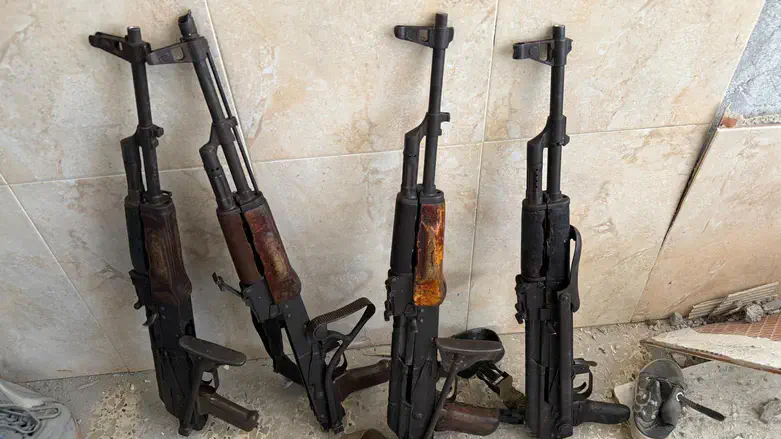
Who takes the weapons?
Who verifies compliance?
And who acts when compliance fails?
Calling it “Phase II" does not solve the problem. It merely postpones it.
There are only three theoretical ways Phase II could unfold, and none fits comfortably within current rhetoric.
The first is voluntary compliance by Hamas. This idea is often presented because it sounds humane and avoids difficult conversations about force. In reality, it is not merely unlikely. It is structurally impossible.
Hamas cannot disarm voluntarily because its weapons are not only aimed outward. They are essential for internal survival. Hamas is widely hated by large segments of Gaza’s population, which it has ruled through fear, repression, and violence. Without arms, Hamas would be exposed not only to Israel, but to its own society. Disarmament would strip Hamas of the only mechanism that protects it from internal revolt, retaliation, or collapse at the hands of its own “brothers."
Armed control, therefore, is not a policy choice for Hamas. It is a condition of existence.
More fundamentally, Hamas has no political identity separate from its ideology. Its charter, worldview, and internal legitimacy are built around a religiously framed mission that defines armed struggle and the destruction of Israel not as a tactic, but as a divine obligation. This ideology is not symbolic. It is existential.
To disarm would require Hamas to renounce the very premise that justifies its authority, its sacrifices, and its claim to moral and religious legitimacy. Doing so would not transform Hamas into a conventional political party. It would dissolve it. Leaders, fighters, and supporters are taught that abandoning this mission is not merely a strategic retreat, but a betrayal of divine command, with eternal consequences.
Organizations built on absolutist theology do not evolve out of armed struggle. They either win, are coerced, or are destroyed.
Even if some senior figures were hypothetically inclined toward accommodation, enforcement would remain impossible. Armed movements fragment under pressure. Splinter groups would reject any agreement and continue operating. Coercion would return, this time against multiple actors instead of one. Voluntarism does not eliminate violence. It delays it while multiplying its sources.
The second path is enforcement by force. This would mean raids, seizures, arrests, intelligence dominance, and sustained pressure against those who resist Phase II. It would involve violence, civilian risk, and international backlash. This option is rarely stated aloud, not because it is unrealistic, but because it is politically radioactive.
The third option is delegation to an international or regional force tasked with implementing Phase II.
This option collapses under its own contradictions.
Israel has made clear its resistance to the participation of Qatar and Turkey in any such force. The reason is not ideological rigidity. It is operational reality. Both countries have been long-standing political, financial, and diplomatic supporters of Hamas, and they continue to provide it with legitimacy, resources, and protection.
This raises an unavoidable question. How can states that have supported Hamas be expected to enforce its removal or dismantle its rule in Gaza?
A force charged with eliminating Hamas cannot include actors that have hosted its leadership, funded its governance, or shielded it diplomatically. Such a force would suffer from conflicted incentives, compromised enforcement, and a fundamental lack of trust from Israel, the very party expected to accept the outcome as a credible security guarantee.
Even if their role were framed as stabilization rather than enforcement, the contradiction remains. A force unwilling or unable to confront Hamas decisively is not neutral. It is permissive.
In practice, this means that any international force acceptable to Israel would need contributors prepared to use force against Hamas fighters who refuse to comply. Yet the very states most eager to participate are among those least likely to authorize such action. The result is paralysis by design.
If the answers to these enforcement questions remain vague, then Phase II is not a plan. It is a placeholder.
This is the central contradiction of the current moment. Leaders speak as if Phase II is a natural progression rather than the hardest, most violent, and most politically costly part of the entire process. Reconstruction is discussed in detail. Governance models are debated endlessly. But enforcement, the single factor that determines whether Phase II exists at all, is treated as an afterthought.
Rebuilding Gaza without enforcement is not stability. It is strategic amnesia. Naming Phase II without defining its mechanics is not leadership. It is avoidance.
Hope is not a strategy.
Sequencing is not enforcement.
And Phase II, absent a credible mechanism, is not a phase. It is an illusion.
Until policymakers are willing to say out loud what Phase II actually requires, they are not solving the problem. They are managing appearances while ensuring that today’s unresolved conflict becomes tomorrow’s inevitable war.