
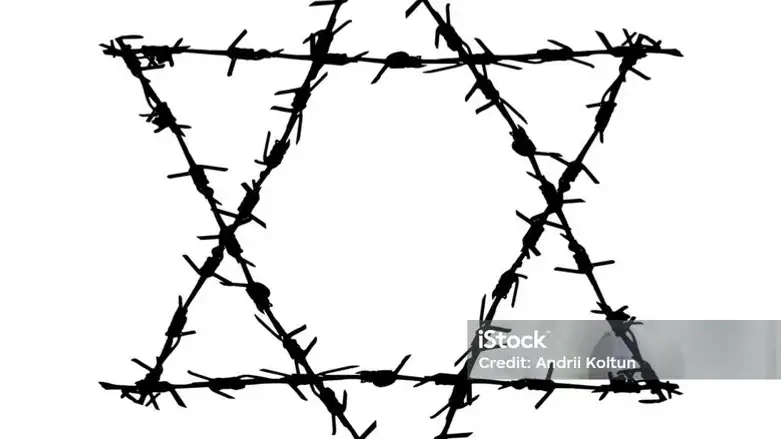
This is not a piece about optimism. It’s about how exhausted you have to be to mistake survival for progress.
For the last eighteen months, British Jews have been told, sometimes gently, more often with open contempt, that what we are experiencing is exaggerated, misinterpreted, or simply the price of standing on the “wrong" side of history. We have been instructed to separate antisemitism from antizionism, intent from impact, chants from consequences. We have been asked, repeatedly, to trust institutions that have already shown us exactly how little our trust counts.
Yet, in recent weeks, I have found myself doing something I resent about myself, think of as a sign perhaps of my own weakness, thats right, I’ve been looking for signs of improvement.
Not because the evidence is overwhelming, not because the danger has passed, but because living in a constant state of alarm is exhausting and because hope, even the thinnest version of it, can feel like a form of self-preservation.
A handful of decisions and statements have landed in quick succession. Each one, on its own, is unremarkable, things that should have happened as a matter of course. Taken together, they provoke an uncomfortable, deeply ambivalent question:
Are we seeing the faint beginnings of institutional understanding in the UK about antisemitism and anti-Zionism? Or are these gestures simply too little, too late, cosmetic adjustments to a structure that has already failed beyond repair?
When the Police Are No Longer Untouchable
When the Home Secretary publicly expressed a lack of confidence in West Midlands Police following their disastrous appearance before a select committee, it mattered more than I expected it to.
Not because a police force was criticised, reports do that all the time, but because the findings pointed towards something far more corrosive, a fit-up. Jewish complaints mishandled, standards unevenly applied, ideology distorting judgment. Trust eroded to the point of collapse, if indeed there was any trust left to destroy.
For once and to my great surprise, the response was not procedural defensiveness or institutional stonewalling, it was the threat of political consequence.
That shouldn’t feel notable, but it does and the fact that it does is part of the problem.
A Line Drawn, Albeit it Belatedly, in Medicine
Then there was the striking off of Asif Munaf, a doctor who had previously appeared on The Apprentice and was later exposed for posting some of the most grotesque antisemitic material imaginable.
This was not careless language or misjudged satire. It was Holocaust denial, jokes about ovens, sick commentary on October 7th, including remarks about beheaded babies.
The medical profession eventually acted, yes slowly, undoubtedly reluctantly, but nonetheless decisively.
I should feel reassured by that. Instead, I feel something closer to numb relief, because what lingers is not the outcome, but the question of how such material was tolerated for so long and how often similar cases quietly disappear into “context," “complexity," or internal process.
Still, it happened and part of me, to my own irritation, logged it as progress.
When Being Jewish Is Treated as a Political Provocation
Perhaps the moment that cut closest was the banning of the MP Damien Egan from visiting his former school in his own constituency, because he is Jewish and serves as vice-chair of Labour Friends of Israel.
This was not about safeguarding, nor was it about neutrality. It was ideological exclusion, enforced by far-left, anti-Israel trade union activists within the National Education Union.
That the Prime Minister, Keir Starmer, publicly promised accountability for those responsible matters. For years, Jewish communities have been told, explicitly, that exclusion rooted in Zionist identity somehow does not qualify as discrimination.
This time, it was named for what it was and once again, I hate that I felt something like relief.
Who We Decide to Give a Platform To
Finally, there was the decision to bar Mohamed Baajour from entering the UK for a planned speaking tour.
Baajour has a documented history of defending terrorist violence and praising Hamas-aligned actions. Shortly after October 7th, he praised the “people of Gaza" for “scarring the enemy," and later described those killed in the war as martyrs whose deaths any “true Muslim" should desire.
For once, the state did not hide behind abstractions about free speech or theological debate. It recognised incitement for what it was and acted accordingly.
I noticed myself registering this as a win. That, too, made me angry.
So What Does This All Mean?
There is a historical parallel worth confronting, precisely because it is so familiar.
In the 1970s and 1980s, British Jews were told that far-left antisemitism was marginal, a rhetorical excess in service of higher moral goals. Institutions minimised it, trade unions excused it, cultural spaces normalised it. Only years later, in light of Jeremy Corbyn and his unlikely rise to popularity, once exclusion had hardened into doctrine, did those same institutions quietly concede that something had gone badly wrong.
What we are seeing now follows that same rhythm.
A belated acknowledgement, a handful of corrective gestures. Actions that would once have been automatic now framed as acts of moral resolve. Accountability applied not because of clarity, but because denial has, in some instances, become reputationally costly.
This is not optimism.
Optimism implies confidence in direction. This is something far thinner, far sadder, this is hope, the kind born not of trust, but of exhaustion. Hope that these actions are not isolated reactions, but the first signs that antisemitism has been catastrophically misread for a generation. Hope that institutions are beginning to grasp that when Jews are excluded, silenced, or conditioned on disavowing their identity, the failure is not one of tone, but of civil rights.
It is worth saying plainly how bleak that is.
That Jewish communities should find themselves scanning for signals that the most basic protections afforded to every other minority might also apply to them. That decisions which should be obvious, essential and morally unremarkable are instead tallied as “wins." That refusing to platform a terrorist apologist, striking off a Holocaust denier or not banning a Jew for being Jewish is treated as progress rather than baseline decency.
If there is hope here, it is not rooted in confidence. It is the hope of people long accustomed to reading between the lines, managing expectations and preparing for disappointment.
Whether this moment represents the beginning of genuine institutional understanding or merely another cycle of late recognition followed by convenient amnesia remains an open question. But the fact that we are even forced to ask it should trouble anyone who believes that minority rights are not conditional, that history does not repeat itself politely and that “never again" is meant to arrive before the damage is done, not as an apology afterwards.
Let me end with this one plainly stated call to all:
Do not let this glimmer of hope silence you. Do not let it dull your vigilance or soften your voice in the face of the hatred and racism that remain widespread, embedded, and culturally tolerated. Do not allow it to lull you back into being the kind of Jew some institutions clearly prefer, quiet, grateful, polite and ultimately complicit.
No. Now is the moment to state your rights louder, prouder and with even greater clarity than before.
Not because the danger has passed, but because it most certainly has not.
Leo Pearlman is a London based producer and a loud and proud Zionist. His most recent film about the Oct 7 Nova Music Festival massacre, ‘We Will Dance Again’ has won the 2025 Emmy of the 46th Annual News & Documentary Awards for most ‘Outstanding Current Affairs Documentary’.