
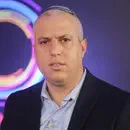
Lt. Col. Dr. A., Head of the IDF’s Operational Medicine Branch, spoke with Arutz Sheva-Israel National News ahead of “Doctors’ Appreciation Day" about the many lessons of the war that are currently being implemented on the ground.
His experience was forged during long months of fighting, serving as the Divisional Medical Officer (DMO) of Division 98 - “Uzvat HaEsh" - a division that has become synonymous with bold offensive activity deep inside Gaza. Prior to that, he served in the key role of Medical Officer of the Galilee Division (Division 91), where he was responsible for preparing forces for a potential campaign on the northern border.
“It is a great privilege and a great responsibility, first and foremost," he says at the outset, when asked to explain the significance of his role in the midst of an ongoing war. “In practice, on a daily basis I am responsible for maintaining learning processes, extracting lessons from the field, translating those lessons into changes or structured work plans, and implementing new technologies and methods - or even reviving capabilities that had been neglected and reintroducing them into operational use."
Lt. Col. Dr. A. emphasizes that the current war required the medical corps to return to what he defines as “high-intensity medicine," a military term describing the need to cope with very large numbers of casualties within a short period of time, while maintaining an uncompromising medical standard.
When examining the operational activity of Division 98, it is difficult not to be struck by the speed of the medical response. Dr. A. describes the feeling that has accompanied him over the past year: “My sense is that this is a historic privilege. Before this role, I served within the medical framework of Division 91 along the border with Lebanon. That means I had both the privilege and the responsibility of preparing the medical forces deployed on the Lebanese border, taking an active part in a full year of defensive combat along the northern front, and afterward also being involved in everything related to the maneuvering and operations of Division 98."
One of the central questions occupying much of the public is how the medical system managed to function under the enormous number of casualties on October 7. For Dr. A., the answer can be summed up in a single word: preparedness. “This is a challenge that can only be met in one way, and that is advance preparation," he states unequivocally. “The processes we carried out in the years leading up to the war - with an emphasis on building trust, connecting people, training, and practicing a shared professional language - are what enabled us to arrive at the point of contact with cohesive teams at the moment of truth, enter into uncertainty, and from there move forward, ultimately fulfilling our responsibility to save lives."
The “shared language" Lt. Col. Dr. A. refers to is the bridge between a surgeon at Beilinson or Sheba Medical Centers and a paramedic operating inside an armored vehicle in Khan Yunis. That trust is what led to unprecedented casualty survival rates in the current war, achieved through shortening the “golden hour" and delivering blood supplies and advanced resuscitation equipment all the way to the first line of contact.
Marking Doctors’ Appreciation Day, Dr. A. seeks to convey a reassuring message to the families of soldiers. “I think perhaps the most important message is that we are there for them at the moment of truth, even if it sounds clichéd - and it is part of the Medical Corps’ ethos," he says. “We are present in the most forward units and in rear-area units alike, at the operational edge and throughout routine combat activity, in order to provide every soldier - somebody’s son, brother, father, or sister - with the best possible medical care we are capable of delivering at any given moment."