


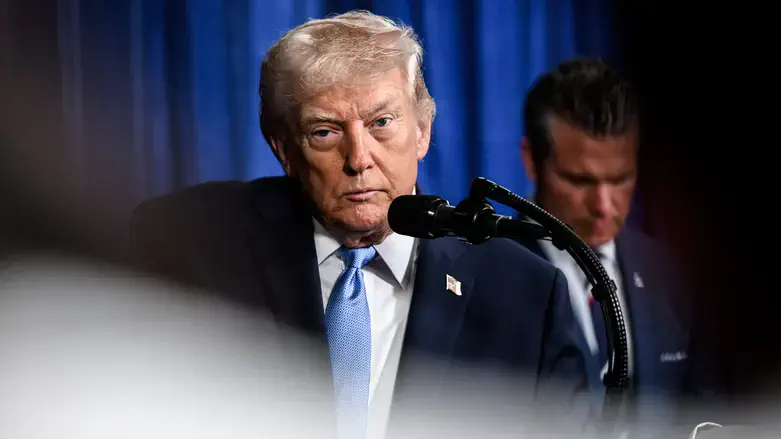
Governments around the world reacted cautiously over the weekend to U.S. President Donald Trump's proposal to establish a new international "Board of Peace," amid concerns it could undermine existing United Nations frameworks, according to a report by Reuters.
Diplomats said invitations to join the initiative were sent to roughly 60 countries and began arriving in European capitals on Saturday. Hungary was the only country to publicly and unequivocally accept the invitation, with Prime Minister Viktor Orban calling it an "honourable invitation." Orban is considered one of Trump's closest allies in Europe.
Other governments refrained from making official statements, while several officials, speaking anonymously, expressed concern that the proposed board could weaken the role of the United Nations. According to a draft charter and letter reviewed by Reuters, Trump would serve as chair of the board for life, with the body initially focusing on the Gaza conflict before potentially expanding its scope to other global disputes.
The proposal outlines three-year membership terms for participating states, unless countries contribute $1 billion each, which would grant permanent membership. The White House defended the structure, stating that permanent membership would be reserved for nations demonstrating a strong commitment to peace and security.
Italian Prime Minister Giorgia Meloni said her country was prepared to "do our part" while visiting South Korea, though she did not clarify whether her remarks referred specifically to Gaza or the broader initiative. Canadian Prime Minister Mark Carney said Ottawa had agreed in principle to participate in a Board of Peace focused on Gaza, pending further details.
Concerns intensified among European governments following the inclusion of a formal charter in the invitation, with several diplomats warning it could function as a parallel international body. One diplomat described it as a "Trump United Nations" that disregards the core principles of the UN Charter.
A spokesperson for UN Secretary-General Antonio Guterres said member states were free to associate in different groupings, while emphasizing that the United Nations would continue carrying out its mandated work.
President Trump said the board would convene in the near future, calling it a unique initiative unlike anything previously established. He told Reuters earlier this week that the board would begin with Gaza and later address other conflicts as they emerge.
The White House has named several individuals expected to serve on the board, including Secretary of State Marco Rubio, special envoy Steve Witkoff, former British prime minister Tony Blair, and Trump's son-in-law Jared Kushner. Additional members are expected to be announced in the coming weeks.