
Rabbi Leo Dee, whose wife Lucy and daughters Maia, 20, and Rina, 15, were murdered in April 2023 by Hamas terrorists in the Jordan Valley, spoke to Arutz Sheva-Israel National News, reflecting on survival and recovery after severe trauma, in light of his newly published book, The Seven Facets of Healing, and on the journey that led him to write it.
Nearly two and a half years after the murder of his wife and daughters, Rabbi Dee describes himself as “still living with trauma. During this period, I became aware that trauma manifests through many different triggers, arising from all areas of life. Over time, I realized that each trigger also has a possible resolution. What I wanted was a clear structure that could help make sense of those experiences."
That structure came from an idea Rabbi Dee shared with his wife, Lucy. “During our date nights," he said, “conversations would often derail when she asked me how my week had been and I responded by focusing only on work frustrations. Lucy suggested a simple but powerful framework: life is made up of seven parts, and when answering that question, one should address all of them. She defined them as family, friends, fitness, fun, finance, function, and faith - the seven ‘Fs.’"
“Going through them one by one helped place challenges in perspective, ensuring that one difficult area did not eclipse everything else. After the trauma, I realized that this same framework encompassed nearly all daily human experience and could serve as a meaningful guide for healing," he explained.
One of the facets Rabbi Dee explores deeply in the book is faith. “After the murder, people often asked me painful “what if" questions: What if we had never made aliyah? What if we had left the house half an hour later that morning? While these questions were painful, they were not new; I had already asked myself each of them a thousand times before. Eventually, I came to understand that asking “what if" is not healthy. There are infinite possibilities for how life could unfold, but only one reality actually occurs. I concluded that there is only one meaningful “what if": What if God planned it this way?"
“What if God planned that I would be married to Lucy for 25 years? What if God planned that I would have five kids until April 7, 2023, and three children afterwards? What if this was God’s plan? Faced with these questions, I have chosen to accept reality as it is and to focus on how to live within it, rather than remaining trapped in regret. I believe that this struggle with regret - replaying past decisions and imagining different outcomes - weighs heavily on many people after loss, divorce, unemployment, or bereavement. Yet the truth is that we did what we did, and now our task is to build forward from what we have been given," he contemplated.
Rabbi Dee also describes a surprising realization that followed the trauma. “Throughout my life, I had relied heavily on instinct, changing careers whenever I felt unhappy - a strategy that had served me well. After the tragedy, however, I discovered that my instincts were often leading me in the wrong direction. Many of the behaviors that came naturally to me were actually deepening my pain rather than easing it."
He gives one example: “After the shiva, I began speaking frequently to visiting groups and delegations. At the end of these talks, people often asked for a selfie. I made a conscious decision not to smile in photos, feeling that smiling would somehow betray the memory of my wife and daughters. While I did smile occasionally in private moments, I refused to do so on camera. Later, I remembered a basic principle from positive psychology: smiling does not only reflect happiness - it can also generate happiness. By preventing myself from smiling, I was also preventing myself from healing. This insight reinforced my belief that many common assumptions about grief and trauma are inverted, and that understanding this can help people begin to lift themselves out of sorrow."
Rabbi Dee emphasizes that “prolonged misery does not help our loved ones, whether the deceased or the living. I had a meeting with a family whose son had fallen on October 7. Two years later, the grandmother was still deeply immersed in grief, and the family felt unable to truly celebrate Passover because he was no longer there. When asked what role she should play, I advised her to do the opposite: to host the family, celebrate fully, and shape the holiday in his memory - talking about him, honoring what he loved, and creating joy for the children and grandchildren. I believe that after a period of mourning, there comes a time when one must consciously begin rebuilding, shifting from depression to elevation."
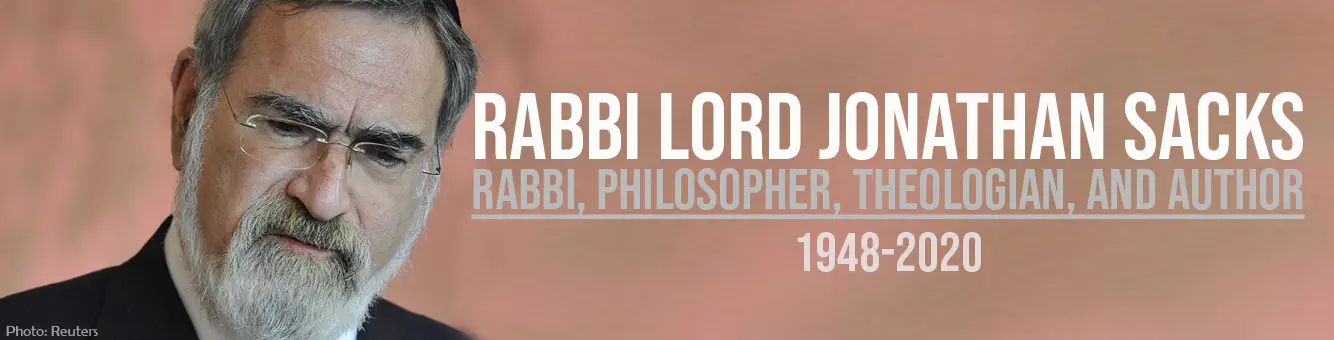
When speaking about optimism, Rabbi Dee draws a distinction taught by his mentor, Rabbi Jonathan Sacks: “optimism is believing that things will get better, while hope is doing something to make them better. I see the Jewish people as a people of hope. The national anthem itself speaks of hope [Hatikva], and Jewish history is marked by the ability to rise and act after catastrophe."
"This was especially poignant on October 8," emphasizes Rabbi Dee, "when Jews around the world instinctively asked, “Where do they need me?" and stepped forward to help - without coordination, without orders, simply by taking responsibility." In his view, this collective response helped save lives and strengthened the Jewish people.
Rabbi Dee concludes that “our future depends on continuing to live with that mindset: asking where one is needed and choosing action over despair, rebuilding rather than retreating, and carrying hope forward into everyday life."