
It is a hard truth, but one that is often ignored: there is something people do not want to see or speak about.
A blindness is spreading through the world-among nations, among leaders, and even inside families. Societies are falling apart while saying that everything is fine. Countries are running toward ruin while calling it honor. Homes are breaking while people pretend nothing is wrong. The signs are everywhere, but many refuse to look.
There are none so blind as those who do not wish to see.
We live in a time when whole societies walk straight into disaster. Countries enter wars they cannot win. They send their young people to die. They let their cities be destroyed and give up their future-all for ideas and slogans. They convince themselves that this destruction is holy. They call it a mitzvah, a jihad, a sacred mission. Reality no longer matters. Results no longer matter. Human life no longer matters.
This is not new. We have seen it before. It is the story of Egypt.
Every Shabbos in Pesukei Dezimra we say in Hallel:
“למכה מצרים בבכוריהם" - “To He Who struck Egypt through their firstborn."
Chazal explain that these words mean far more than the simple reading. Midrash Tehillim (136) describes a frightening scene at the end of the plagues. When Hashem sent makkat bechorot and Moshe warned that at midnight every firstborn in Egypt would die, the firstborn ran to their fathers and begged: “Everything Moshe said has come true! Do you not want us to live? Send the Jews out, or we will die."
Their fathers answered: “Even if all of Egypt dies, they are not leaving."
The firstborn then ran to Pharaoh and cried to him to free the Jews, for their lives and for his life. Pharaoh told his servants to go out and beat them. At that point, the firstborn took swords and killed their own fathers.
That is why it does not say, “He struck the firstborn of Egypt," but rather, “He struck Egypt through their firstborn." Six hundred thousand firstborn rose up and struck their own fathers.
This Midrash is not only telling a story. It is showing the collapse of a whole nation.
How could this happen? How could a strong and smart empire, which saw nine open miracles, still refuse to accept the truth? How could a nation that watched its land fall apart, its wealth disappear, and nature turn upside down still refuse to let the Jews go?
The Torah says that Hashem saying that He hardened Pharaoh’s heart. At first, this seems unfair. Did Pharaoh still have free choice?
The Ramban explains that Pharaoh hardened his own heart many times. Again and again he ignored the truth. Again and again he pushed away his conscience. In the end, because of his own actions, he lost the power to choose honestly. A heart that keeps ignoring the truth will one day be unable to see it at all.
Another way to understand Pharaoh is like an addict. Pharaoh was drunk on power. He was hooked on control. He knew the danger. He saw the damage. But like a person who knows his habit is killing him and still cannot stop, Pharaoh could no longer think straight. His whole self was built on being a god. Letting the Jews go would mean admitting that he was not.
But there is an even deeper point.
When makkat bechorot came, the Torah says:
“ויקם פרעה לילה" - Pharaoh arose at night.
Rashi says: “ויקם פרעה ממטתו" - he got up from his bed.
Why is it important to tell us that Pharaoh was sleeping?
The Kotzker Rebbe explains: Pharaoh went to sleep that night. Moshe had warned him clearly. Every plague before this came true, exactly as Moshe said. There was no reason to think this one would be different.
And yet Pharaoh went to bed. Not walking the floor. Not shaking. Not thinking. Not getting ready. He went to sleep.
That is not strength. That is not courage. That is numbness. A person who keeps ignoring the truth will one day lose the power to see. As the Ramban says, Pharaoh hardened his heart again and again until Hashem hardened it for him.
This is how nations fall. Not because they are foolish. Not because they are weak. But because they lose the courage to face the truth. They tell themselves that ruin is heroism. That death is glory. That loss is holiness. And they send their children into the fire.
Egypt was not stupid. Pharaoh did not lack facts. They lacked the will to face reality. They saw nine plagues. They heard the warnings. They watched their country fall apart. And still they refused to see. Not because they could not. Because they did not want to.
This is the meaning of “למכה מצרים בבכוריהם"-Egypt was destroyed from within, by its own future.
But this lesson is not only for kings and countries. It is just as true for every home.
Blindness does not only destroy empires. It destroys families. It destroys shalom bayit. It destroys bonds between parents and children, between husband and wife. When people refuse to see what is happening-when they ignore tension, brush away pain, deny blame, or pretend problems will vanish-the damage grows quietly until it is too late.
There are none so blind as those who do not wish to see.
In our homes, we must have the strength to look honestly, to admit when something is wrong, and to act before small cracks become deep breaks. Refusing to see leads to anger. Refusing to listen leads to distance. Refusing to change leads to sorrow.
For each of us, the task is to face the truth, take responsibility, and choose honesty over comfort. Because the greatest safeguard for kings, countries, empires, alliances, and our future is the courage to open our eyes and truly see.
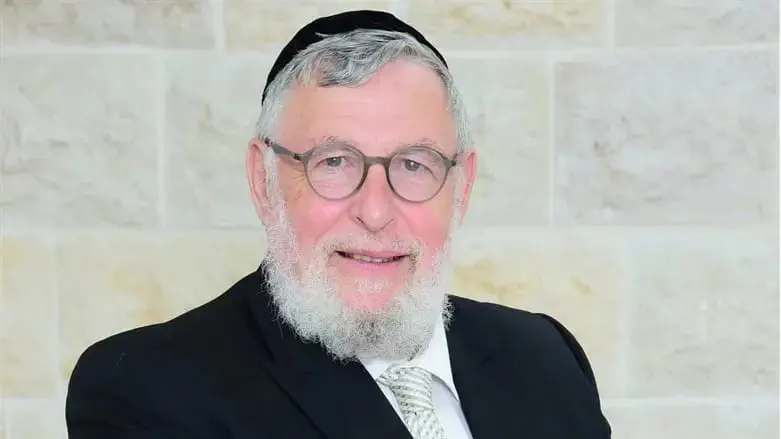
Rabbi Eliezer Simcha Weisz is a member of Israel's Chief Rabbinate Council.